


Mitochondrially-targeted expression of a cytoplasmic male sterility-associated orf220 gene causes male sterility in Brassica juncea
- PMID: 20974011
- PMCID: PMC3017852
- DOI: 10.1186/1471-2229-10-231
Mitochondrially-targeted expression of a cytoplasmic male sterility-associated orf220 gene causes male sterility in Brassica juncea
Abstract
Background: The novel chimeric open reading frame (orf) resulting from the rearrangement of a mitochondrial genome is generally thought to be a causal factor in the occurrence of cytoplasmic male sterility (CMS). Both positive and negative correlations have been found between CMS-associated orfs and the occurrence of CMS when CMS-associated orfs were expressed and targeted at mitochondria. Some orfs cause male sterility or semi-sterility, while some do not. Little is currently known about how mitochondrial factor regulates the expression of the nuclear genes involved in male sterility. The purpose of this study was to investigate the biological function of a candidate CMS-associated orf220 gene, newly isolated from cytoplasmic male-sterile stem mustard, and show how mitochondrial retrograde regulated nuclear gene expression is related to male sterility.
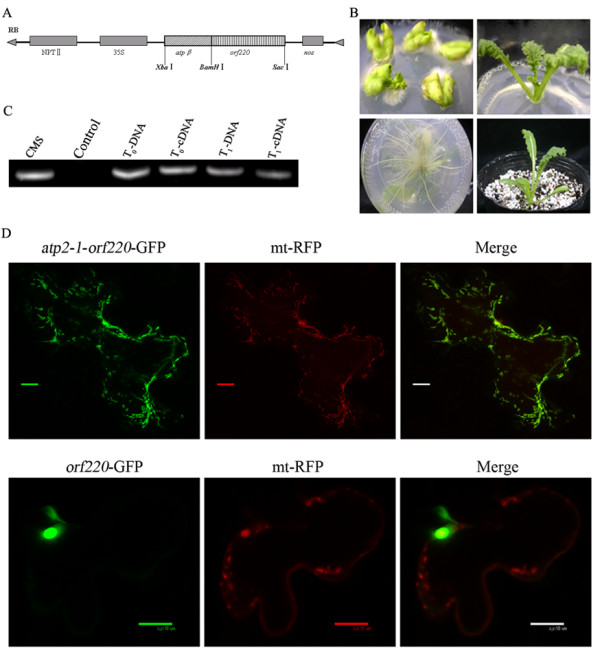
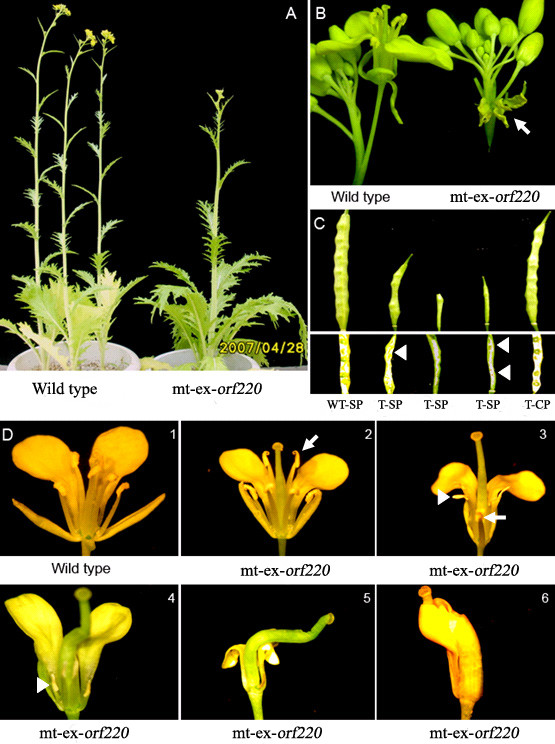
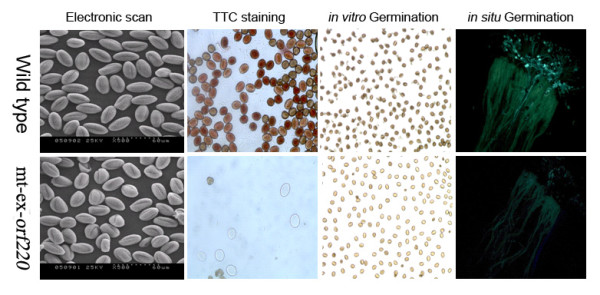
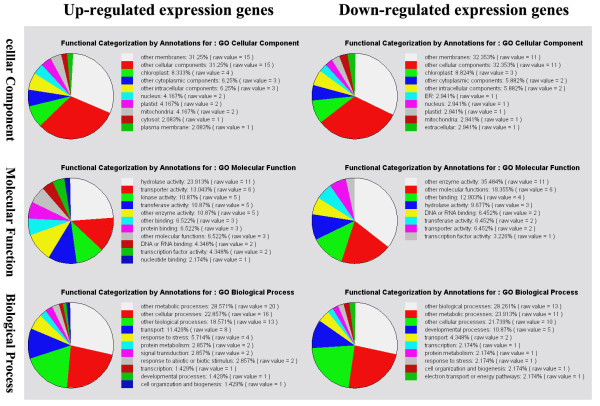
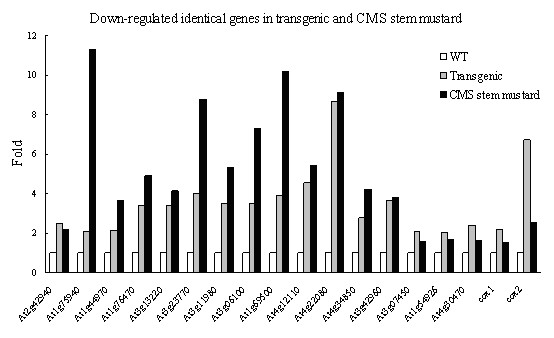
Results: It was shown that the ORF220 protein can be guided to the mitochondria using the mitochondrial-targeting sequence of the β subunit of F1-ATPase (atp2-1). Transgenic stem mustard plants expressed the chimeric gene containing the orf220 gene and a mitochondrial-targeting sequence of the β subunit of F1-ATPase (atp2-1). Transgenic plants were male-sterile, most being unable to produce pollen while some could only produce non-vigorous pollen. The transgenic stem mustard plants also showed aberrant floral development identical to that observed in the CMS stem mustard phenotype. Results obtained from oligooarray analysis showed that some genes related to mitochondrial energy metabolism were down-regulated, indicating a weakening of mitochondrial function in transgenic stem mustard. Some genes related to pollen development were shown to be down-regulated in transgenic stem mustard and the expression of some transcription factor genes was also altered.
Conclusion: The work presented furthers our understanding of how the mitochondrially-targeted expression of CMS-associated orf220 gene causes male sterility through retrograde regulation of nuclear gene expression in Brassica juncea.
Figures
References
-
- Schnable PS, Wise RP. The molecular basis of cytoplasmic male sterility and fertility restoration. Trends in Plant Sci. 1998;3:175–180. doi: 10.1016/S1360-1385(98)01235-7. - DOI
-
- Budar F, Pelletier G. Male sterility in plant: occurrence, determinism, significance and use. Life Sci. 2001;324:543–550. - PubMed
-
- Yang JH, Zhang MF. Molecular genetics of mitochondrial respiratory/ATP-related genes in relation to cytoplasmic male-sterility of higher plants. Gene Genomes and Genomics. 2007;1:21–26.
Publication types
MeSH terms
Substances
LinkOut - more resources
Full Text Sources
Other Literature Sources
Molecular Biology Databases
