


Familial aggregation of hyperemesis gravidarum
- PMID: 20974461
- PMCID: PMC3030697
- DOI: 10.1016/j.ajog.2010.09.018
Familial aggregation of hyperemesis gravidarum
Abstract
Objective: This study was undertaken to determine whether there is familial aggregation of hyperemesis gravidarum (HG), making it a disease amenable to genetic study.
Study design: Cases with severe nausea and vomiting in a singleton pregnancy treated with intravenous hydration and unaffected friend controls completed a survey regarding family history.
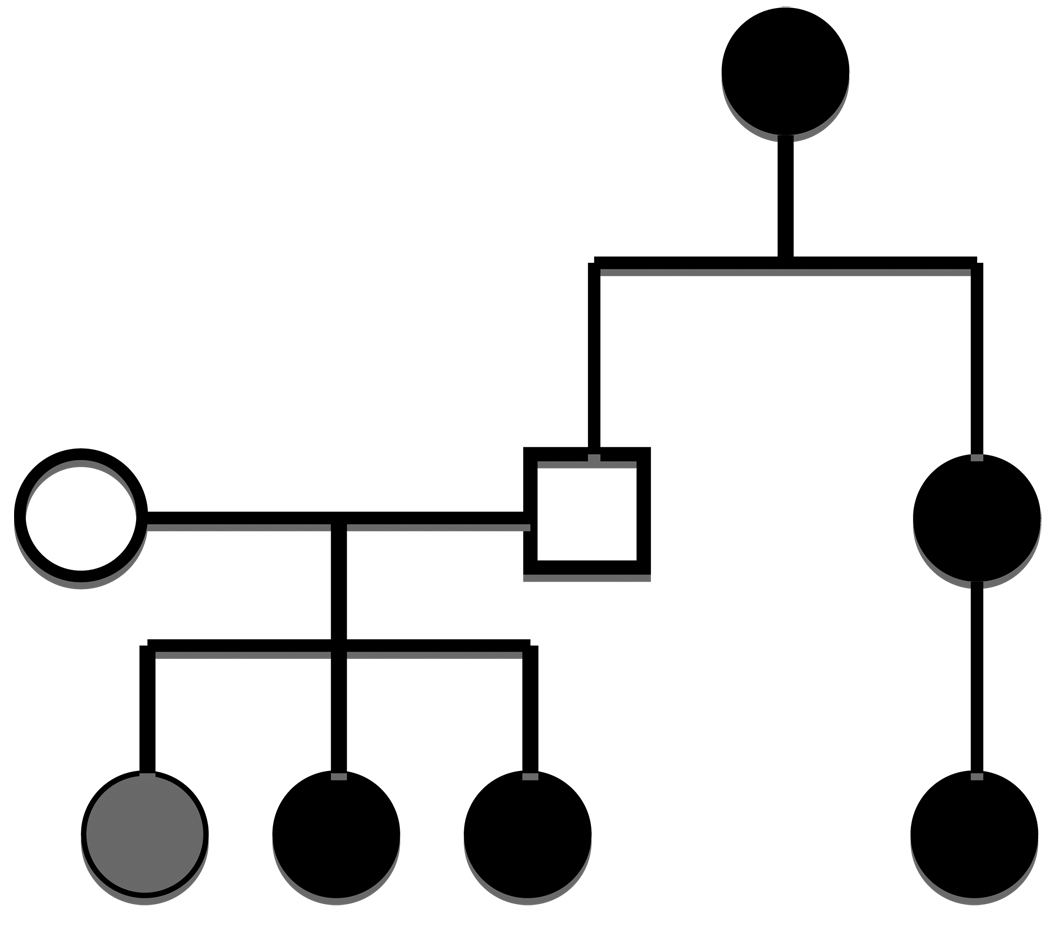
Results: Sisters of women with HG have a significantly increased risk of having HG themselves (odds ratio, 17.3; P = .005). Cases have a significantly increased risk of having a mother with severe nausea and vomiting; 33% of cases reported an affected mother compared to 7.7% of controls (P < .0001). Cases reported a similar frequency of affected second-degree maternal and paternal relatives (18% maternal lineage, 23% paternal lineage).
Conclusion: There is familial aggregation of HG. This study provides strong evidence for a genetic component to HG. Identification of the predisposing gene(s) may determine the cause of this poorly understood disease of pregnancy.
Copyright © 2011 Mosby, Inc. All rights reserved.
Figures
References
-
- Jiang HG, Elixhauser A, Nicholas J, Steiner C, Reyes C, Brierman AS. Care of women in U.S. hospitals, 2000. Rockville, MD: Agency for Healthcare Research and Quality (AHRQ) Publication; 2002. HCUP fact book no. 3, No. 02-0044.
-
- Verberg MF, Gillott DJ, Al-Fardan N, Grudzinskas JG. Hyperemesis gravidarum, a literature review. Hum Reprod Update. 2005;11(5):527–539. - PubMed
-
- Kallen B. Hyperemesis during pregnancy and delivery outcome: a registry study. Eur J Obstet Gynecol Reprod Biol. 1987;26(4):291–302. - PubMed
-
- Zhang J, Cai WW. Severe vomiting during pregnancy: antenatal correlates and fetal outcomes. Epidemiology. 1991;2(6):454–457. - PubMed
-
- Grjibovski AM, Vikanes A, Stoltenberg C, Magnus P. Consanguinity and the risk of hyperemesis gravidarum in Norway. Acta Obstet Gynecol Scand. 2007;12:1–6. - PubMed
Publication types
MeSH terms
Grants and funding
LinkOut - more resources
Full Text Sources
