


Effects of moderate-volume, high-load lower-body resistance training on strength and function in persons with Parkinson's disease: a pilot study
- PMID: 20976096
- PMCID: PMC2957327
- DOI: 10.4061/2010/824734
Effects of moderate-volume, high-load lower-body resistance training on strength and function in persons with Parkinson's disease: a pilot study
Abstract
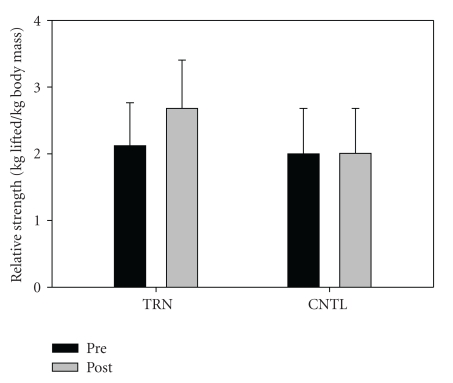
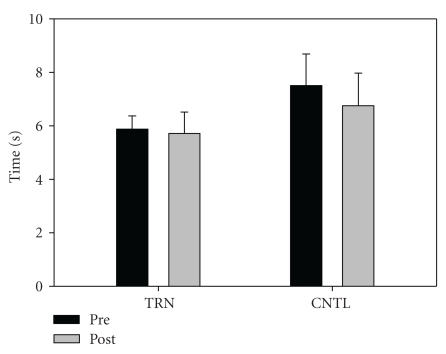
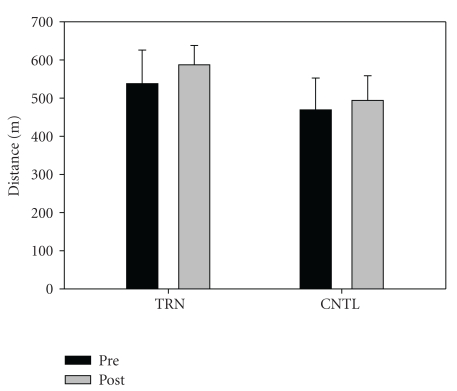
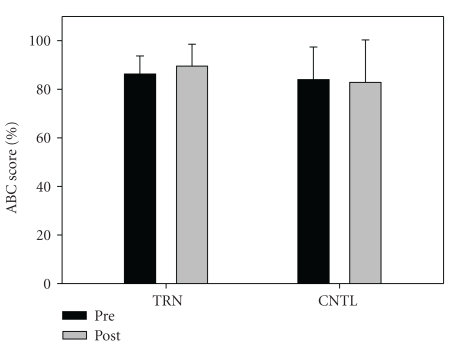
Background. Resistance training research has demonstrated positive effects for persons with Parkinson's disease (PD), but the number of acute training variables that can be manipulated makes it difficult to determine the optimal resistance training program. Objective. The purpose of this investigation was to examine the effects of an 8-week resistance training intervention on strength and function in persons with PD. Methods. Eighteen men and women were randomized to training or standard care for the 8-week intervention. The training group performed 3 sets of 5-8 repetitions of the leg press, leg curl, and calf press twice weekly. Tests included leg press strength relative to body mass, timed up-and-go, six-minute walk, and Activities-specific Balance Confidence questionnaire. Results. There was a significant group-by-time effect for maximum leg press strength relative to body mass, with the training group significantly increasing their maximum relative strength (P < .05). No other significant interactions were noted (P > .05). Conclusions. Moderate volume, high-load weight training is effective for increasing lower-body strength in persons with PD.
Figures
References
-
- Falvo MJ, Schilling BK, Earhart GM. Parkinson’s disease and resistive exercise: rationale, review, and recommendations. Movement Disorders. 2008;23(1):1–11. - PubMed
-
- Corcos DM, Chen C-M, Quinn NP, McAuley J, Rothwell JC. Strength in Parkinson’s disease: relationship to rate of force generation and clinical status. Annals of Neurology. 1996;39(1):79–88. - PubMed
-
- Paasuke M, Mottus K, Ereline J, Gapeyeva H, Taba P. Lower limb performance in older female patients with Parkinson’s disease. Aging: Clinical and Experimental Research. 2002;14(3):185–191. - PubMed
-
- Paasuke M, Ereline J, Gapeyeva H, Joost K, Mottus K, Taba P. Leg-extension strength and chair-rise performance in elderly women with Parkinson’s disease. Journal of Aging and Physical Activity. 2004;12(4):511–524. - PubMed
LinkOut - more resources
Full Text Sources
