


Human endometrial CD98 is essential for blastocyst adhesion
- PMID: 20976164
- PMCID: PMC2955532
- DOI: 10.1371/journal.pone.0013380
Human endometrial CD98 is essential for blastocyst adhesion
Abstract
Background: Understanding the molecular basis of embryonic implantation is of great clinical and biological relevance. Little is currently known about the adhesion receptors that determine endometrial receptivity for embryonic implantation in humans.
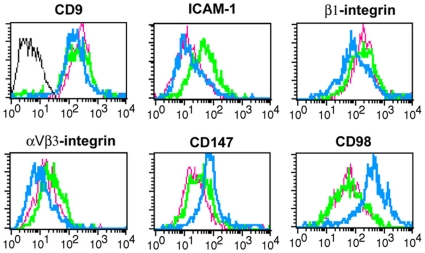
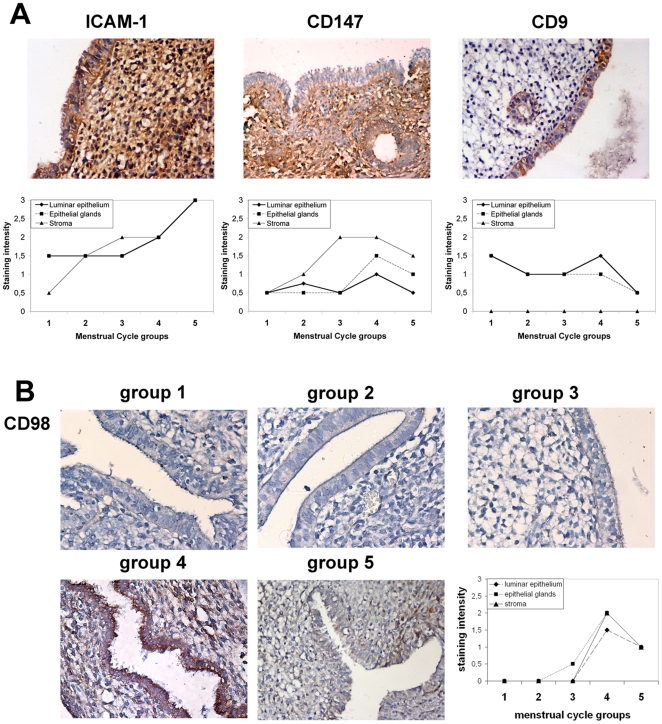
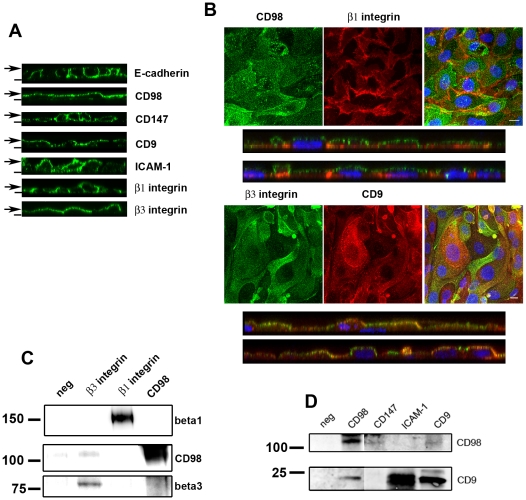
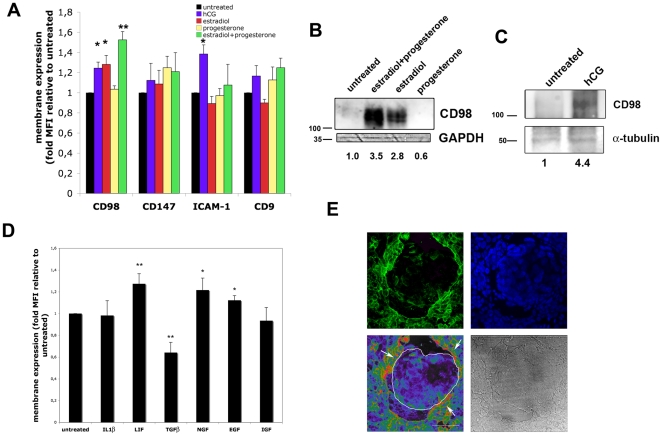
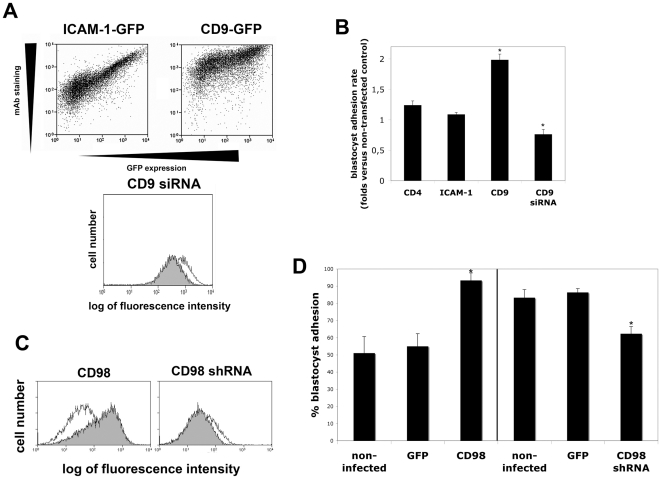
Methods and principal findings: Using two human endometrial cell lines characterized by low and high receptivity, we identified the membrane receptor CD98 as a novel molecule selectively and significantly associated with the receptive phenotype. In human endometrial samples, CD98 was the only molecule studied whose expression was restricted to the implantation window in human endometrial tissue. CD98 expression was restricted to the apical surface and included in tetraspanin-enriched microdomains of primary endometrial epithelial cells, as demonstrated by the biochemical association between CD98 and tetraspanin CD9. CD98 expression was induced in vitro by treatment of primary endometrial epithelial cells with human chorionic gonadotropin, 17-β-estradiol, LIF or EGF. Endometrial overexpression of CD98 or tetraspanin CD9 greatly enhanced mouse blastocyst adhesion, while their siRNA-mediated depletion reduced the blastocyst adhesion rate.
Conclusions: These results indicate that CD98, a component of tetraspanin-enriched microdomains, appears to be an important determinant of human endometrial receptivity during the implantation window.
Conflict of interest statement
Figures
References
-
- Cross JC, Werb Z, Fisher SJ. Implantation and the placenta: key pieces of the development puzzle. Science. 1994;266:1508–1518. - PubMed
-
- Navot D, Bergh PA, Williams M, Garrisi GJ, Guzman I, et al. An insight into early reproductive processes through the in vivo model of ovum donation. J Clin Endocrinol Metab. 1991;72:408–414. - PubMed
-
- Murphy CR. The plasma membrane transformation of uterine epithelial cells during pregnancy. J Reprod Fertil. 2000;Suppl 55:23–28. - PubMed
-
- Martin JC, Jasper MJ, Valbuena D, Meseguer M, Remohi J, et al. Increased adhesiveness in cultured endometrial-derived cells is related to the absence of moesin expression. Biol Reprod. 2000;63:1370–1376. - PubMed
-
- Thie M, Harrach-Ruprecht B, Sauer H, Fuchs P, Albers A, et al. Cell adhesion to the apical pole of epithelium: a function of cell polarity. Eur J Cell Biol. 1995;66:180–191. - PubMed
Publication types
MeSH terms
Substances
LinkOut - more resources
Full Text Sources
Other Literature Sources
