


4-oxo-N-(4-hydroxyphenyl)retinamide: two independent ways to kill cancer cells
- PMID: 20976277
- PMCID: PMC2954786
- DOI: 10.1371/journal.pone.0013362
4-oxo-N-(4-hydroxyphenyl)retinamide: two independent ways to kill cancer cells
Abstract
Background: The retinoid 4-oxo-N-(4-hydroxyphenyl)retinamide (4-oxo-4-HPR) is a polar metabolite of fenretinide (4-HPR) very effective in killing cancer cells of different histotypes, able to inhibit 4-HPR-resistant cell growth and to act synergistically in combination with the parent drug. Unlike 4-HPR and other retinoids, 4-oxo-4-HPR inhibits tubulin polymerization, leading to multipolar spindle formation and mitotic arrest. Here we investigated whether 4-oxo-4-HPR, like 4-HPR, triggered cell death also via reactive oxygen species (ROS) generation and whether its antimicrotubule activity was related to a ROS-dependent mechanism in ovarian (A2780), breast (T47D), cervical (HeLa) and neuroblastoma (SK-N-BE) cancer cell lines.
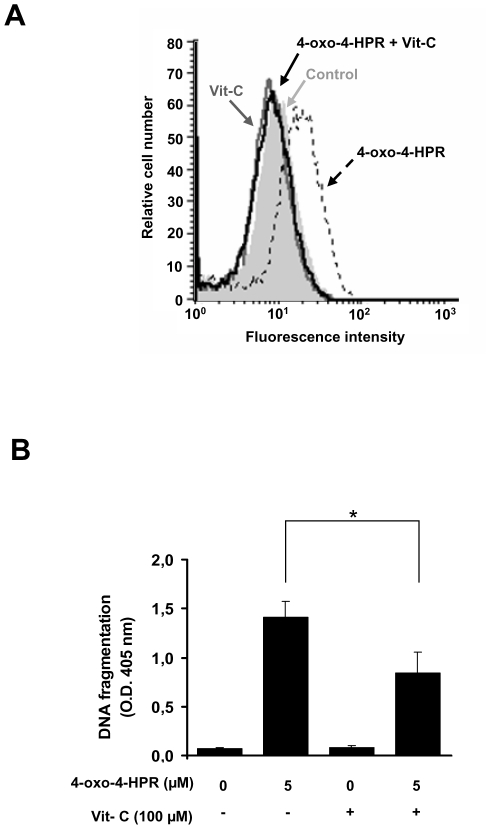
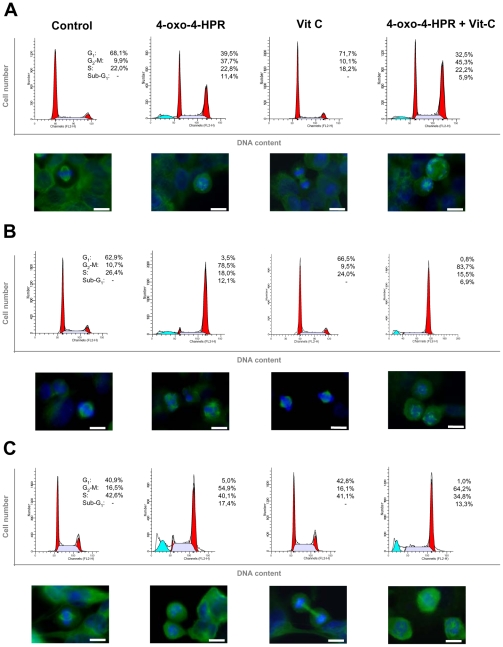
Methodology/principal findings: We provided evidence that 4-oxo-4-HPR, besides acting as an antimicrotubule agent, induced apoptosis through a signaling cascade starting from ROS generation and involving endoplasmic reticulum (ER) stress response, Jun N-terminal Kinase (JNK) activation, and upregulation of the proapoptotic PLAcental Bone morphogenetic protein (PLAB). Through time-course analysis and inhibition of the ROS-related signaling pathway (upstream by vitamin C and downstream by PLAB silencing), we demonstrated that the antimitotic activity of 4-oxo-4-HPR was independent from the oxidative stress induced by the retinoid. In fact, ROS generation occurred earlier than mitotic arrest (within 30 minutes and 2 hours, respectively) and abrogation of the ROS-related signaling pathway did not prevent the 4-oxo-4-HPR-induced mitotic arrest.
Conclusions/significance: These data indicate that 4-oxo-4-HPR anticancer activity is due to at least two independent mechanisms and provide an explanation of the ability of 4-oxo-4-HPR to be more potent than the parent drug and to be effective also in 4-HPR-resistant cell lines. In addition, the double mechanism of action could allow 4-oxo-4-HPR to efficiently target tumour and to eventually counteract the development of drug resistance.
Conflict of interest statement
Figures



References
-
- Nagy L, Thomazy VA, Heyman RA, Davies PJ. Retinoid-induced apoptosis in normal and neoplastic tissues. Cell Death Differ. 1998;5:11–19. - PubMed
-
- Veronesi U, De Palo G, Marubini E, Costa A, Formelli F, et al. Randomized trial of fenretinide to prevent second breast malignancy in women with early breast cancer. J Natl Cancer Inst. 1999;91:1847–1856. - PubMed
-
- Chiesa F, Tradati N, Grigolato R, Boracchi P, Biganzoli E, et al. Randomized trial of fenretinide (4HPR) to prevent recurrences, new localizations and carcinomas in patients operated on for oral leukoplakia: long-term results. Int J Cancer. 2005;115:625–629. - PubMed
-
- Moglia D, Formelli F, Baliva G, Bono A, Accetturi M, et al. Effects of topical treatment with fenretinide (4-HPR) and plasma vitamin A levels in patients with actinic keratoses. Cancer Lett. 1996;110:87–91. - PubMed
-
- Tradati N, Chiesa F, Rossi N, Grigolato R, Formelli F, et al. Successful topical treatment of oral lichen planus and leukoplakias with fenretinide (4-HPR). Cancer Lett. 1994;76:109–111. - PubMed
Publication types
MeSH terms
Substances
LinkOut - more resources
Full Text Sources
Other Literature Sources
Research Materials
Miscellaneous
