


Evolutionary mode and functional divergence of vertebrate NMDA receptor subunit 2 genes
- PMID: 20976280
- PMCID: PMC2954789
- DOI: 10.1371/journal.pone.0013342
Evolutionary mode and functional divergence of vertebrate NMDA receptor subunit 2 genes
Abstract
Background: Ionotropic glutamate receptors in the central nervous system play a major role in numerous brain functions including learning and memory in many vertebrate species. NR2 subunits have been regarded as rate-limiting molecules in controlling the optimal N-methyl-D-aspartate (NMDA) receptor's coincidence-detection property and subsequent learning and memory function across multi-species. However, its evolutionary mode among vertebrate species remains unclear.
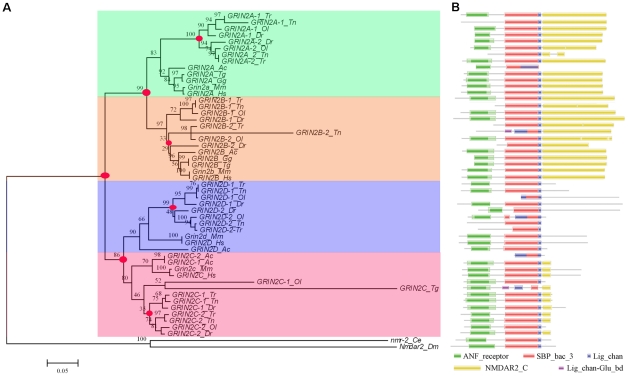
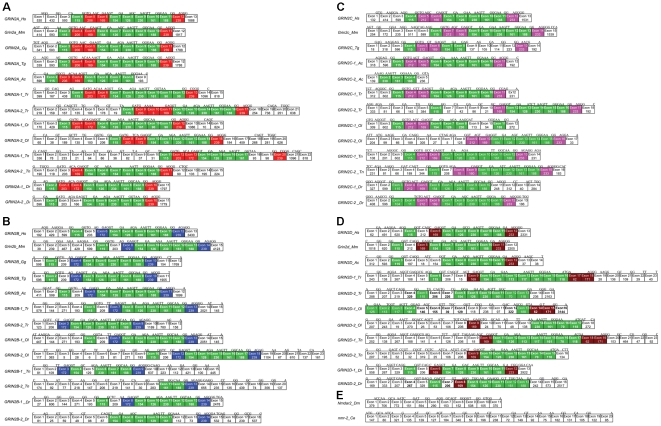
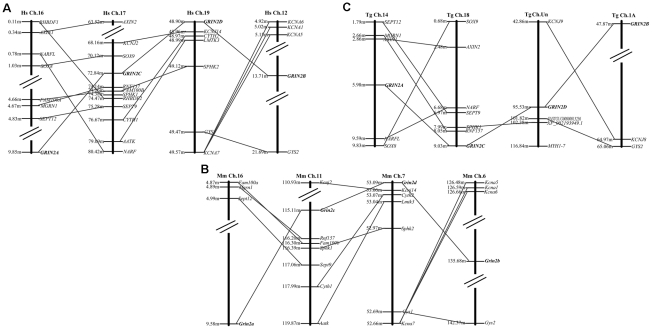
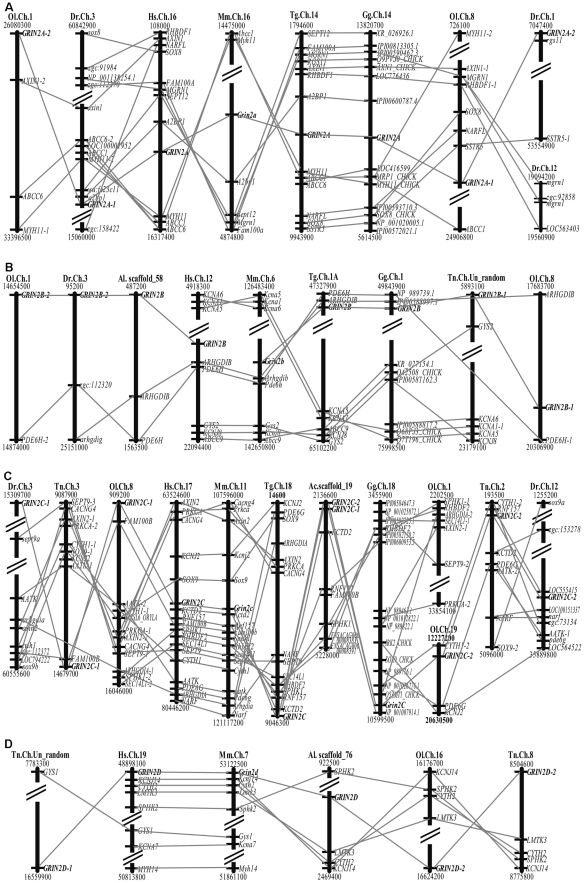
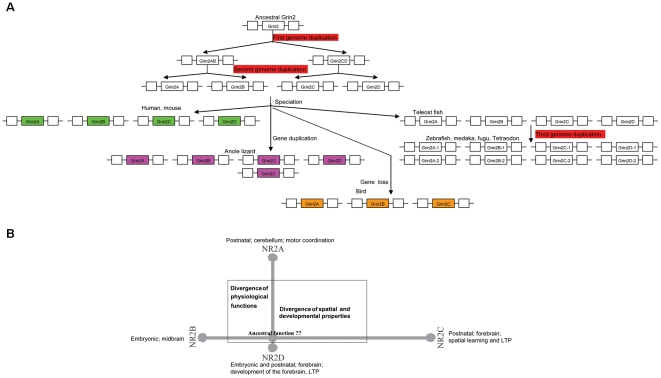
Results: With extensive analysis of phylogeny, exon structure, protein domain, paralogon and synteny, we demonstrated that two-round genome duplication generated quartet GRIN2 genes and the third-round fish-specific genome duplication generated extra copies of fish GRIN2 genes. In addition, in-depth investigation has enabled the identification of three novel genes, GRIN2C_Gg, GRIN2D-1_Ol and GRIN2D-2_Tr in the chicken, medaka and fugu genome, respectively. Furthermore, we showed functional divergence of NR2 genes mostly occurred at the first-round duplication, amino acid residues located at the N-terminal Lig_chan domain were responsible for type I functional divergence between these GRIN2 subfamilies and purifying selection has been the prominent natural pressure operating on these diversified GRIN2 genes.
Conclusion and significance: These findings provide intriguing subjects for testing the 2R and 3R hypothesis and we expect it could provide new insights into the underlying evolution mechanisms of cognition in vertebrate.
Conflict of interest statement
Figures
References
-
- Burrell BD, Sahley CL. Learning in simple systems. Curr Opin Neurobiol. 2001;11:757–764. - PubMed
-
- Malenka RC, Bear MF. LTP and LTD: an embarrassment of riches. Neuron. 2004;44:5–21. - PubMed
-
- Bliss TV, Collingridge GL. A synaptic model of memory: long-term potentiation in the hippocampus. Nature. 1993;361:31–39. - PubMed
-
- Tsien JZ, Huerta PT, Tonegawa S. The essential role of hippocampal CA1 NMDA receptor-dependent synaptic plasticity in spatial memory. Cell. 1996;87:1327–1338. - PubMed
Publication types
MeSH terms
Substances
LinkOut - more resources
Full Text Sources
