


Inactivated seasonal influenza vaccines increase serum antibodies to the neuraminidase of pandemic influenza A(H1N1) 2009 virus in an age-dependent manner
- PMID: 20979454
- PMCID: PMC2974032
- DOI: 10.1086/657084
Inactivated seasonal influenza vaccines increase serum antibodies to the neuraminidase of pandemic influenza A(H1N1) 2009 virus in an age-dependent manner
Abstract
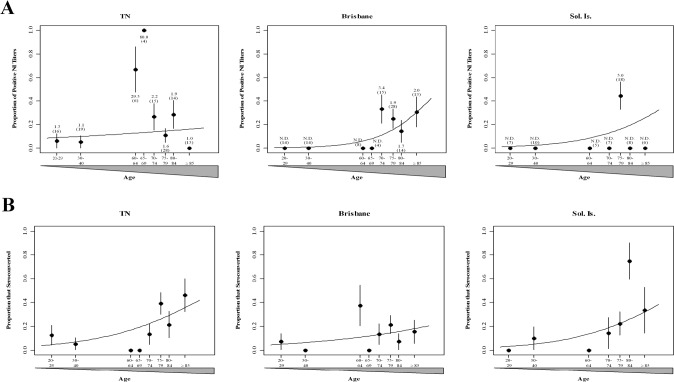
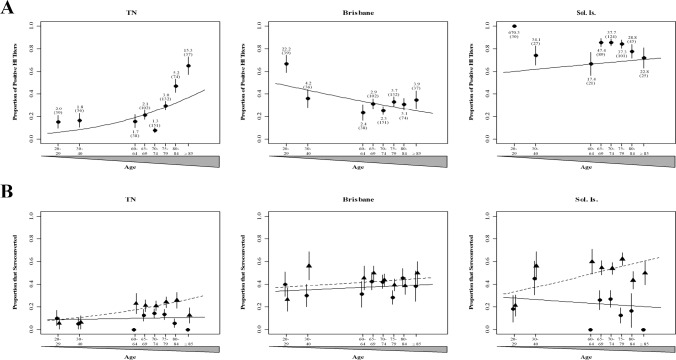
Levels of preexisting antibodies to the hemagglutinin of pandemic influenza A(H1N1) 2009 (hereafter pandemic H1N1) virus positively correlate with age. The impact of contemporary seasonal influenza vaccines on establishing immunity to other pandemic H1N1 proteins is unknown. We measured serum antibodies to the neuraminidase (NA) of pandemic H1N1 in adults prior to and after vaccination with seasonal trivalent inactivated influenza vaccines. Serum antibodies to pandemic H1N1 NA were observed in all age groups; however, vaccination elevated levels of pandemic H1N1 NA antibodies predominately in elderly individuals (age, ⩾60 years). Therefore, contemporary seasonal vaccines likely contribute to reduction of pandemic H1N1-associated disease in older individuals.
Conflict of interest statement
Potential conflicts of interest: none reported.
Figures
Comment in
-
Inactivated seasonal influenza vaccines increase serum antibodies to the neuraminidase of pandemic influenza A(H1N1) 2009 virus in an age-dependent manner.J Infect Dis. 2011 Jun 1;203(11):1697-8. doi: 10.1093/infdis/jir169. J Infect Dis. 2011. PMID: 21593002 No abstract available.
References
-
- Hancock K, eguilla V, Lu X, et al. Cross-reactive antibody responses to the 2009 pandemic H1N1 influenza virus. N Engl J Med. 2009;361:1945–1952. - PubMed
-
- Novel Swine-Origin Influenza A (H1N1) Virus Investigation Team. Dawood FS, Jain S, et al. Emergence of a novel swine-origin influenza A (H1N1) virus in humans. N Engl J Med. 2009;360:2605–2615. - PubMed
-
- van Maurik A, Sabarth N, Dacho H, et al. Seasonal influenza vaccine elicits heterosubtypic immunity against H5N1 that can be further boosted by H5N1 vaccination. Vaccine. 2010;28:1778–1785. - PubMed
-
- Chen Z, Kadowaki S, Hagiwara Y, et al. Cross-protection against a lethal influenza virus infection by DNA vaccine to neuraminidase. Vaccine. 2000;18:3214–3222. - PubMed
Publication types
MeSH terms
Substances
Grants and funding
LinkOut - more resources
Full Text Sources
Medical
