


Internet-based surveillance of Influenza-like-illness in the UK during the 2009 H1N1 influenza pandemic
- PMID: 20979640
- PMCID: PMC2988734
- DOI: 10.1186/1471-2458-10-650
Internet-based surveillance of Influenza-like-illness in the UK during the 2009 H1N1 influenza pandemic
Abstract
Background: Internet-based surveillance systems to monitor influenza-like illness (ILI) have advantages over traditional (physician-based) reporting systems, as they can potentially monitor a wider range of cases (i.e. including those that do not seek care). However, the requirement for participants to have internet access and to actively participate calls into question the representativeness of the data. Such systems have been in place in a number of European countries over the last few years, and in July 2009 this was extended to the UK. Here we present results of this survey with the aim of assessing the reliability of the data, and to evaluate methods to correct for possible biases.
Methods: Internet-based monitoring of ILI was launched near the peak of the first wave of the UK H1N1v influenza pandemic. We compared the recorded ILI incidence with physician-recorded incidence and an estimate of the true number of cases over the course of the epidemic. We also compared overall attack rates. The effect of using different ILI definitions and alternative denominator assumptions on incidence estimates was explored.
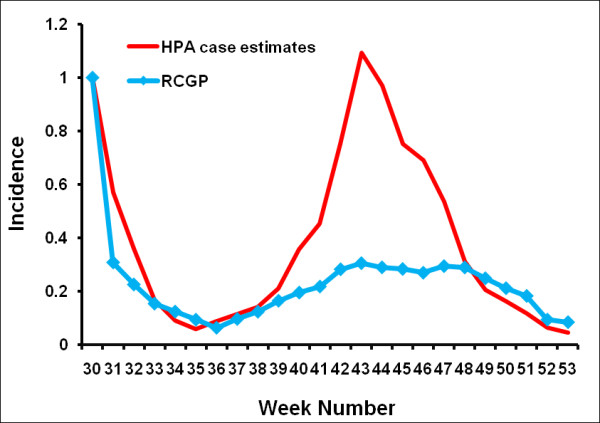
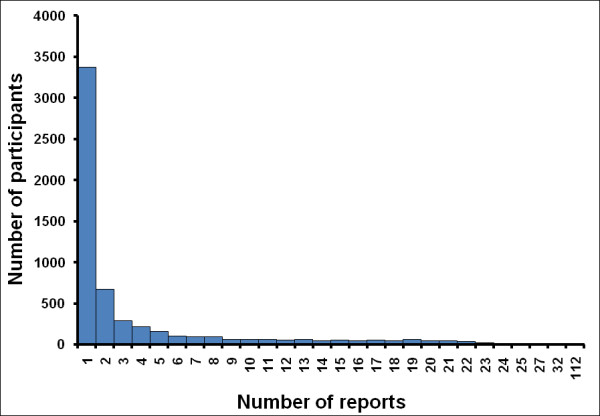
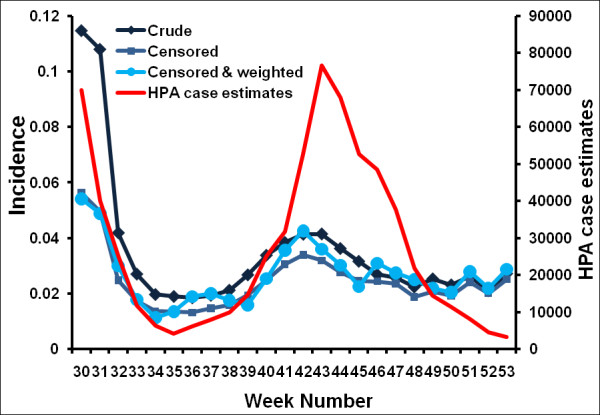
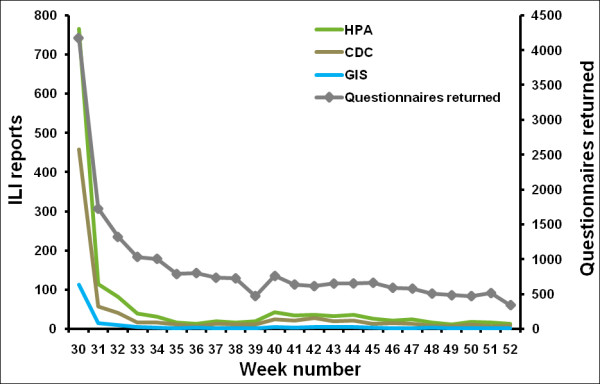
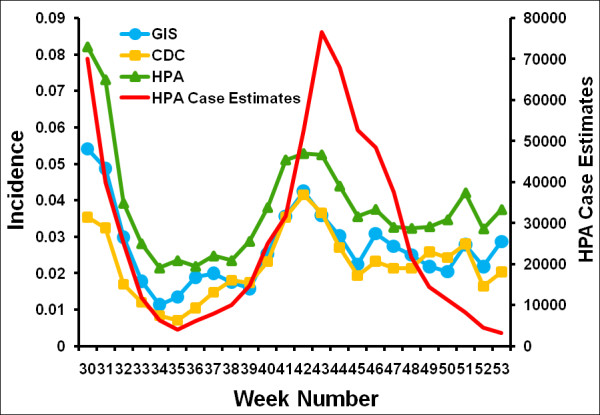
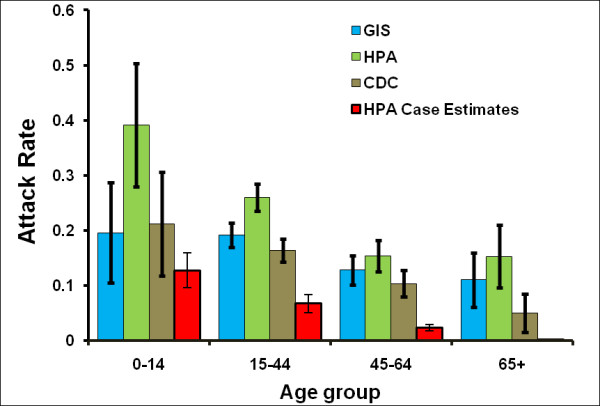
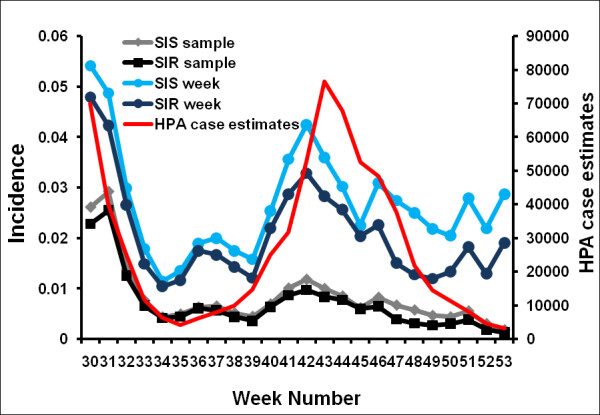
Results: The crude incidence measured by the internet-based system appears to be influenced by individuals who participated only once in the survey and who appeared more likely to be ill. This distorted the overall incidence trend. Concentrating on individuals who reported more than once results in a time series of ILI incidence that matches the trend of case estimates reasonably closely, with a correlation of 0.713 (P-value: 0.0001, 95% CI: 0.435, 0.867). Indeed, the internet-based system appears to give a better estimate of the relative height of the two waves of the UK pandemic than the physician-recorded incidence. The overall attack rate is, however, higher than other estimates, at about 16% when compared with a model-based estimate of 6%.
Conclusion: Internet-based monitoring of ILI can capture the trends in case numbers if appropriate weighting is used to correct for differential response. The overall level of incidence is, however, difficult to measure. Internet-based systems may be a useful adjunct to existing ILI surveillance systems as they capture cases that do not necessarily contact health care. However, further research is required before they can be used to accurately assess the absolute level of incidence in the community.
Figures
References
-
- Influenza (Seasonal), Fact Sheet N 211. http://www.who.int/mediacentre/factsheets/fs211/en
-
- Strauss JH, Strauss EG. In Viruses and Human Disease. San Diego: Academic Press; 2002. Family Orthomyxoviridae; pp. 147–156.
-
- Health Protection Agency. Pandemic (H1N1) 2009 in England: an overview of the initial epidemiological findings and implications for the second wave. 2009.
-
- Elliot AJ, Powers C, Thornton A, Obi C, Hill C, Simms I, Waight P, Maguire H, Foord D, Povey E. et al. Monitoring the emergence of community transmission of influenza A/H1N1 2009 in England: a cross sectional opportunistic survey of self sampled telephone callers to NHS Direct. BMJ. 2009;339:b3403. doi: 10.1136/bmj.b3403. - DOI - PMC - PubMed
MeSH terms
LinkOut - more resources
Full Text Sources
Medical
