


Prevalence of dietary supplement use in patients with proven or suspected cardiovascular disease
- PMID: 20981333
- PMCID: PMC2957222
- DOI: 10.1155/2011/632829
Prevalence of dietary supplement use in patients with proven or suspected cardiovascular disease
Abstract
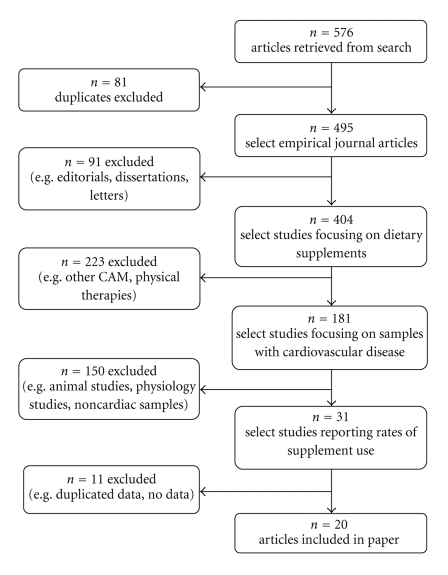
Systematic search of bibliographic databases was conducted to describe the prevalence of dietary supplement use in cardiac patients. Included for review were studies that investigated supplement use in people with cardiovascular risk factors or proven cardiovascular disease. Databases searched were Medline, EMBASE, CINAHL, AMED, Meditext, H&S and IPA. Over five hundred articles were retrieved and twenty studies met the criteria for this review. Dietary supplements were taken by a median 36% (interquartile range: 26-42%) of cardiac patients; 36% (IQR 18-43%) reported taking a vitamin/mineral supplement and 12% (IQR 7-21%) used herbal supplements. Many users indicated that supplements were taken specifically for heart health and 16-64% of users reported using supplements alongside prescription medications. However 39-95% of treating physicians were unaware of patients' supplement use. Dietary supplement use in patients with cardiovascular disease appears common, as does the concurrent use of supplements with prescription medicines. This information is often not communicated to doctors and treating physicians may need to be more proactive in asking about supplement use.
Figures
References
-
- Kurtzweil P. An FDA guide to dietary supplements. FDA consumer. 1998;32(5):28–35. - PubMed
-
- Barnes PM, Bloom B, Nahin RL. Complementary and alternative medicine use among adults and children: United States, 2007. National health statistics reports. 2009;(12):1–23. - PubMed
-
- Bell RA, Suerken CK, Grzywacz JG, Lang W, Quandt SA, Arcury TA. CAM use among older adults age 65 or older with hypertension in the United States: general use and disease treatment. Journal of Alternative and Complementary Medicine. 2006;12(9):903–909. - PubMed
-
- Shah SH, Engelhardt R, Ovbiagele B. Patterns of complementary and alternative medicine use among United States stroke survivors. Journal of the Neurological Sciences. 2008;271(1-2):180–185. - PubMed
LinkOut - more resources
Full Text Sources
Miscellaneous
