


Microbial stimulation fully differentiates monocytes to DC-SIGN/CD209(+) dendritic cells for immune T cell areas
- PMID: 21029863
- PMCID: PMC3150728
- DOI: 10.1016/j.cell.2010.09.039
Microbial stimulation fully differentiates monocytes to DC-SIGN/CD209(+) dendritic cells for immune T cell areas
Abstract
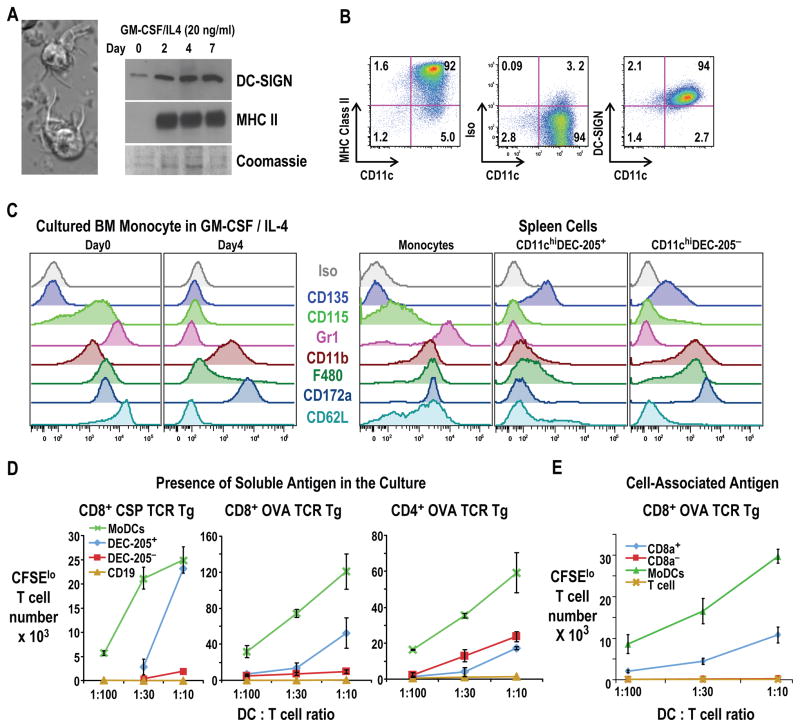
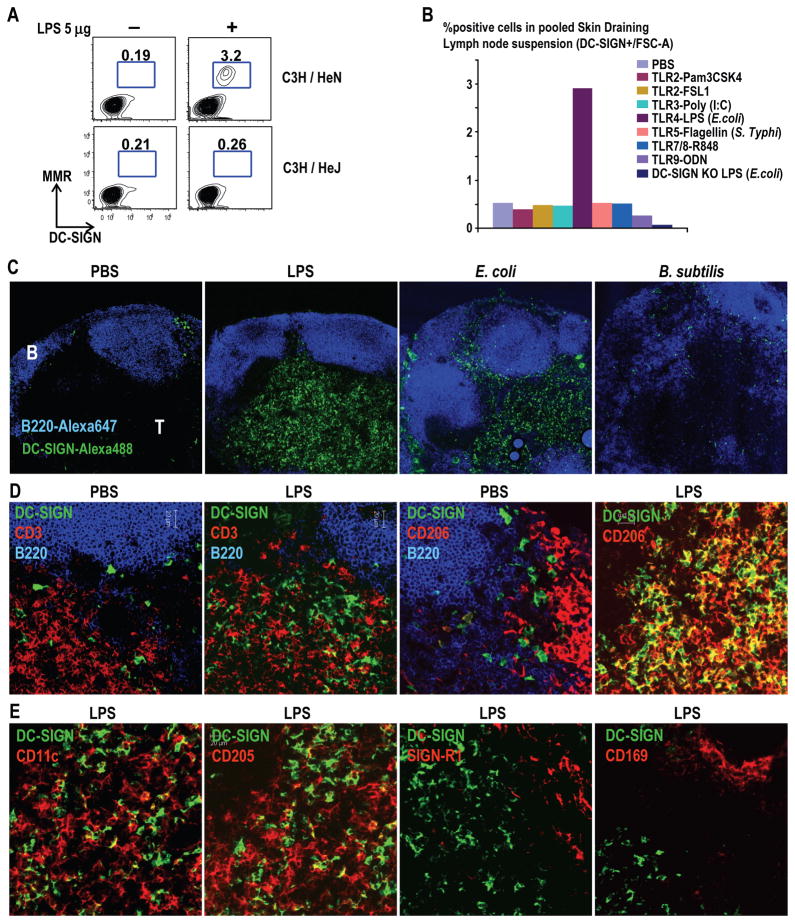
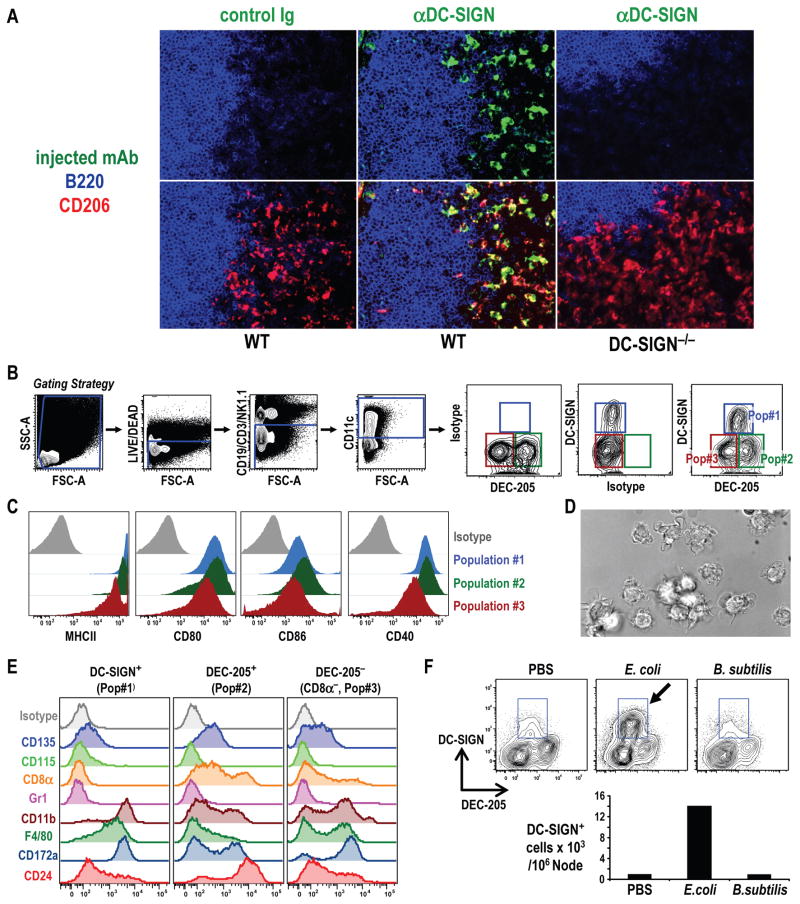
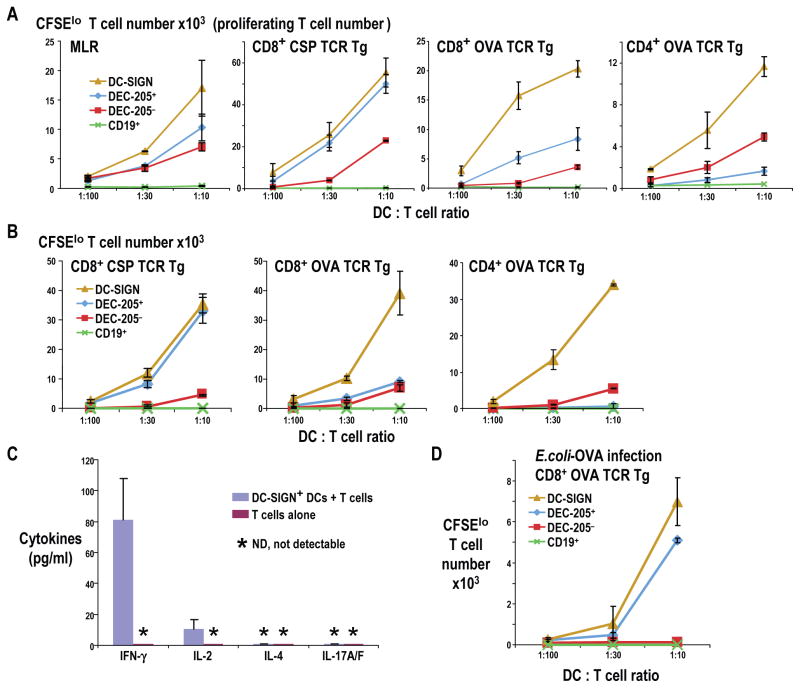
Dendritic cells (DCs), critical antigen-presenting cells for immune control, normally derive from bone marrow precursors distinct from monocytes. It is not yet established if the large reservoir of monocytes can develop into cells with critical features of DCs in vivo. We now show that fully differentiated monocyte-derived DCs (Mo-DCs) develop in mice and DC-SIGN/CD209a marks the cells. Mo-DCs are recruited from blood monocytes into lymph nodes by lipopolysaccharide and live or dead gram-negative bacteria. Mobilization requires TLR4 and its CD14 coreceptor and Trif. When tested for antigen-presenting function, Mo-DCs are as active as classical DCs, including cross-presentation of proteins and live gram-negative bacteria on MHC I in vivo. Fully differentiated Mo-DCs acquire DC morphology and localize to T cell areas via L-selectin and CCR7. Thus the blood monocyte reservoir becomes the dominant presenting cell in response to select microbes, yielding DC-SIGN(+) cells with critical functions of DCs.
Copyright © 2010 Elsevier Inc. All rights reserved.
Figures



Comment in
-
Monocytes join the dendritic cell family.Cell. 2010 Oct 29;143(3):339-40. doi: 10.1016/j.cell.2010.10.022. Cell. 2010. PMID: 21029856
-
Prime time for monocytes.Nat Rev Immunol. 2010 Dec;10(12):808. doi: 10.1038/nri2893. Nat Rev Immunol. 2010. PMID: 21155170 No abstract available.
References
-
- Agger R, Petersen MS, Toldbod HE, Holtz S, Dagnaes-Hansen F, Johnsen BW, Bolund L, Hokland M. Characterization of murine dendritic cells derived from adherent blood mononuclear cells in vitro. Scand J Immunol. 2000;52:138–147. - PubMed
Publication types
MeSH terms
Substances
Grants and funding
LinkOut - more resources
Full Text Sources
Other Literature Sources
Molecular Biology Databases
Research Materials
