. 2010 Dec 15;70(24):10038-43.
doi: 10.1158/0008-5472.CAN-10-2956. Epub 2010 Oct 28.

The neuroblastoma-associated F1174L ALK mutation causes resistance to an ALK kinase inhibitor in ALK-translocated cancers

Affiliations

The neuroblastoma-associated F1174L ALK mutation causes resistance to an ALK kinase inhibitor in ALK-translocated cancers

Takaaki Sasaki et al. Cancer Res. .

Abstract

The ALK kinase inhibitor crizotinib (PF-02341066) is clinically effective in patients with ALK-translocated cancers, but its efficacy will ultimately be limited by acquired drug resistance. Here we report the identification of a secondary mutation in ALK, F1174L, as one cause of crizotinib resistance in a patient with an inflammatory myofibroblastic tumor (IMT) harboring a RANBP2-ALK translocation who progressed while on crizotinib therapy. When present in cis with an ALK translocation, this mutation (also detected in neuroblastomas) causes an increase in ALK phosphorylation, cell growth, and downstream signaling. Furthermore, the F1174L mutation inhibits crizotinib-mediated downregulation of ALK signaling and blocks apoptosis in RANBP2-ALK Ba/F3 cells. A chemically distinct ALK inhibitor, TAE684, and the HSP90 inhibitor 17-AAG are both effective in models harboring the F1174L ALK mutation. Our findings highlight the importance of studying drug resistance mechanisms in order to develop effective clinical treatments for patients with ALK-translocated cancers.


Figures

Figure 1
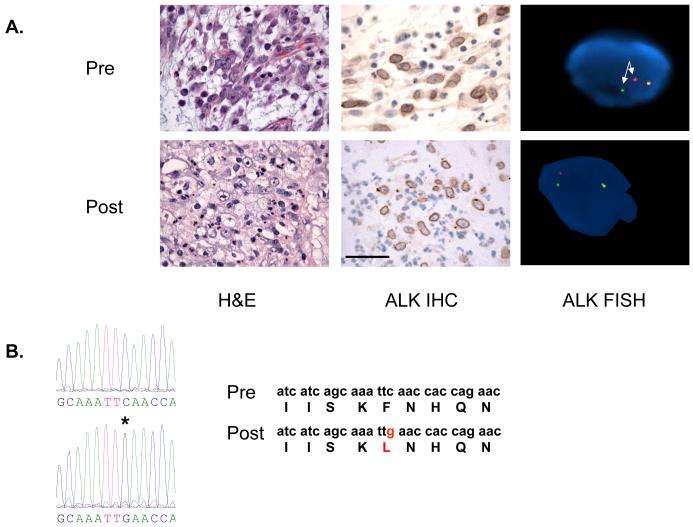
Figure 1. Tumor from crizotinib resistant patient contains a secondary ALK mutation
A. Comparison of pre-treatment and post-treatment biopsy specimens. Both specimens contain viable tumor and both tumors express ALK by IHC which is localized to the nuclear membrane. FISH analyses demonstrate an ALK translocation (split red and green signals; arrows). Scale bar 50 μM. B. Sequence tracing from pre and post-treatment tumor specimens. There is a C to G mutation (asterix) in codon 3522 in exon 23 resulting in the F1174L mutation. This is not detected in the pre-treatment tumor.
Figure 2
Figure 2. Impact of F1174L on growth and signaling in Ba/F3 cells harboring RANBP2-ALK
A. IL-3 independent Ba/F3 cells expressing RANBP2-ALK F1174L proliferate faster compared to cells expressing RANBP2-ALK. * p < 0.05; ** p < 0.001 B. Ba/F3 cells with indicated genotypes were treated with increasing concentrations of crizotinib for 6 hours. Cell extracts were immunoprecipitated with an anti-FLAG antibody followed immunoblotting to detect the indicated proteins. C. Presence of F1174L mutation in the background of an ALK translocation leads to enhanced AKT and ERK 1/2 signaling. Cell extracts were immunoblotted to detect the indicated proteins. D. Ba/F3 cells were treated with crizotinib at the indicated concentrations, and viable cells were measured after 72 hours of treatment and plotted relative to untreated controls. There is a significant effect of the F1174L mutation at 300 nM (p < 0.001).
Figure 3
Figure 3. Impact of the F1174L mutation on growth and signaling in Ba/F3 cells expressing EML4-ALK
A. IL-3 independent Ba/F3 cells expressing EML4-ALK F1174L proliferate faster compared to cells expressing EML4-ALK. ** p < 0.001 B. EML4-ALK and EML4-ALK F1174L Ba/F3 cells were treated with increasing concentrations of PF-02341066 for 6 hours. Cell extracts were immunoprecipitated with an anti-FLAG antibody followed immunoblotting to detect the indicated proteins. C. Ba/F3 cells were treated with crizotinib at the indicated concentrations, and viable cells were measured after 72 hours of treatment and plotted relative to untreated controls. There is a significant effect of the F1174L mutation at 300 nM (p < 0.001).
Figure 4
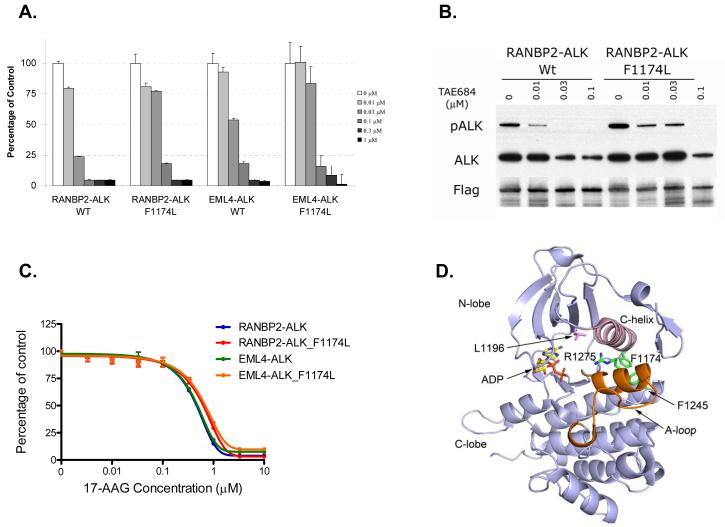
Figure 4. Therapeutic strategies against cancers harboring the F1174L crizotinib resistance mutation
A. Ba/F3 cells were treated with TAE684 at the indicated concentrations, and viable cells were measured after 72 hours of treatment and plotted relative to untreated controls. B. RANBP2-ALK and RANBP2-ALK F1174L Ba/F3 cells were treated with increasing concentrations of TAE684 for 6 hours. Cell extracts were immunoprecipitated with an anti-FLAG antibody followed immunoblotting to detect the indicated proteins. C. IL-3 independent Ba/F3 cells harboring ALK translocations with or without the F1174L mutation are equally sensitive to the HSP90 inhibitor 17-AAG. Viable cells were measured after 72 hours of treatment and plotted relative to untreated controls. D. Ribbon diagram depicting the crystal structure of ALK kinase in the inactive conformation in complex with ADP. The sidechains of F1174 and selected other neuroblastoma mutations are shown in green, and the gatekeeper residue L1196 is shown in magenta. Note that F1174 is not in contact with the ATP-binding cleft. Interestingly, these neuroblastoma mutations cluster along a helix formed in the activation loop (A-loop, colored orange) in this inactive structure. The mutations may destabilize this helix to promote the active conformation. They may also affect the position of the C-helix (pink), which is known to play a key regulatory role in some kinases. Figure is drawn from PDB ID 3LCT (18).

References

    1. Morris SW, Kirstein MN, Valentine MB, et al. Fusion of a kinase gene, ALK, to a nucleolar protein gene, NPM, in non-Hodgkin’s lymphoma. Science. 1994;263:1281–4. - PubMed
    1. Lawrence B, Perez-Atayde A, Hibbard MK, et al. TPM3-ALK and TPM4-ALK oncogenes in inflammatory myofibroblastic tumors. Am J Pathol. 2000;157:377–84. - PMC - PubMed
    1. Soda M, Choi YL, Enomoto M, et al. Identification of the transforming EML4-ALK fusion gene in non-small-cell lung cancer. Nature. 2007;448:561–67. - PubMed
    1. Chen Y, Takita J, Choi YL, et al. Oncogenic mutations of ALK kinase in neuroblastoma. Nature. 2008;455:971–4. - PubMed
    1. George RE, Sanda T, Hanna M, et al. Activating mutations in ALK provide a therapeutic target in neuroblastoma. Nature. 2008;455:975–8. - PMC - PubMed

Publication types

MeSH terms