


Depressive symptoms during pregnancy: impact on neuroendocrine and neonatal outcomes
- PMID: 21035873
- PMCID: PMC3053131
- DOI: 10.1016/j.infbeh.2010.07.002
Depressive symptoms during pregnancy: impact on neuroendocrine and neonatal outcomes
Abstract
Objective: To explore the interplay of maternal depressive symptoms on the infant limbic-hypothalamic-pituitary axis (LHPA) and neurological development.
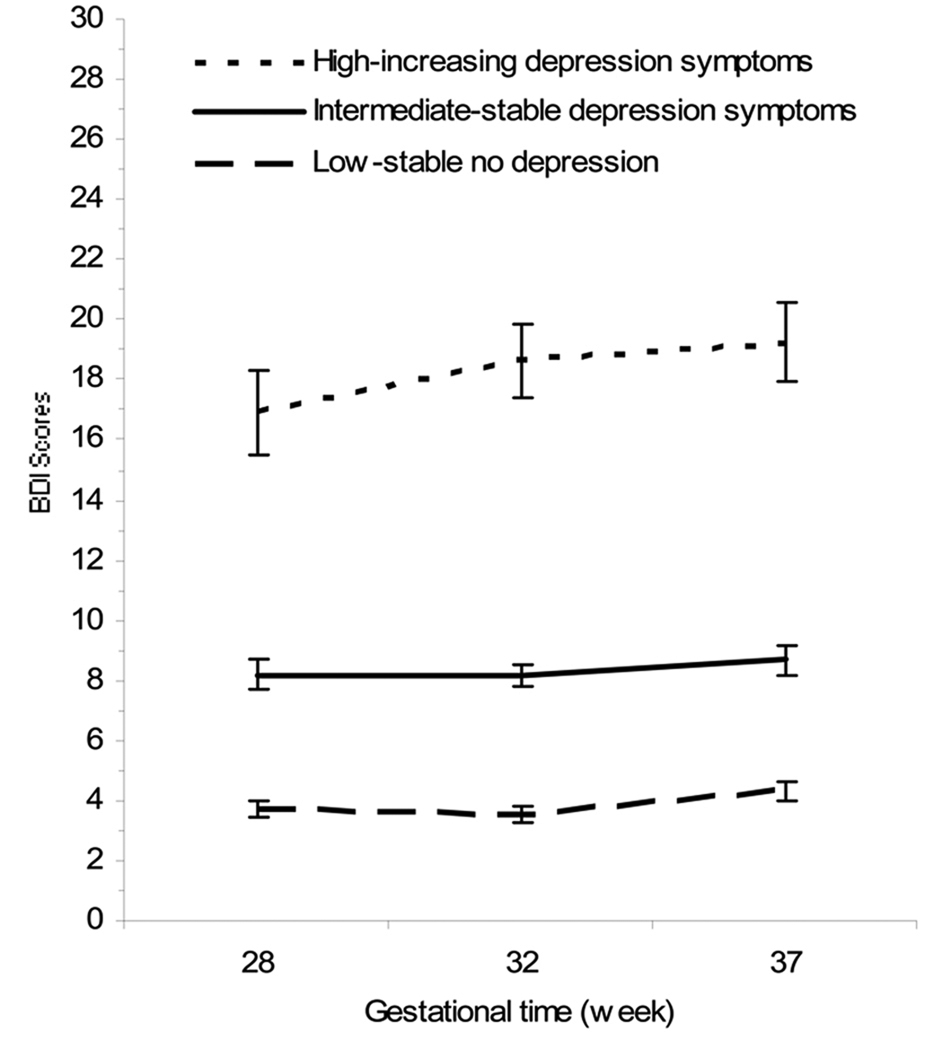
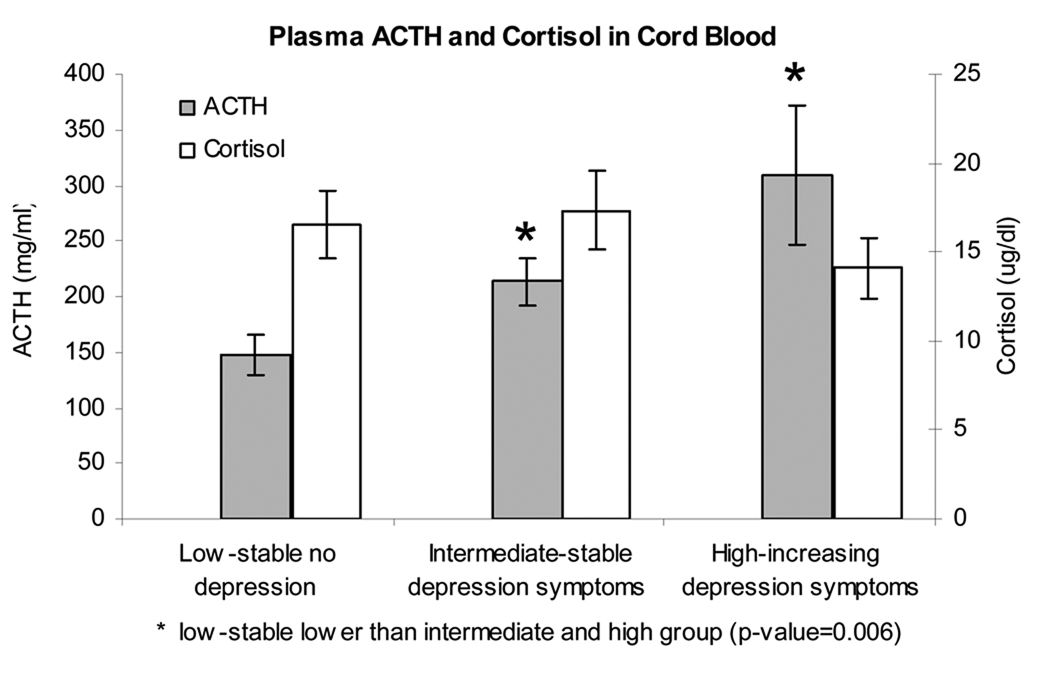
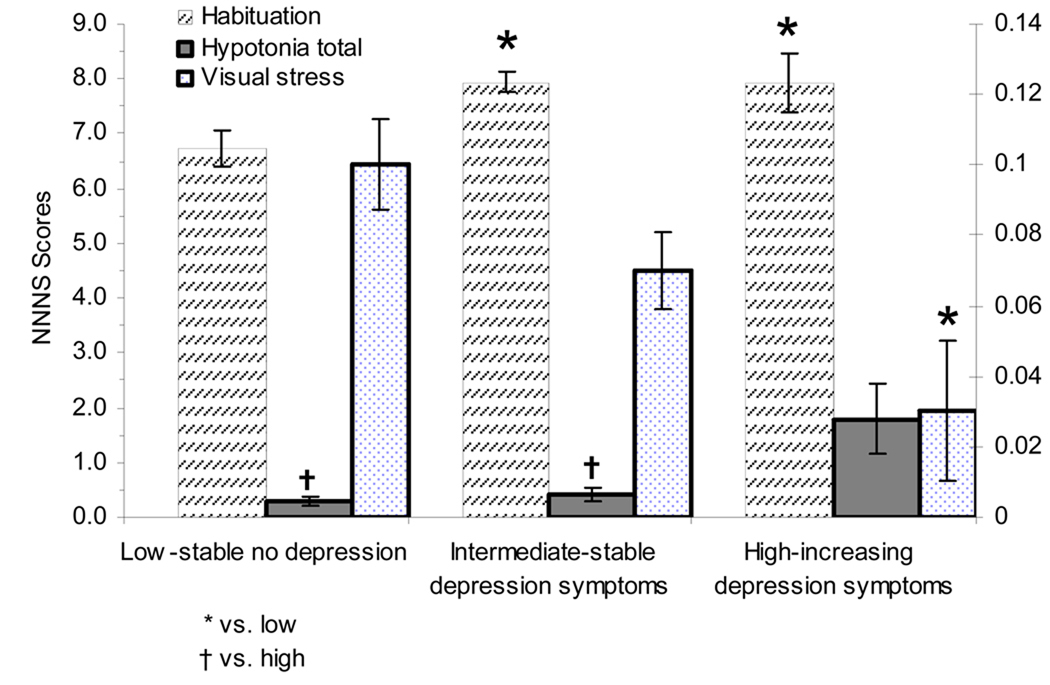
Design: Pregnant women were monitored for depressive symptoms using the Beck Depression Inventory (BDI) at 28, 32, and 37 weeks of gestation and at delivery. A mixture growth curve analysis divided the women into three risk groups: low/stable, intermediate, and high/increasing depression based on BDI scores. The infant neuroendocrine system was examined using cord blood for adrenocorticotrophic hormone (ACTH) and cortisol measurements. Two-week-old infants were examined using Neonatal Intensive Care Unit Neurobehavioral Scale (NNNS).
Results: Infants born to women of the high/increasing depression group had significant ACTH elevation at birth. On NNNS examination, these infants were more hypotonic and habituated to auditory and visual stimuli.
Conclusion: When compared to non-depressed women, maternal depressive symptoms, even in the absence of major depressive disorder, appeared to facilitate a different developmental pathway for the infant LHPA and early neurological development.
Copyright © 2010 Elsevier Inc. All rights reserved.
Figures
References
-
- Abrams SM, Field T, Scafidi F, Prodromidis M. Newborns of depressed mothers. Infant Mental Health Journal. 1995;16:233–239.
-
- Als H, Tronick E, Lester BM, Brazelton TB. The Brazelton Neonatal Behavioral Assessment Scale (BNBAS) Journal of Abnormal Child Psychology. 1977;5:215–231. - PubMed
-
- Als H, Lester BM, Tronick E, Brazelton TB. Towards a research instrument for the assessment of preterm infants’ behavior (A.P.I. B.) In: Fitzgerald HE, Lester BM, Yogman MW, editors. Theory and Research in Behavioral Pediatrics. Plenum Press: New York; 1982. pp. 85–132.
-
- Beck AT, Ward CH, Mendelson M, Mock J, Erbaugh J. An inventory for measuring depression. Archives of General Psychiatry. 1961;4:561–571. - PubMed
Publication types
MeSH terms
Substances
Grants and funding
LinkOut - more resources
Full Text Sources
Medical
