


Small molecule antagonists for CXCR2 and CXCR1 inhibit human colon cancer liver metastases
- PMID: 21035946
- PMCID: PMC2994987
- DOI: 10.1016/j.canlet.2010.10.004
Small molecule antagonists for CXCR2 and CXCR1 inhibit human colon cancer liver metastases
Abstract
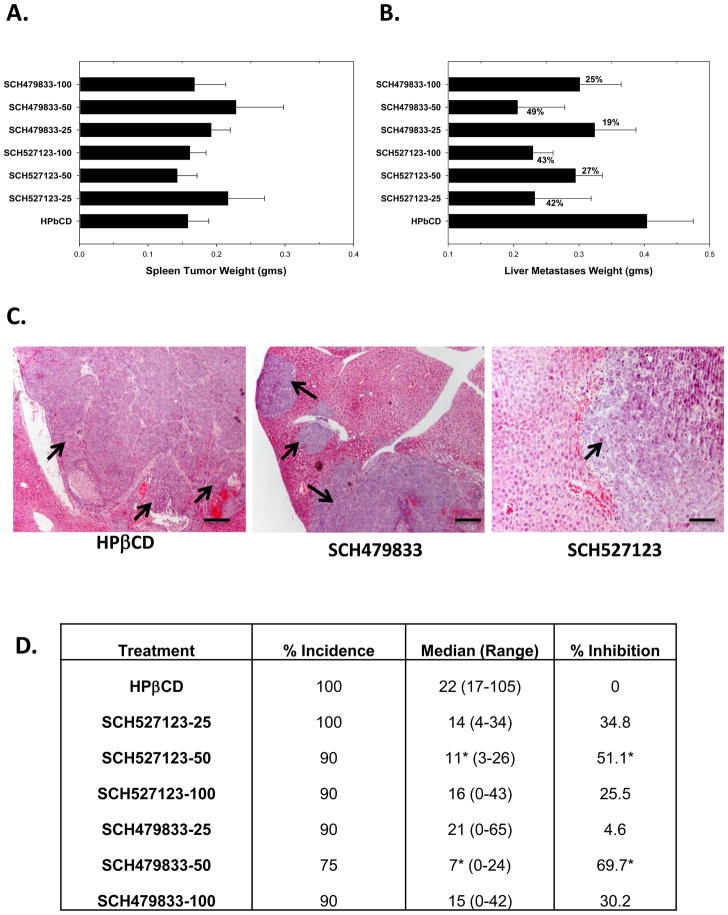
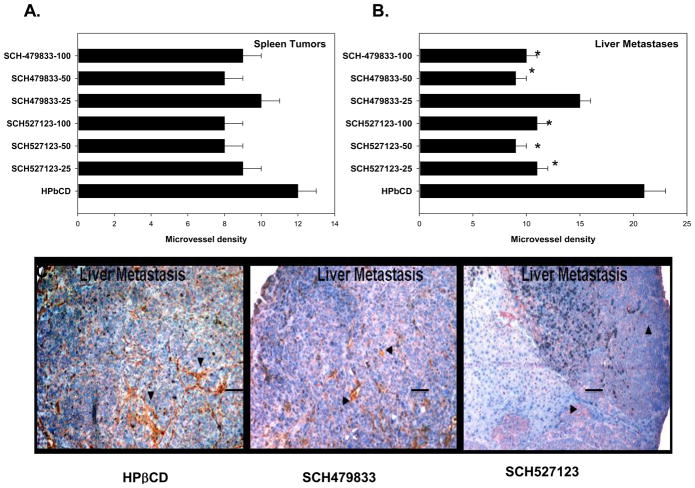
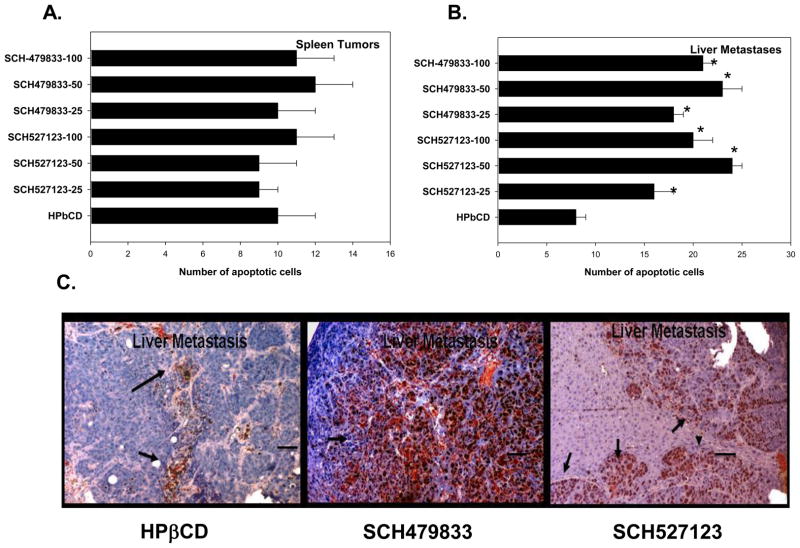
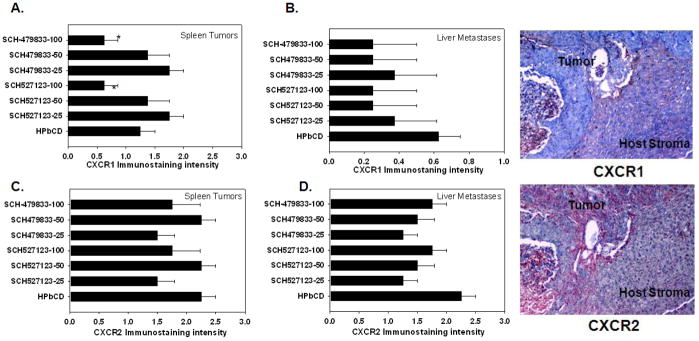
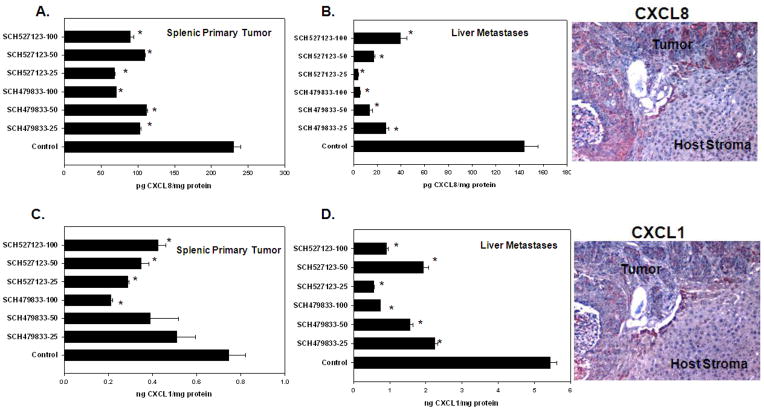
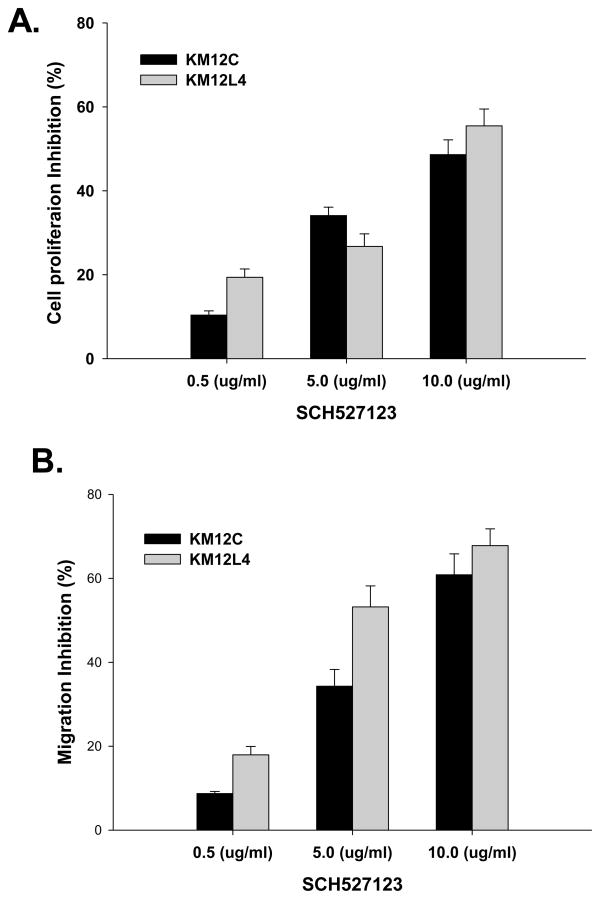
CXCR1 and CXCR2 are G-protein coupled receptors, that have been shown to play important role in tumor growth and metastasis, and are prime targets for the development of novel therapeutics. Here, we report that targeting CXCR2 and CXCR1 activity using orally active small molecule antagonist (SCH-527123, SCH-479833) inhibits human colon cancer liver metastasis mediated by decreased neovascularization and enhanced malignant cell apoptosis. There were no differences in primary tumor growth. These studies demonstrate the important role of CXCR2/1 in colon cancer metastasis and that inhibition of CXCR2 and CXCR1, small molecule antagonists provides a novel therapeutic strategy.
Copyright © 2010 Elsevier Ireland Ltd. All rights reserved.
Conflict of interest statement
None Declared
Figures
References
-
- Jemal A, Siegel R, Xu J, Ward E. Cancer Statistics. CA Cancer J Clin. 2010:2010. - PubMed
-
- Li A, Varney ML, Singh RK. Expression of interleukin 8 and its receptors in human colon carcinoma cells with different metastatic potentials. Clin Cancer Res. 2001;7:3298–3304. - PubMed
-
- Ruffini PA, Morandi P, Cabioglu N, Altundag K, Cristofanilli M. Manipulating the chemokine-chemokine receptor network to treat cancer. Cancer. 2007;109:2392–2404. - PubMed
-
- Matsushima K, Oppenheim JJ. Interleukin 8 and MCAF: novel inflammatory cytokines inducible by IL 1 and TNF. Cytokine. 1989;1:2–13. - PubMed
-
- Rossi D, Zlotnik A. The biology of chemokines and their receptors. Annu Rev Immunol. 2000;18:217–242. - PubMed
Publication types
MeSH terms
Substances
Grants and funding
LinkOut - more resources
Full Text Sources
Other Literature Sources
Medical
Miscellaneous
