A physical map for an Asian malaria mosquito, Anopheles stephensi
- PMID: 21036831
- PMCID: PMC2963963
- DOI: 10.4269/ajtmh.2010.10-0366
A physical map for an Asian malaria mosquito, Anopheles stephensi
Abstract
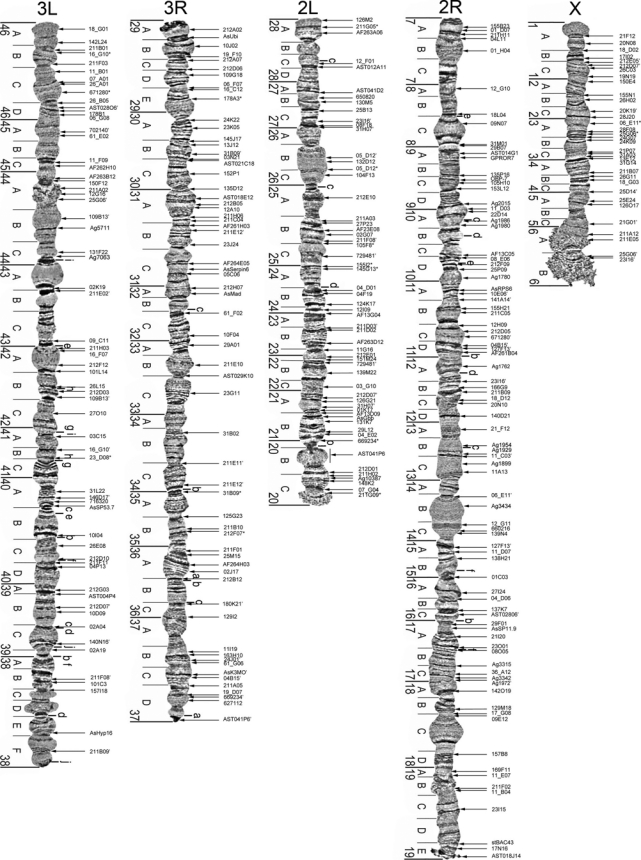
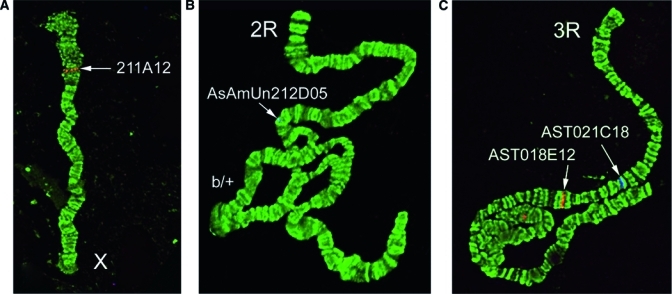
Physical mapping is a useful approach for studying genome organization and evolution as well as for genome sequence assembly. The availability of polytene chromosomes in malaria mosquitoes provides a unique opportunity to develop high-resolution physical maps. We report a 0.6-Mb-resolution physical map consisting of 422 DNA markers hybridized to 379 chromosomal sites of the Anopheles stephensi polytene chromosomes. This makes An. stephensi second only to Anopheles gambiae in density of a physical map among malaria mosquitoes. Three hundred sixty-three (363) probes hybridized to single chromosomal sites, whereas 59 clones yielded multiple signals. This physical map provided a suitable basis for comparative genomics, which was used for determining inversion breakpoints, duplications, and origin of novel genes across species.
Figures
References
-
- Zhimulev IF. Morphology and Structure of Polytene Chromosomes. San Diego, CA: Academic Press; 1996. pp. 1–490. - PubMed
Publication types
MeSH terms
Substances
Grants and funding
LinkOut - more resources
Full Text Sources
Medical
Miscellaneous