


UniPROBE, update 2011: expanded content and search tools in the online database of protein-binding microarray data on protein-DNA interactions
- PMID: 21037262
- PMCID: PMC3013812
- DOI: 10.1093/nar/gkq992
UniPROBE, update 2011: expanded content and search tools in the online database of protein-binding microarray data on protein-DNA interactions
Abstract
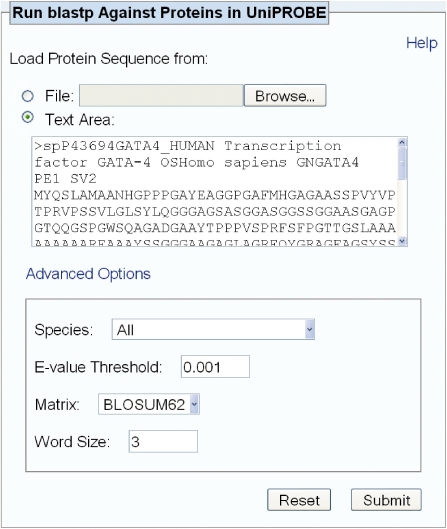
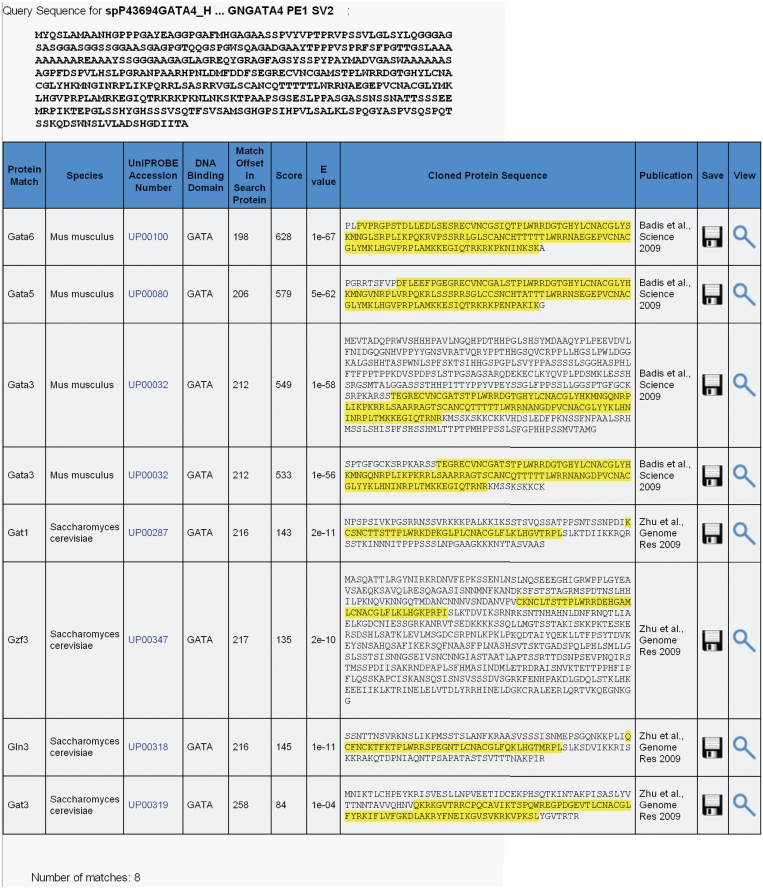
The Universal PBM Resource for Oligonucleotide-Binding Evaluation (UniPROBE) database is a centralized repository of information on the DNA-binding preferences of proteins as determined by universal protein-binding microarray (PBM) technology. Each entry for a protein (or protein complex) in UniPROBE provides the quantitative preferences for all possible nucleotide sequence variants ('words') of length k ('k-mers'), as well as position weight matrix (PWM) and graphical sequence logo representations of the k-mer data. In this update, we describe >130% expansion of the database content, incorporation of a protein BLAST (blastp) tool for finding protein sequence matches in UniPROBE, the introduction of UniPROBE accession numbers and additional database enhancements. The UniPROBE database is available at http://uniprobe.org.
Figures
References
-
- Stormo GD. DNA binding sites: representation and discovery. Bioinformatics. 2000;16:16–23. - PubMed
Publication types
MeSH terms
Substances
LinkOut - more resources
Full Text Sources
Research Materials
Miscellaneous
