


Fever control and application of hypothermia using intravenous cold saline
- PMID: 21037507
- PMCID: PMC3638805
- DOI: 10.1097/PCC.0b013e3181fe27c7
Fever control and application of hypothermia using intravenous cold saline
Abstract
Objectives: To describe the use and feasibility of cold saline to decrease body temperature in pediatric neurocritical care.
Design: Retrospective chart review.
Setting: Pediatric tertiary care university hospital.
Patients: Children between 1 wk and 17 yrs of age admitted to the pediatric intensive care unit with acute brain injury and having received intravenous cold saline between June and August 2009.
Interventions: None.
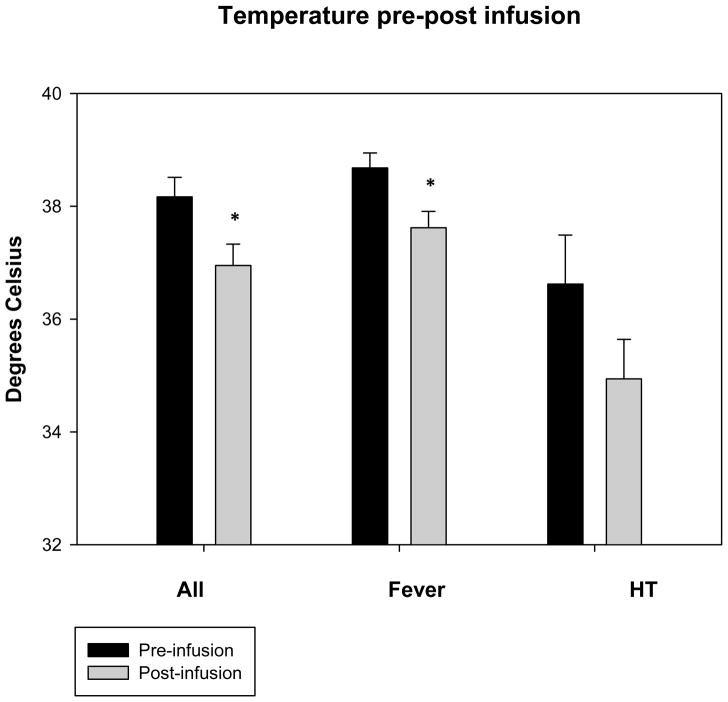
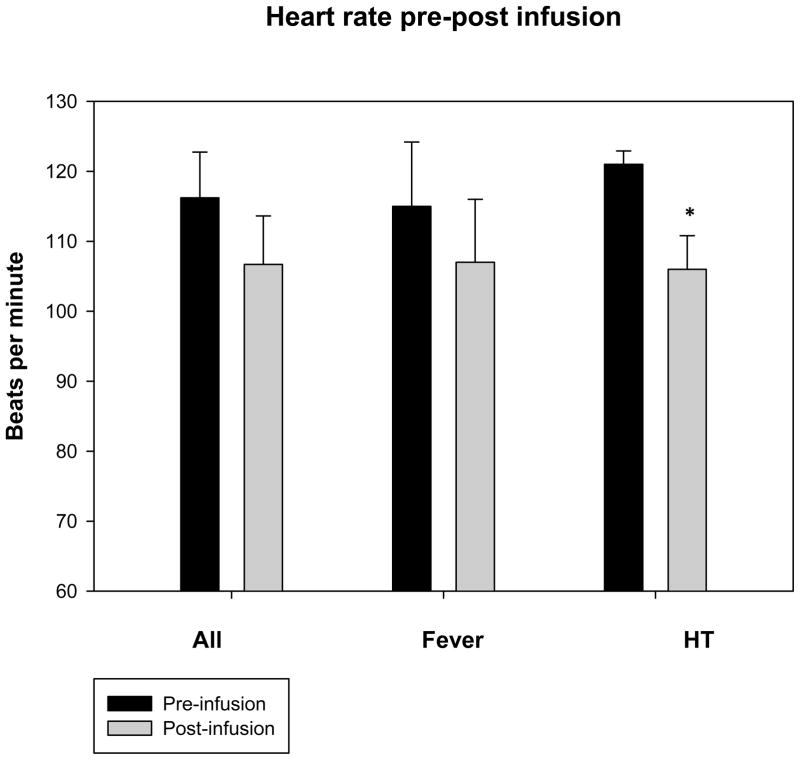
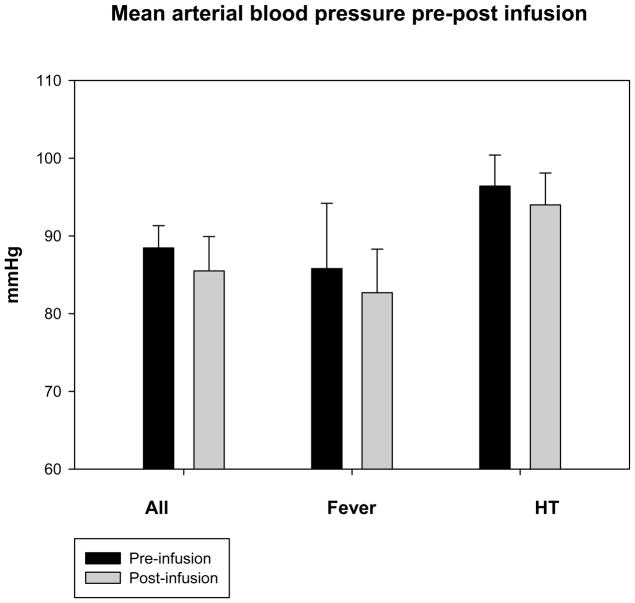
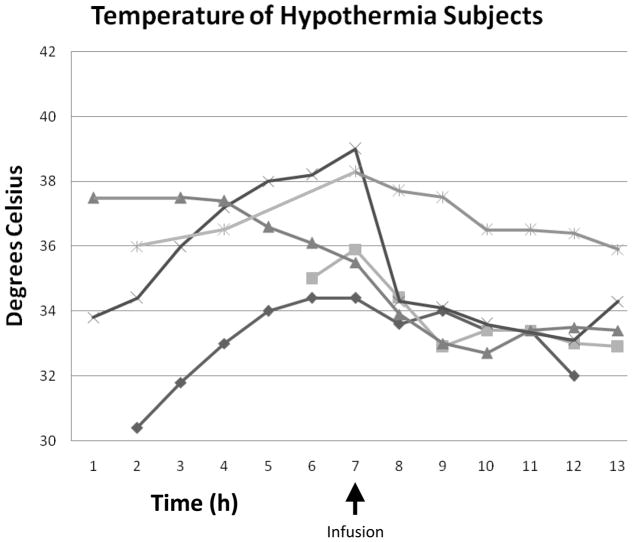
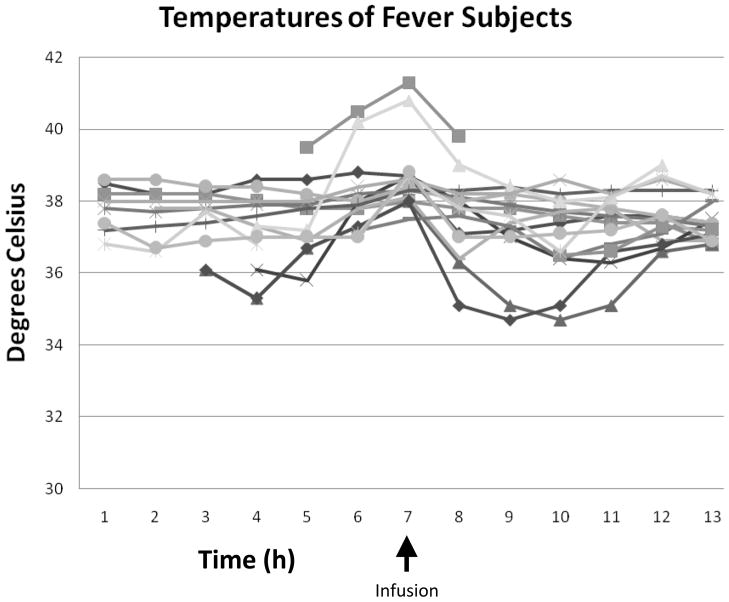
Measurements and main results: Eighteen subjects accounted for 20 infusions with mean infusion volume 18 ± 10 mL/kg. Eight subjects had traumatic brain injury, two had intracranial hemorrhage, six had cardiac arrest, and one each had ischemic stroke and status epilepticus. The mean age was 9.5 ± 4.8 yrs. Temperature decreased from 38.7 ± 1.1°C to 37.7 ± 1.2°C and from 37.0 ± 2.0°C to 35.3 ± 1.6°C 1 hr after infusion for fever (n = 14; p < .05) or hypothermia induction (n = 6; p = .05), respectively. Cold saline was not bloused but rather infused over 10-15 mins. Mean arterial blood pressure and oxygenation parameters (PaO2/FIO2 ratio, mean airway pressure) were unchanged, but heart rate decreased in those with hypothermia (121 ± 4 beats per minute vs. 109 ± 12 beats per minute; p < .05). Serum sodium concentration and international normalized ratio were significantly increased after cold saline infusion. There were no differences between preinfusion and postinfusion serum glucose and hematocrit, or between cerebral perfusion pressure and intracranial pressure in traumatic brain injury patients.
Conclusions: Cold saline was an effective method of reducing temperature in children with acute brain injury. This approach can be considered to treat fever or to induce hypothermia. A prospective study comparing safety and efficacy vs. other cooling measures should be considered.
Figures
References
-
- Polderman KH. Induced hypothermia and fever control for prevention and treatment of neurological injuries. Lancet. 2008 Jun 7;371(9628):1955–1969. - PubMed
-
- Hickey RW, Kochanek PM, Ferimer H, Alexander HL, Garman RH, Graham SH. Induced hyperthermia exacerbates neurologic neuronal histologic damage after asphyxial cardiac arrest in rats. Crit Care Med. 2003 Feb;31(2):531–535. - PubMed
-
- Kim Y, Busto R, Dietrich WD, Kraydieh S, Ginsberg MD. Delayed postischemic hyperthermia in awake rats worsens the histopathological outcome of transient focal cerebral ischemia. Stroke. 1996 Dec;27(12):2274–2280. discussion 2281. - PubMed
-
- Greer DM, Funk SE, Reaven NL, Ouzounelli M, Uman GC. Impact of fever on outcome in patients with stroke and neurologic injury: a comprehensive meta-analysis. Stroke. 2008 Nov;39(11):3029–3035. - PubMed
Publication types
MeSH terms
Substances
Grants and funding
LinkOut - more resources
Full Text Sources
Other Literature Sources
Medical
