


CD1a-autoreactive T cells are a normal component of the human αβ T cell repertoire
- PMID: 21037579
- PMCID: PMC3131223
- DOI: 10.1038/ni.1956
CD1a-autoreactive T cells are a normal component of the human αβ T cell repertoire
Abstract
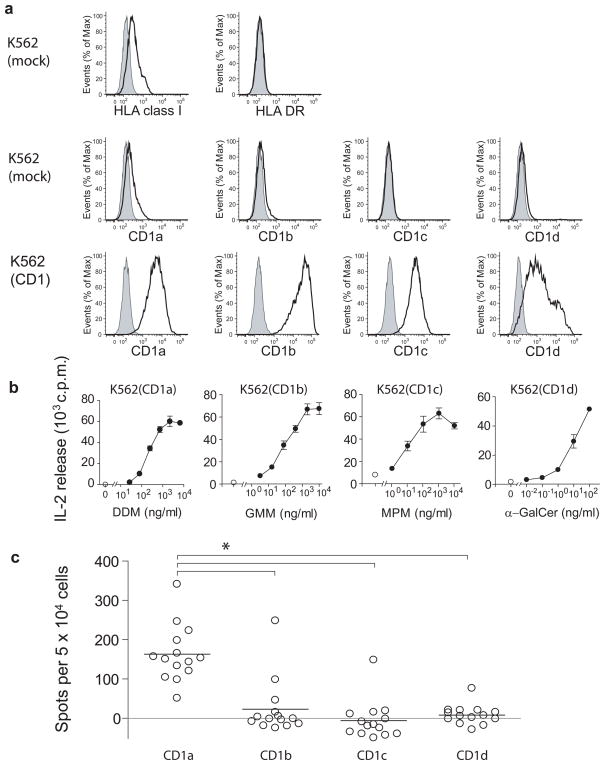
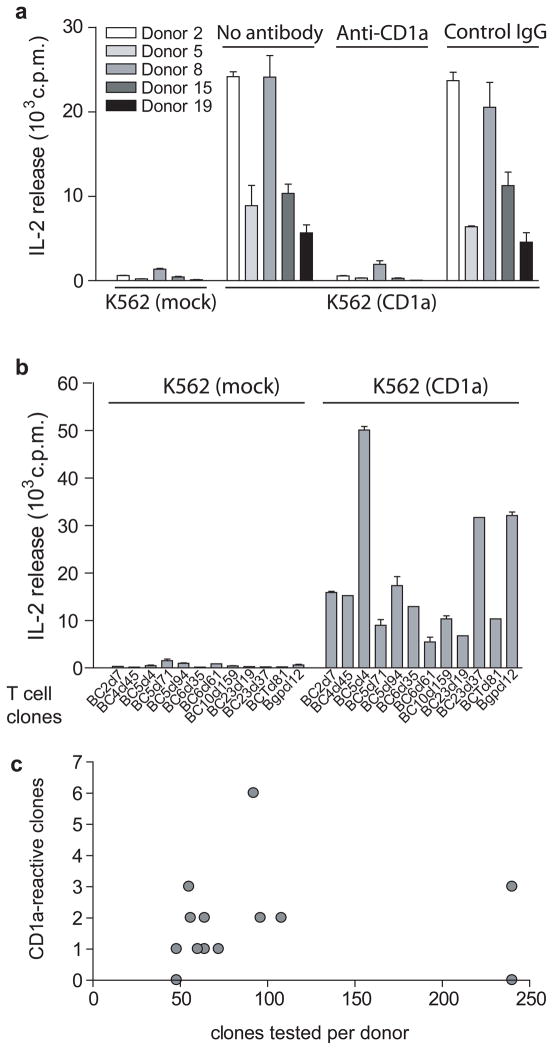
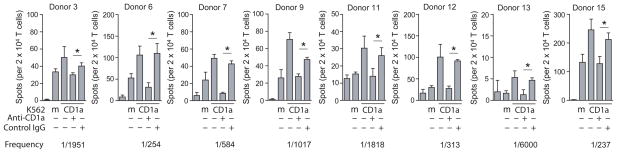
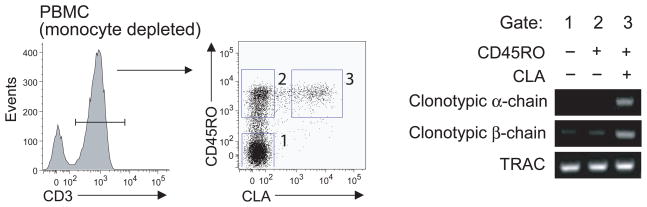
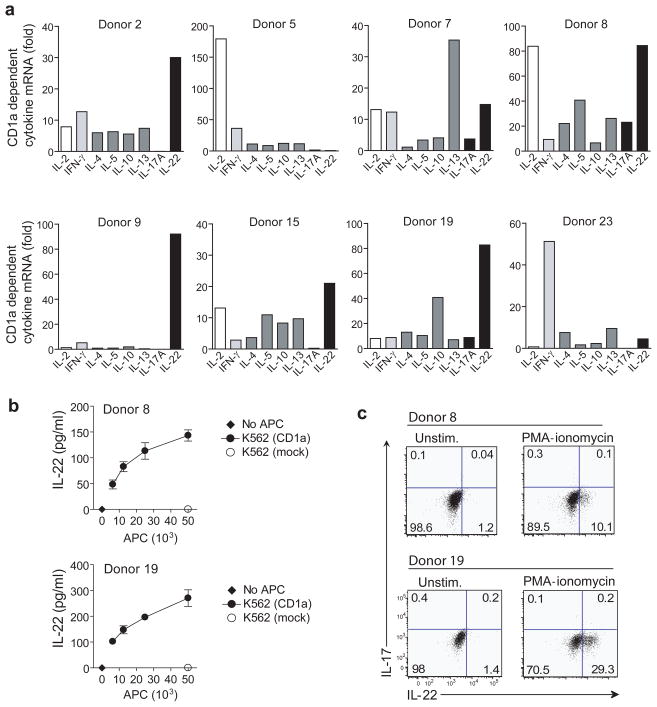
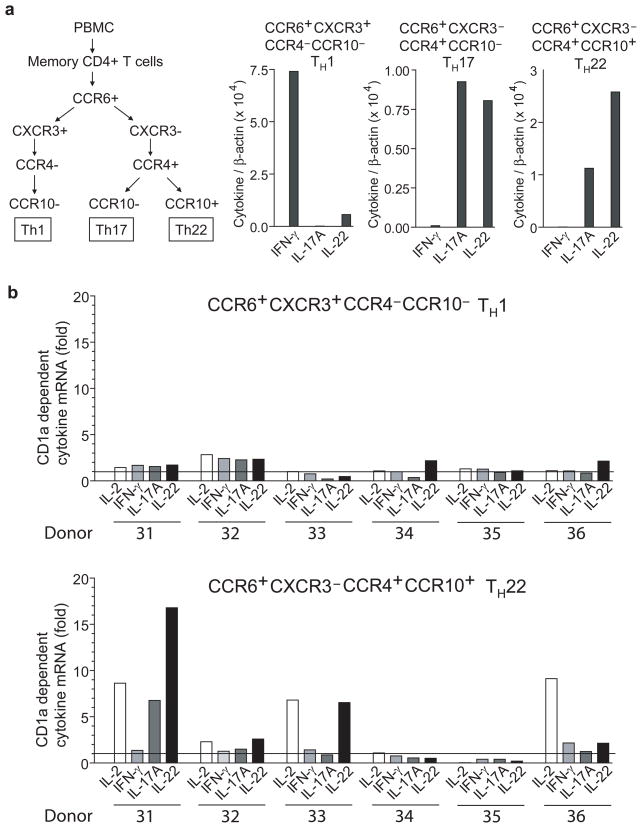
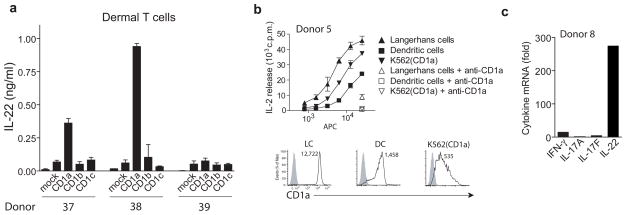
CD1 activates T cells, but the function and size of the possible human T cell repertoires that recognize each of the CD1 antigen-presenting molecules remain unknown. Using an experimental system that bypasses major histocompatibility complex (MHC) restriction and the requirement for defined antigens, we show that polyclonal T cells responded at higher rates to cells expressing CD1a than to those expressing CD1b, CD1c or CD1d. Unlike the repertoire of invariant natural killer T (NKT) cells, the CD1a-autoreactive repertoire contained diverse T cell antigen receptors (TCRs). Functionally, many CD1a-autoreactive T cells homed to skin, where they produced interleukin 22 (IL-22) in response to CD1a on Langerhans cells. The strong and frequent responses among genetically diverse donors define CD1a-autoreactive cells as a normal part of the human T cell repertoire and CD1a as a target of the T(H)22 subset of helper T cells.
Conflict of interest statement
Competing financial interests
The authors declare no competing financial interests.
Figures
Comment in
-
Skin function for human CD1a-reactive T cells.Nat Immunol. 2010 Dec;11(12):1079-80. doi: 10.1038/ni1210-1079. Nat Immunol. 2010. PMID: 21079630 Review.
References
-
- Fowlkes BJ, et al. A novel population of T-cell receptor alpha beta-bearing thymocytes which predominantly expresses a single V beta gene family. Nature. 1987;329:251–254. - PubMed
Publication types
MeSH terms
Substances
Grants and funding
LinkOut - more resources
Full Text Sources
Other Literature Sources
Research Materials
