


Adult depression-like behavior, amygdala and olfactory cortex functions are restored by odor previously paired with shock during infant's sensitive period attachment learning
- PMID: 21037982
- PMCID: PMC2964861
- DOI: 10.1016/j.dcn.2010.07.005
Adult depression-like behavior, amygdala and olfactory cortex functions are restored by odor previously paired with shock during infant's sensitive period attachment learning
Abstract
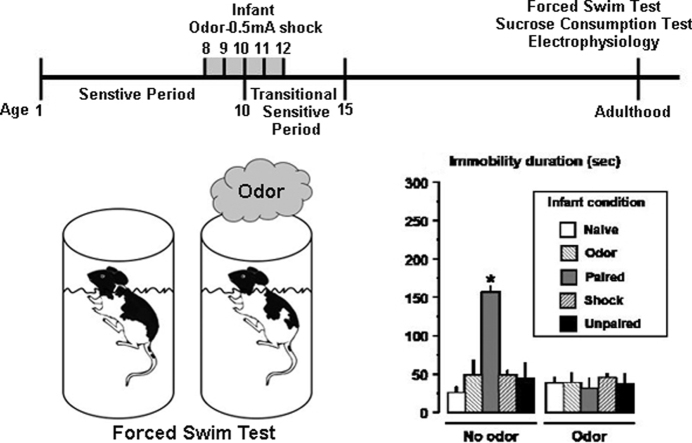
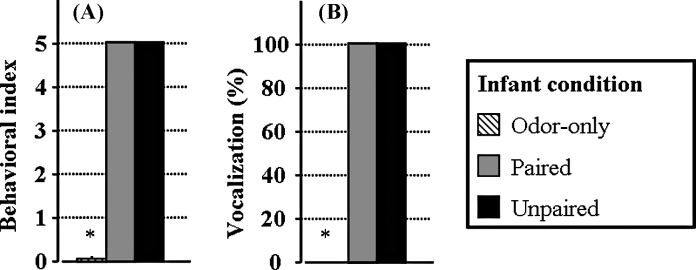
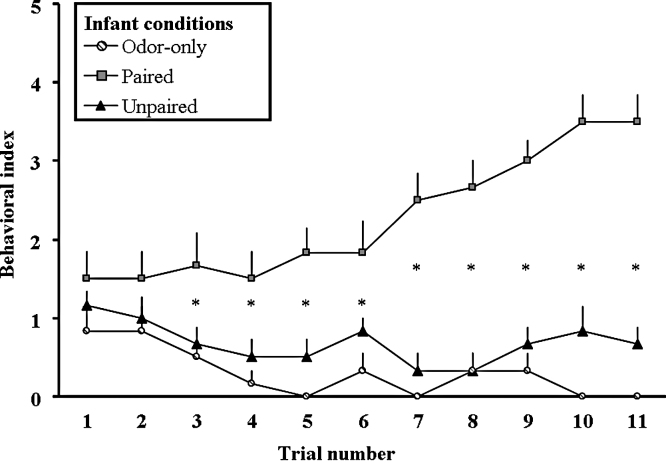
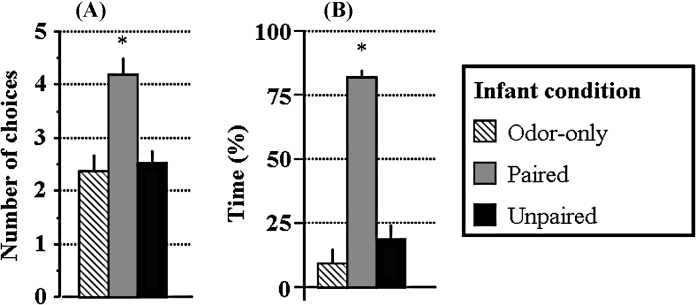
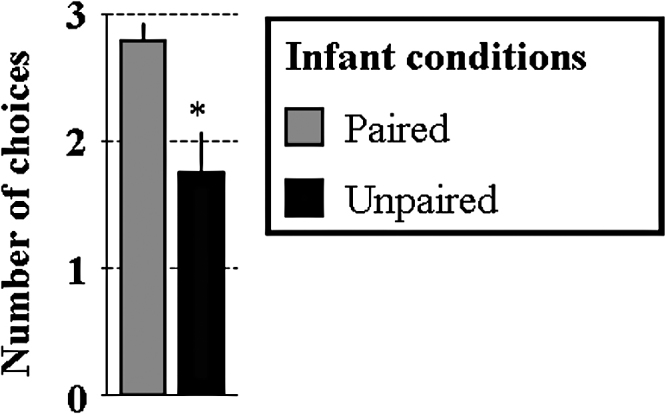
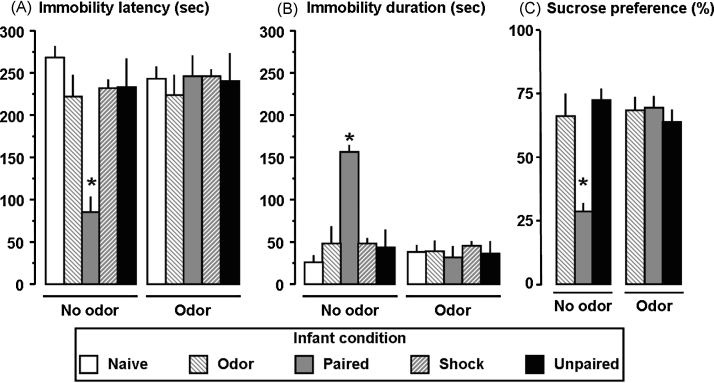
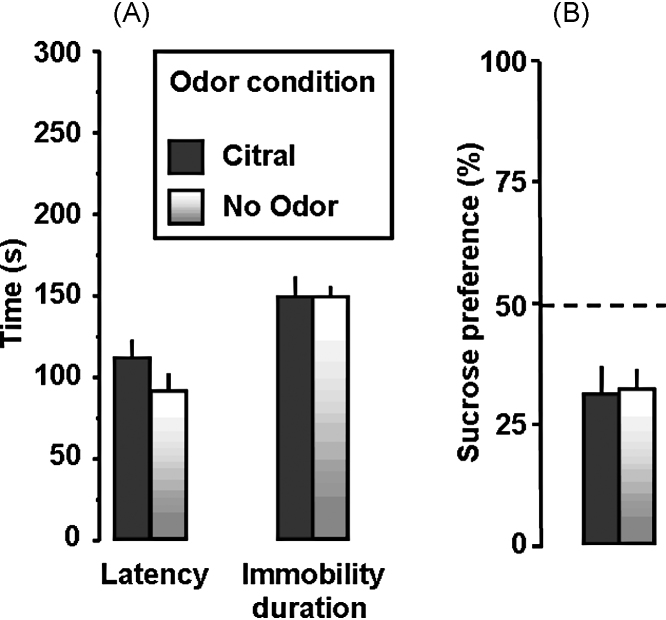
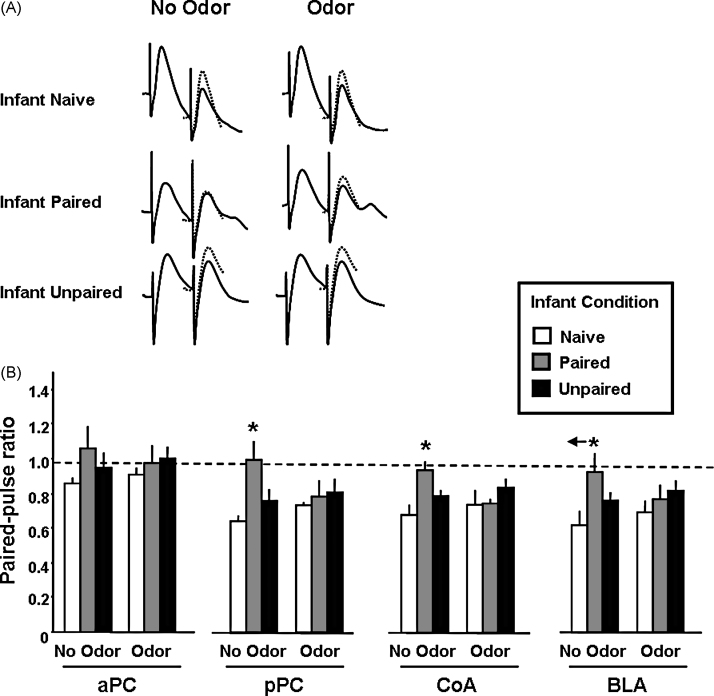
Maltreatment from the caregiver induces vulnerability to later life psychopathologies, yet attraction and comfort is sometimes provided by cues associated with early life maltreatment. We used a rat model of early life maltreatment with odor-0.5 mA shock conditioning to produce depressive-like behaviors and questioned whether stimuli associated with maltreatment would restore emotional neurobehavioral function to control levels. Pups received daily novel odor-0.5 mA shock conditioning from postnatal day 8 to 12. This procedure produces a new maternal odor that controls pups' attachment behaviors. In adulthood, either with or without the infant odor, animals received a Forced Swim Test, Sucrose Preference Test or assessment of amygdala and olfactory system functioning using field potential signal evoked by olfactory bulb paired-pulse electrical stimulation. Following neonatal odor-shock pairings, but not unpaired controls, adults without the odor present showed increased depression-like behavior in the Forced Swim Test and Sucrose Preference Test and a deficit in paired-pulse inhibition in amygdala and piriform (olfactory) cortex. All effects were brought to control levels when the infant conditioned odor was presented during behavioral and neural tests. The ability of cues associated with early life maltreatment to normalize behavior and amygdala activity suggests these cues provide adaptive value in adulthood.
Keywords: amygdala; depression; infant experiences; odor-shock pairing; plasticity; safety signal.
Figures
References
-
- Anisman H., Zaharia M.D., Meaney M.J., Merali Z. Do early-life events permanently alter behavioral and hormonal responses to stressors? Int. J. Dev. Neurosci. 1998;16:149–164. - PubMed
-
- Barr G.A. Ontogeny of nociception and antinociception. NIDA Res. Monogr. 1995;158:172–201. - PubMed
-
- Bell R.W., Denenberg V.H. The interrelationships of shock and critical periods in infancy as they affect adult learning and activity. Anim. Behav. 1962;11:21–27.
-
- Blais I., Terkel J., Goldblatt A. Long-term impact of early olfactory experience on later olfactory conditioning. Dev. Psychobiol. 2006;48:501–507. - PubMed
Publication types
MeSH terms
Grants and funding
LinkOut - more resources
Full Text Sources
Medical
