Fruit juice inhibition of uptake transport: a new type of food-drug interaction
- PMID: 21039758
- PMCID: PMC2997304
- DOI: 10.1111/j.1365-2125.2010.03722.x
Fruit juice inhibition of uptake transport: a new type of food-drug interaction
Abstract
A new type of interaction in which fruit juices diminish oral drug bioavailability through inhibition of uptake transport is the focus of this review. The discovery was based on an opposite to anticipated finding when assessing the possibility of grapefruit juice increasing oral fexofenadine bioavailability in humans through inhibition of intestinal MDR1-mediated efflux transport. In follow-up investigations, grapefruit or orange juice at low concentrations potentially and selectively inhibited in vitro OATP1A2-mediated uptake compared with MDR1-caused efflux substrate transport. These juices at high volume dramatically depressed oral fexofenadine bioavailability. Grapefruit was the representative juice to characterize the interaction subsequently. A volume-effect relationship study using a normal juice amount halved average fexofenadine absorption. Individual variability and reproducibility data indicated the clinical interaction involved direct inhibition of intestinal OATP1A2. Naringin was a major causal component suggesting that other flavonoids in fruits and vegetables might also produce the effect. Duration of juice clinical inhibition of fexofenadine absorption lasted more than 2 h but less than 4 h indicating the interaction was avoidable with appropriate interval of time between juice and drug consumption. Grapefruit juice lowered the oral bioavailability of several medications transported by OATP1A2 (acebutolol, celiprolol, fexofenadine, talinolol, L-thyroxine) while orange juice did the same for others (atenolol, celiprolol, ciprofloxacin, fexofenadine). Juice clinical inhibition of OATP2B1 was unresolved while that of OATP1B1 seemed unlikely. The interaction between grapefruit juice and etoposide also seemed relevant. Knowledge of both affected uptake transporter and drug hydrophilicity assisted prediction of the clinical interaction with grapefruit or orange juice.
© 2010 The Author. British Journal of Clinical Pharmacology © 2010 The British Pharmacological Society.
Figures
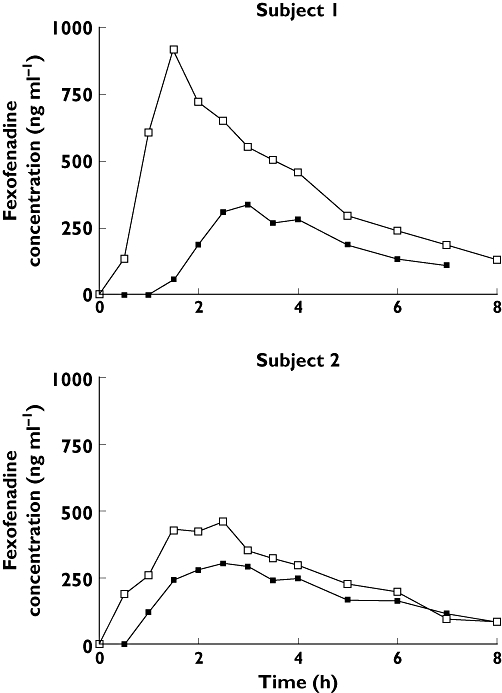
 ); 300 ml GFJ (
 )
)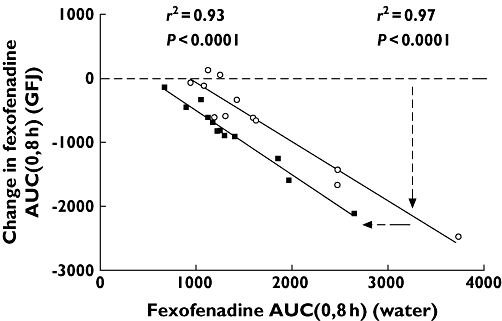
 ); GFJ 300 ml (○) Reprinted with permission from Clinical Pharmacology & Therapeutics
References
-
- Levy RH, Thummel KE, Trager WF, Hansten PD, Eichelbaum M. Metabolic Drug Interactions. 1st. Philadelphia, PA: Lippincott Williams & Wilkins; 2000.
-
- Wilkinson GR. Drug metabolism and variability among patients in drug response. N Engl J Med. 2005;352:2211–21. Review. - PubMed
-
- Dresser GK, Spence JD, Bailey DG. Pharmacokinetic-pharmacodynamic consequences and clinical relevance of cytochrome P450 3A4 inhibition. Clin Pharmacokinet. 2000;38:41–57. Review. - PubMed
-
- Dresser GK, Bailey DG. A basic conceptual and practical overview of interactions with highly prescribed drugs. Can J Clin Pharmacol. 2002;9:191–8. - PubMed
-
- Edgar B, Regardh CG, Johnsson G, Johansson L, Lundborg P, Löfberg I, Rönn O. Felodipine kinetics in healthy man. Clin Pharmacol Ther. 1985;38:205–11. - PubMed
Publication types
MeSH terms
Substances
LinkOut - more resources
Full Text Sources
Molecular Biology Databases