


Subcellular communication through RNA transport and localized protein synthesis
- PMID: 21040295
- PMCID: PMC3058479
- DOI: 10.1111/j.1600-0854.2010.01118.x
Subcellular communication through RNA transport and localized protein synthesis
Abstract
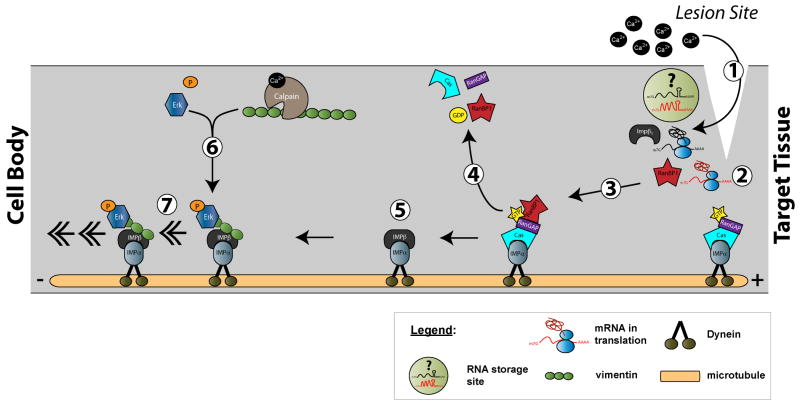
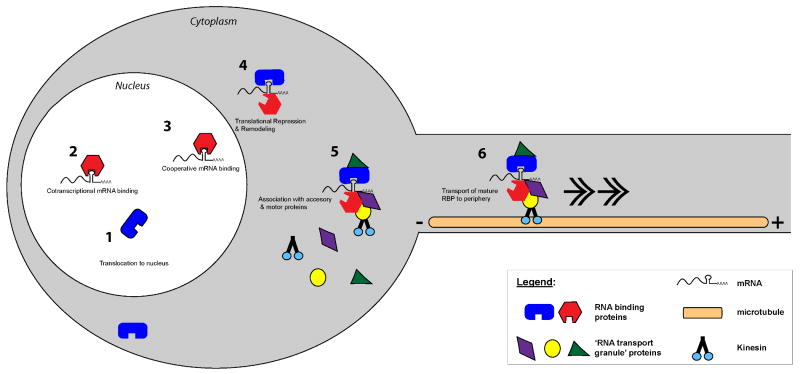
Interest in the mechanisms of subcellular localization of mRNAs and the effects of localized translation has increased over the last decade. Polarized eukaryotic cells transport mRNA-protein complexes to subcellular sites, where translation of the mRNAs can be regulated by physiological stimuli. The long distances separating distal neuronal processes from their cell body have made neurons a useful model system for dissecting mechanisms of mRNA trafficking. Both the dendritic and axonal processes of neurons have been shown to have protein synthetic capacity and the diversity of mRNAs discovered in these processes continues to increase. Localized translation of mRNAs requires a co-ordinated effort by the cell body to target both mRNAs and necessary translational machinery into distal sites, as well as temporal control of individual mRNA translation. In addition to altering protein composition locally at the site of translation, some of the proteins generated in injured nerves retrogradely signal to the cell body, providing both temporal and spatial information on events occurring at distant subcellular sites.
© 2010 John Wiley & Sons A/S.
Figures
References
-
- Lecuyer E, Yoshida H, Parthasarathy N, Alm C, Babak T, Cerovina T, Hughes TR, Tomancak P, Krause HM. Global analysis of mRNA localization reveals a prominent role in organizing cellular architecture and function. Cell. 2007;131(1):174–187. - PubMed
-
- Paquin N, Chartrand P. Local regulation of mRNA translation: new insights from the bud. Trends Cell Biol. 2008;18(3):105–111. - PubMed
Publication types
MeSH terms
Substances
Grants and funding
LinkOut - more resources
Full Text Sources
