


Exposure to a social stressor alters the structure of the intestinal microbiota: implications for stressor-induced immunomodulation
- PMID: 21040780
- PMCID: PMC3039072
- DOI: 10.1016/j.bbi.2010.10.023
Exposure to a social stressor alters the structure of the intestinal microbiota: implications for stressor-induced immunomodulation
Abstract
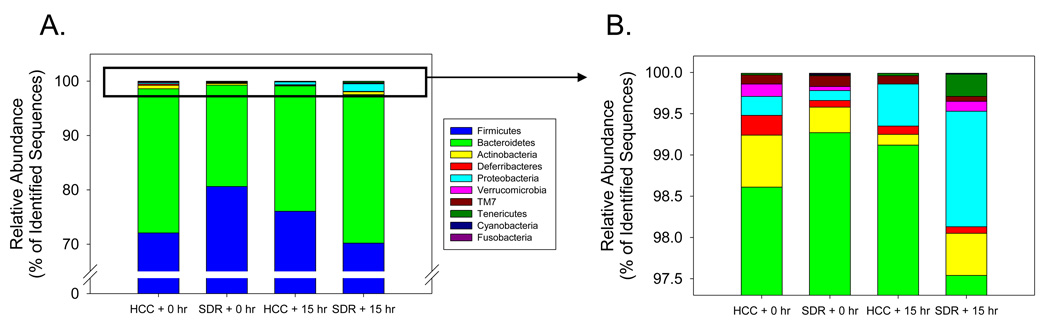
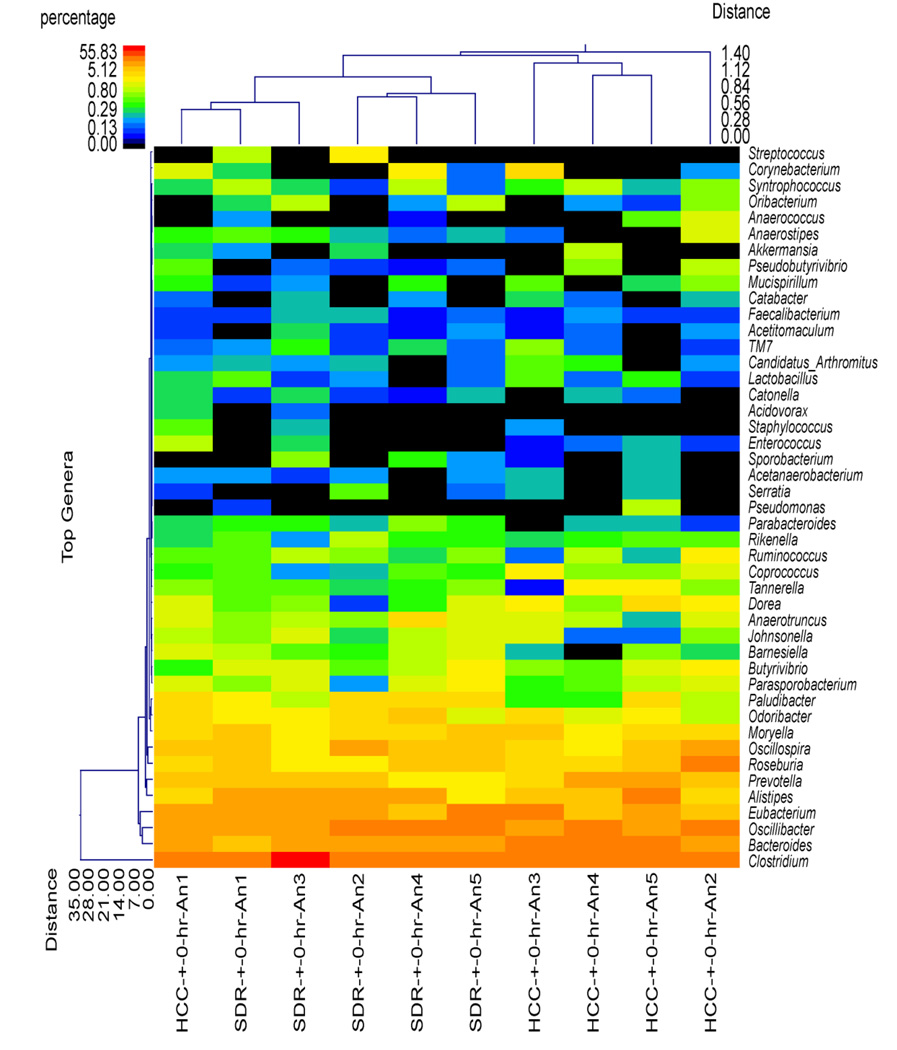
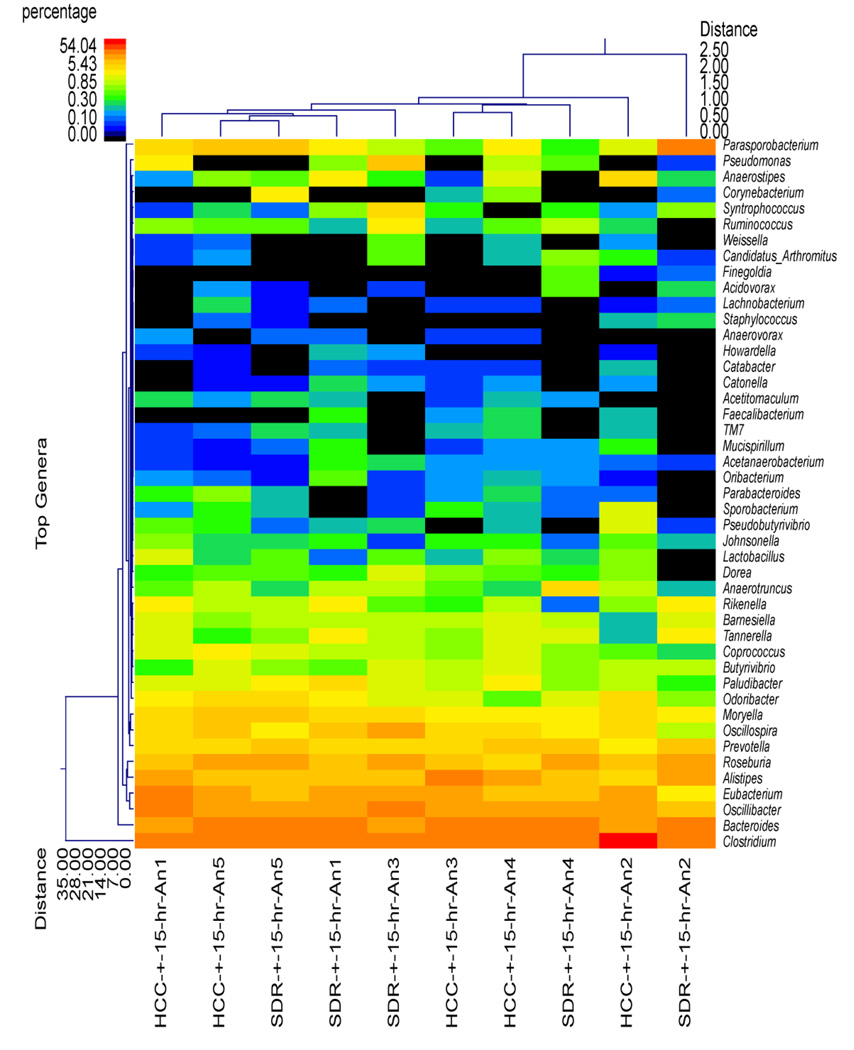
The bodies of most animals are populated by highly complex and genetically diverse communities of microorganisms. The majority of these microbes reside within the intestines in largely stable but dynamically interactive climax communities that positively interact with their host. Studies from this laboratory have shown that stressor exposure impacts the stability of the microbiota and leads to bacterial translocation. The biological importance of these alterations, however, is not well understood. To determine whether the microbiome contributes to stressor-induced immunoenhancement, mice were exposed to a social stressor called social disruption (SDR), that increases circulating cytokines and primes the innate immune system for enhanced reactivity. Bacterial populations in the cecum were characterized using bacterial tag-encoded FLX amplicon pyrosequencing. Stressor exposure significantly changed the community structure of the microbiota, particularly when the microbiota were assessed immediately after stressor exposure. Most notably, stressor exposure decreased the relative abundance of bacteria in the genus Bacteroides, while increasing the relative abundance of bacteria in the genus Clostridium. The stressor also increased circulating levels of IL-6 and MCP-1, which were significantly correlated with stressor-induced changes to three bacterial genera (i.e., Coprococcus, Pseudobutyrivibrio, and Dorea). In follow up experiments, mice were treated with an antibiotic cocktail to determine whether reducing the microbiota would abrogate the stressor-induced increases in circulating cytokines. Exposure to SDR failed to increase IL-6 and MCP-1 in the antibiotic treated mice. These data show that exposure to SDR significantly affects bacterial populations in the intestines, and remarkably also suggest that the microbiota are necessary for stressor-induced increases in circulating cytokines.
Copyright © 2010 Elsevier Inc. All rights reserved.
Figures


Comment in
-
The gut microbiota: a new player in the innate immune stress response?Brain Behav Immun. 2011 Mar;25(3):395-6. doi: 10.1016/j.bbi.2010.12.007. Epub 2010 Dec 17. Brain Behav Immun. 2011. PMID: 21168480 No abstract available.
References
-
- Acosta-Martinez V, Dowd S, un Y, llen V. Tag-encoded pyrosequencing analysis of bacterial diversity in a single soil type as affected by management and land use. Soil Biology and Biochemistry. 2008;40:2762–2770.
-
- Ando T, Brown RF, Berg RD, Dunn AJ. Bacterial translocation can increase plasma corticosterone and brain catecholamine and indoleamine metabolism. Am. J. Physiol Regul. Integr. Comp Physiol. 2000;279:R2164–R2172. - PubMed
-
- Avitsur R, Stark JL, Sheridan JF. Social stress induces glucocorticoid resistance in subordinate animals. Horm. Behav. 2001;39:247–257. - PubMed
Publication types
MeSH terms
Grants and funding
LinkOut - more resources
Full Text Sources
Other Literature Sources
Medical
Miscellaneous
