


Single-cell optogenetic excitation drives homeostatic synaptic depression
- PMID: 21040851
- PMCID: PMC3111089
- DOI: 10.1016/j.neuron.2010.09.020
Single-cell optogenetic excitation drives homeostatic synaptic depression
Abstract
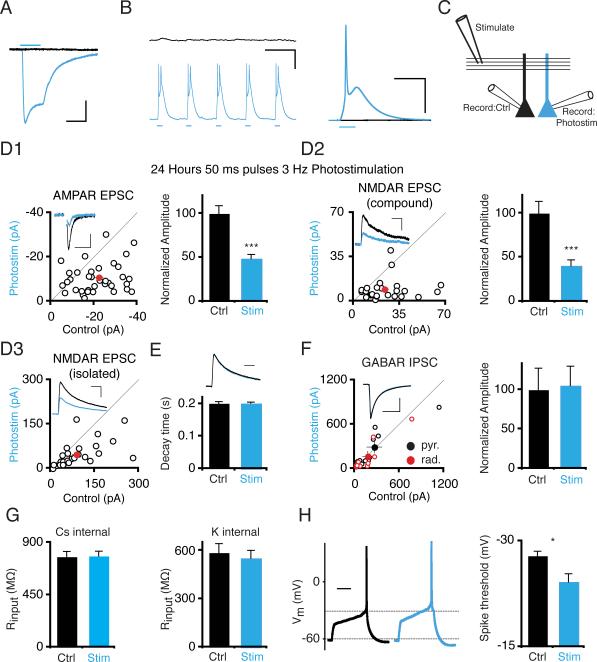
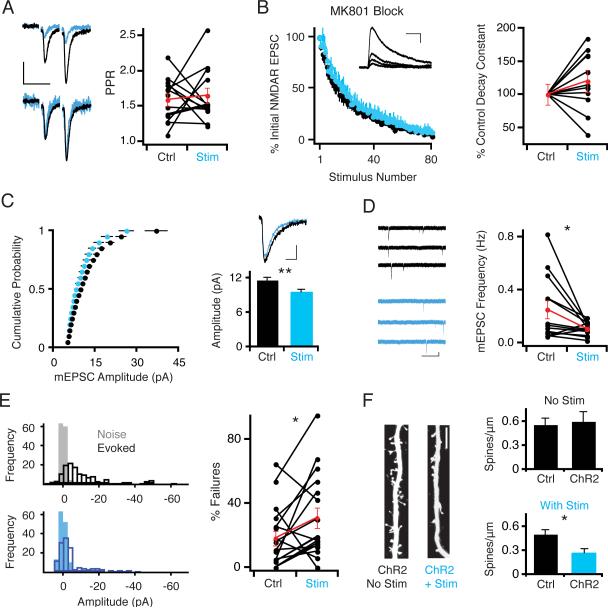
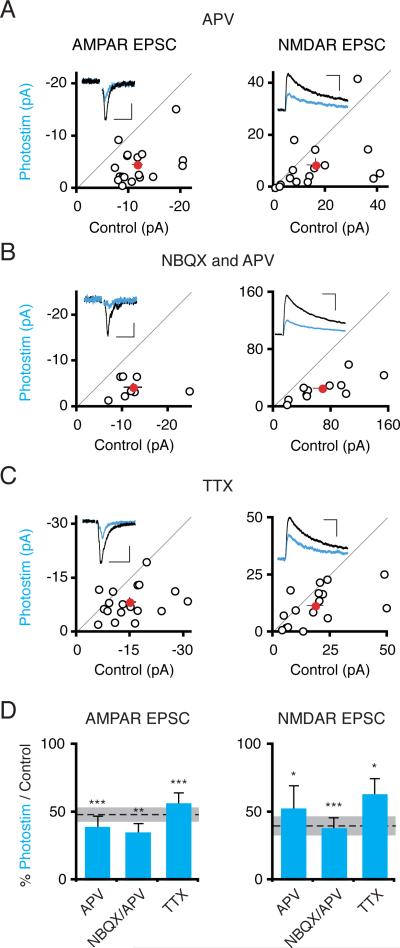
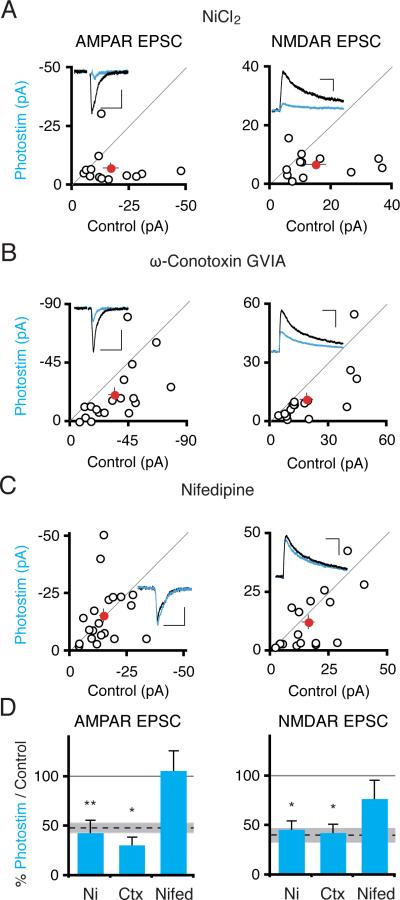
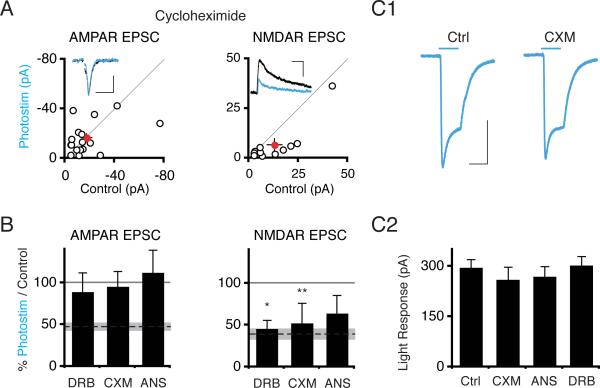
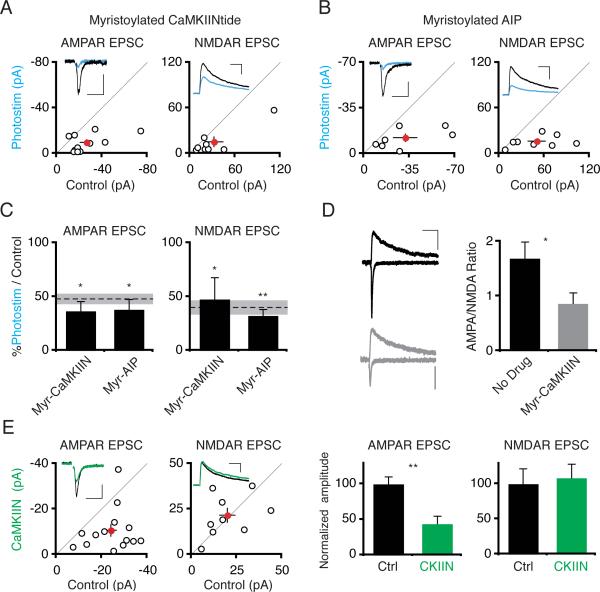
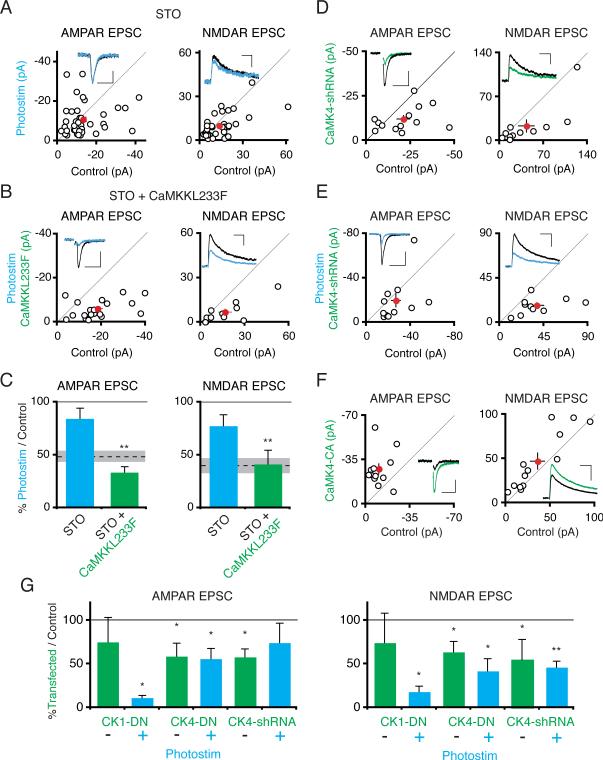
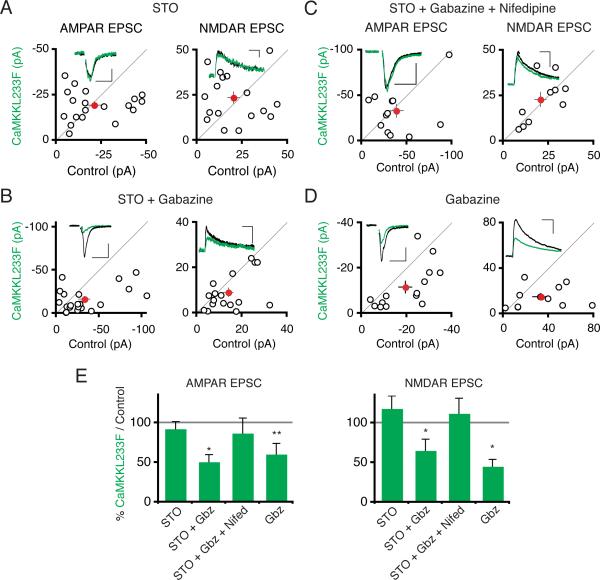
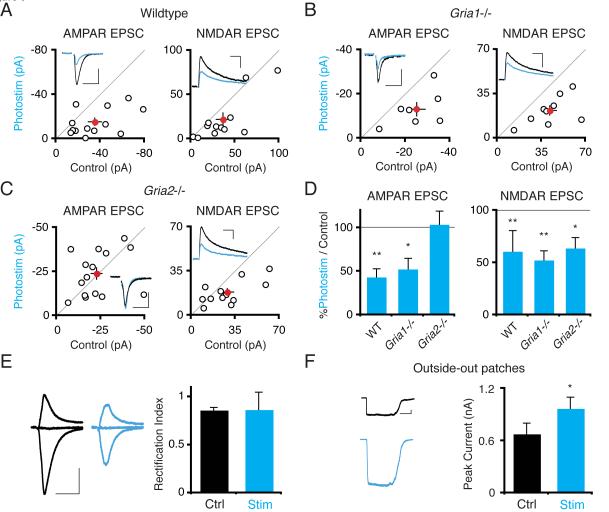
Homeostatic processes have been proposed to explain the discrepancy between the dynamics of synaptic plasticity and the stability of brain function. Forms of synaptic plasticity such as long-term potentiation alter synaptic activity in a synapse- and cell-specific fashion. Although network-wide excitation triggers compensatory homeostatic changes, it is unknown whether neurons initiate homeostatic synaptic changes in response to cell-autonomous increases in excitation. Here we employ optogenetic tools to cell-autonomously excite CA1 pyramidal neurons and find that a compensatory postsynaptic depression of both AMPAR and NMDAR function results. Elevated calcium influx through L-type calcium channels leads to activation of a pathway involving CaM kinase kinase and CaM kinase 4 that induces synaptic depression of AMPAR and NMDAR responses. The synaptic depression of AMPARs but not of NMDARs requires protein synthesis and the GluA2 AMPAR subunit, indicating that downstream of CaM kinase activation divergent pathways regulate homeostatic AMPAR and NMDAR depression.
Copyright © 2010 Elsevier Inc. All rights reserved.
Figures
Comment in
-
Homeostatic plasticity: single hippocampal neurons see the light.Neuron. 2010 Nov 4;68(3):326-8. doi: 10.1016/j.neuron.2010.10.025. Neuron. 2010. PMID: 21040836
-
Plasticity: Don't get too excited!Nat Rev Neurosci. 2011 Jan;12(1):6. doi: 10.1038/nrn2966. Nat Rev Neurosci. 2011. PMID: 21218573 No abstract available.
References
Publication types
MeSH terms
Substances
Grants and funding
LinkOut - more resources
Full Text Sources
Other Literature Sources
Miscellaneous
