


The discovery and development of analgesics: new mechanisms, new modalities
- PMID: 21041957
- PMCID: PMC2966322
- DOI: 10.1172/JCI43195
The discovery and development of analgesics: new mechanisms, new modalities
Abstract
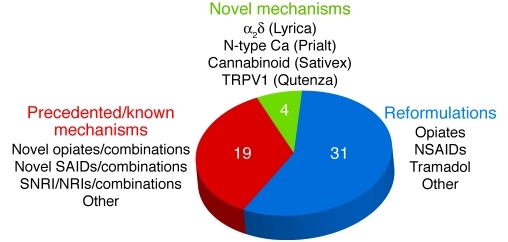
Despite intensive research into pain mechanisms and significant investment in research and development, the majority of analgesics available to prescribers and patients are based on mechanistic classes of compounds that have been known for many years. With considerable ingenuity and innovation, researchers continue to make the best of the mechanistic approaches available, with novel formulations, routes of administration, and combination products. Here we review some of the mechanisms and modalities of analgesics that have recently entered into clinical development, which, coupled with advances in the understanding of the pathophysiology of chronic pain, will hopefully bring the promise of new therapeutics that have the potential to provide improved pain relief for those many patients whose needs remain poorly met.
Figures
References
-
- Bjordal JM, Klovning A, Ljunggren AE, Slordal L. Short-term efficacy of pharmacotherapeutic interventions in osteoarthritic knee pain: a meta-analysis of randomised placebo-controlled trials. Eur J Pain. 2007;11(2):125–138. - PubMed
-
- Moore RA, Derry S, Makinson GT, McQuay HJ. Tolerability and adverse events in clinical trials of celecoxib in osteoarthritis and rheumatoid arthritis: systematic review and meta-analysis of information from company clinical trial reports. Arthritis Res Ther. 2005;7(3):R644–R665. doi: 10.1186/ar1704. - DOI - PMC - PubMed
Publication types
MeSH terms
Substances
LinkOut - more resources
Full Text Sources
Medical
Molecular Biology Databases
Miscellaneous
