


A prospective echocardiographic evaluation of pulmonary hypertension in chronic hemodialysis patients in the United States: prevalence and clinical significance
- PMID: 21042428
- PMCID: PMC2962323
- DOI: 10.2147/IJGM.S12946
A prospective echocardiographic evaluation of pulmonary hypertension in chronic hemodialysis patients in the United States: prevalence and clinical significance
Abstract
Background: Pulmonary hypertension (PH), a disease which carries substantial morbidity and mortality, has been reported to occur in 25%-45% of dialysis patients. No prospective evaluation of the prevalence or clinical significance of PH in chronic dialysis patients in the United States (US) has been undertaken.
Methods: Echocardiograms were performed prospectively in chronic hemodialysis patients prior to dialysis at a single dialysis center. PH was defined as a tricuspid regurgitant jet ≥2.5 m/s and "more severe PH" as ≥3.0 m/s. Clinical outcomes recovered were all-cause hospitalizations and death at 12 months.
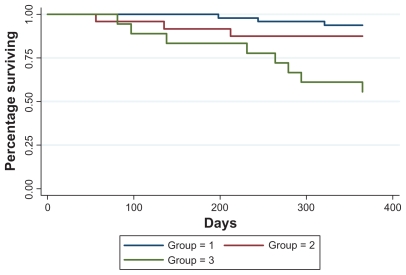
Results: In a cohort of 90 patients, 42 patients (47%) met the definition of PH. Of those, 18 patients (20%) met the definition of more severe PH. At 12 months, mortality was significantly higher in patients with PH (26%) compared with patients without PH (6%). All-cause hospitalizations were similar in patients with PH and without PH. Echocardiographic findings suggesting impaired left ventricular function and elevated pulmonary capillary wedge pressure were significantly associated with PH.
Conclusion: This prospective cross-sectional study of a single dialysis unit suggests that PH may be present in nearly half of US dialysis patients and when present is associated with increased mortality. Echocardiographic findings demonstrate an association between elevated filling pressures, elevated pulmonary artery pressures, and higher mortality, suggesting that the PH may be secondary to diastolic dysfunction and compounded by volume overload.
Keywords: diastolic dysfunction; pulmonary hypertension; renal failure.
Figures
References
-
- Yigla M, Fruchter O, Aharonson D, et al. Pulmonary hypertension is an independent predictor of mortality in hemodialysis patients. Kidney Int. 2009;75:969–975. - PubMed
-
- Yigla M, Nakhoul F, Sabag A, et al. Pulmonary hypertension in patients with end-stage renal disease. Chest. 2003;123:1577–1582. - PubMed
-
- Abdelwhab S, Elshinnawy S. Pulmonary hypertension in chronic renal failure patients. Am J Nephrol. 2008;28:990–997. - PubMed
LinkOut - more resources
Full Text Sources
Miscellaneous
