Multimodal mass spectrometric imaging of small molecules reveals distinct spatio-molecular signatures in differentially metastatic breast tumor models
- PMID: 21045154
- PMCID: PMC5555163
- DOI: 10.1158/0008-5472.CAN-10-0360
Multimodal mass spectrometric imaging of small molecules reveals distinct spatio-molecular signatures in differentially metastatic breast tumor models
Abstract
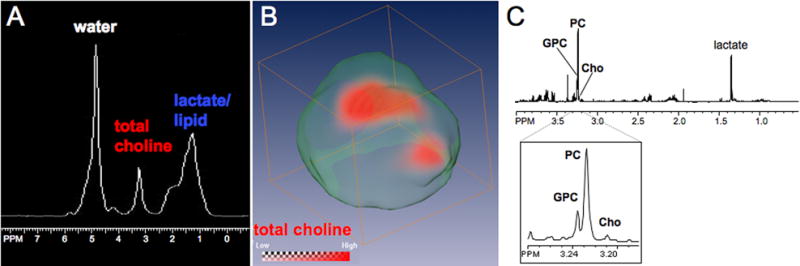
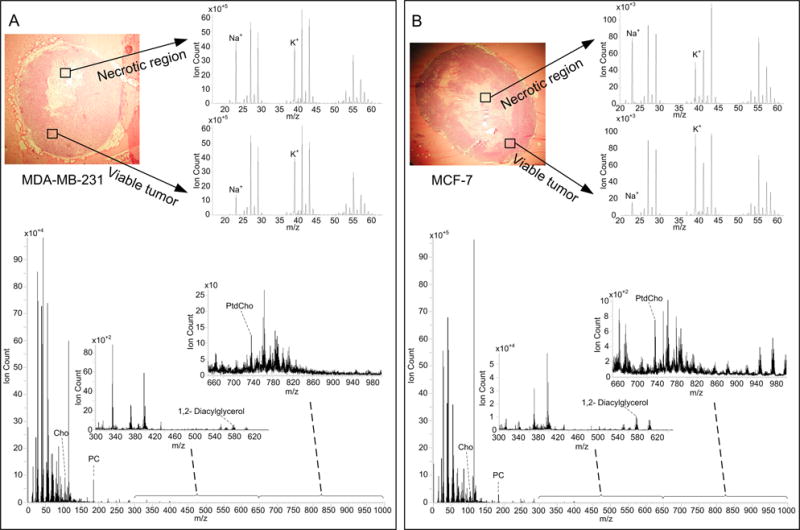
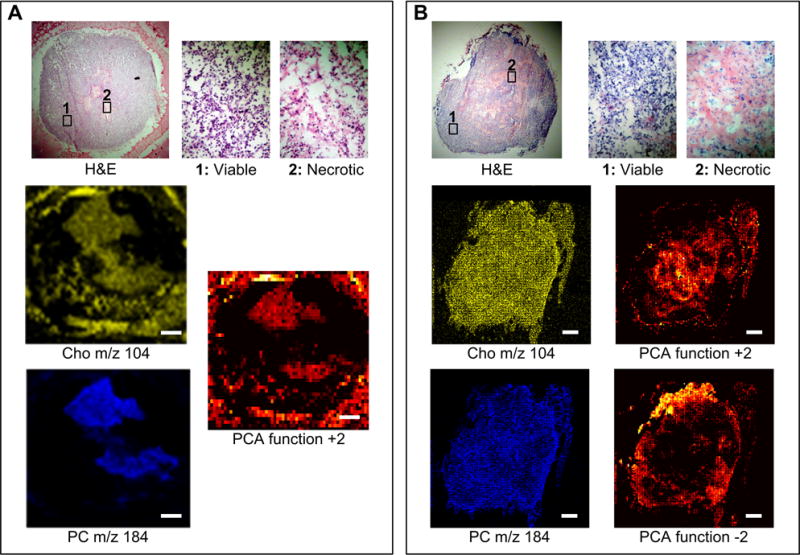
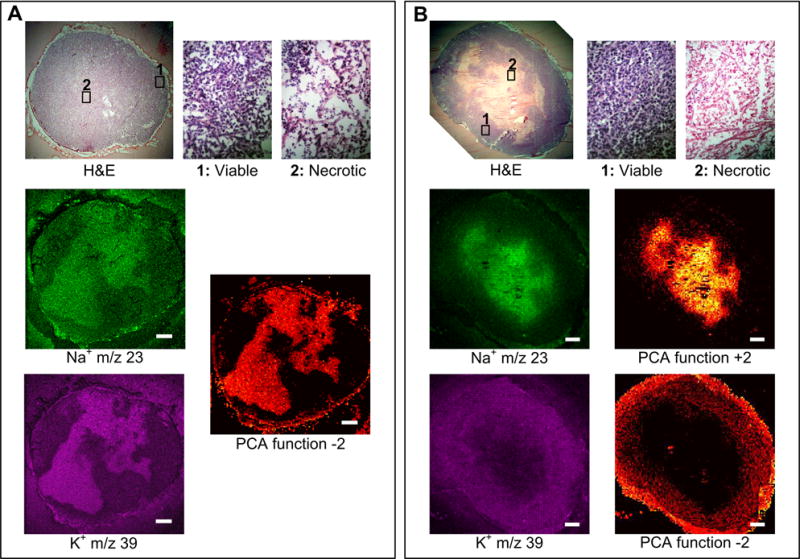
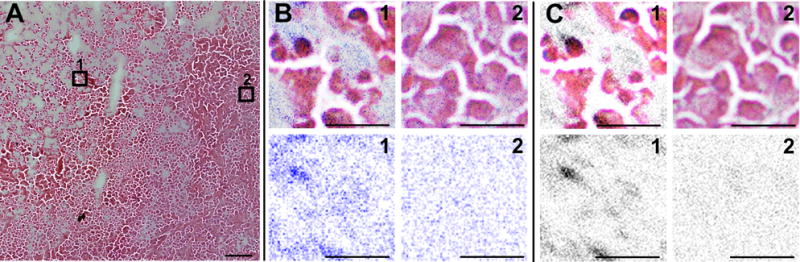
Phosphocholine (PC) and total choline (tCho) are increased in malignant breast tumors. In this study, we combined magnetic resonance spectroscopic imaging (MRSI), mass spectrometry (MS) imaging, and pathologic assessment of corresponding tumor sections to investigate the localization of choline metabolites and cations in viable versus necrotic tumor regions in the nonmetastatic MCF-7 and the highly metastatic MDA-MB-231 breast cancer xenograft models. In vivo three-dimensional MRSI showed that high tCho levels, consisting of free choline (Cho), PC, and glycerophosphocholine (GPC), displayed a heterogeneous spatial distribution in the tumor. MS imaging performed on tumor sections detected the spatial distributions of individual PC, Cho, and GPC, as well as sodium (Na+) and potassium (K+), among many others. PC and Cho intensity were increased in viable compared with necrotic regions of MDA-MB-231 tumors, but relatively homogeneously distributed in MCF-7 tumors. Such behavior may be related to the role of PC and PC-related enzymes, such as choline kinase, choline transporters, and others, in malignant tumor growth. Na+ and K+ colocalized in the necrotic tumor areas of MDA-MB-231 tumors, whereas in MCF-7 tumors, Na+ was detected in necrotic and K+ in viable tumor regions. This may be attributed to differential Na+/K+ pump functions and K+ channel expressions. Principal component analysis of the MS imaging data clearly identified different tumor microenvironmental regions by their distinct molecular signatures. This molecular information allowed us to differentiate between distinct tumor regions and tumor types, which may, in the future, prove clinically useful in the pathologic assessment of breast cancers.
Copyright © 2010 AACR.
Figures
References
-
- Bathen TF, Holmgren K, Lundemo AG, et al. Omega-3 fatty acids suppress growth of sw620 human colon cancer xenografts in nude mice. Anticancer Res. 2008;28:3717–23. - PubMed
-
- de Molina AR, Sormentero-Estrada J, Beldo-Iniesta C, et al. Expression of choline kinase alpha to predict outcome in patients with early-stage non-small-cell lung cancer: A retrospective study. Lancet Oncol. 2007;8:889–97. - PubMed
Publication types
MeSH terms
Substances
Grants and funding
LinkOut - more resources
Full Text Sources
Research Materials
Miscellaneous