


Reduced hippocampal and amygdala activity predicts memory distortions for trauma reminders in combat-related PTSD
- PMID: 21047644
- PMCID: PMC3081889
- DOI: 10.1016/j.jpsychires.2010.10.007
Reduced hippocampal and amygdala activity predicts memory distortions for trauma reminders in combat-related PTSD
Abstract
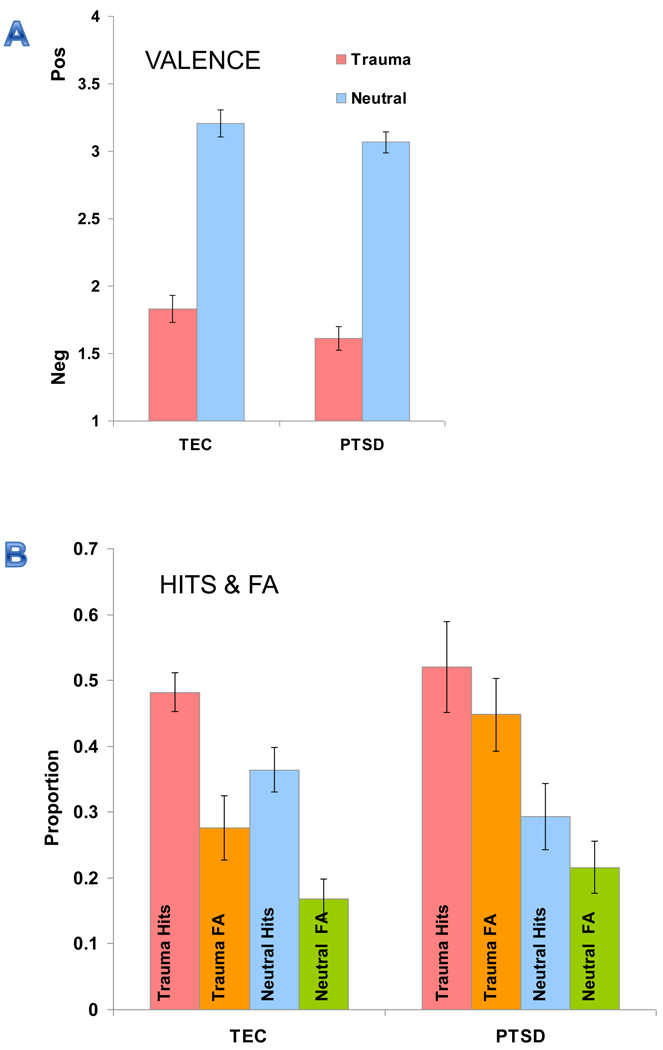
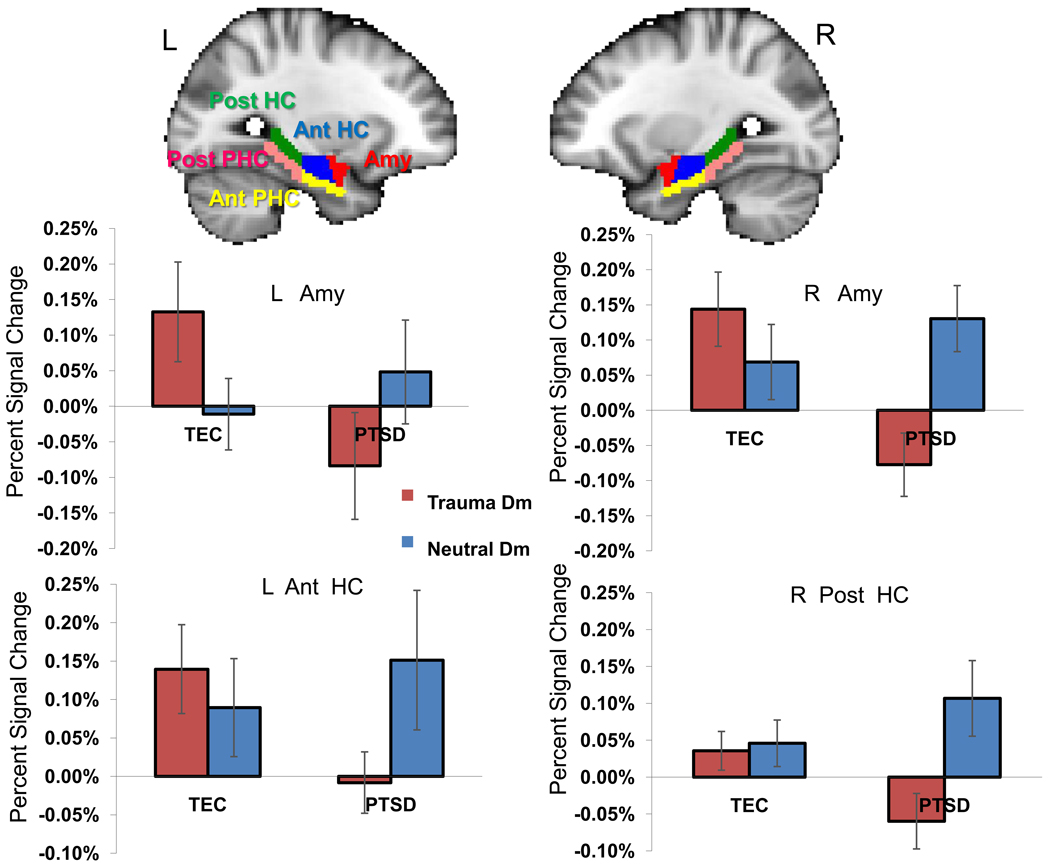
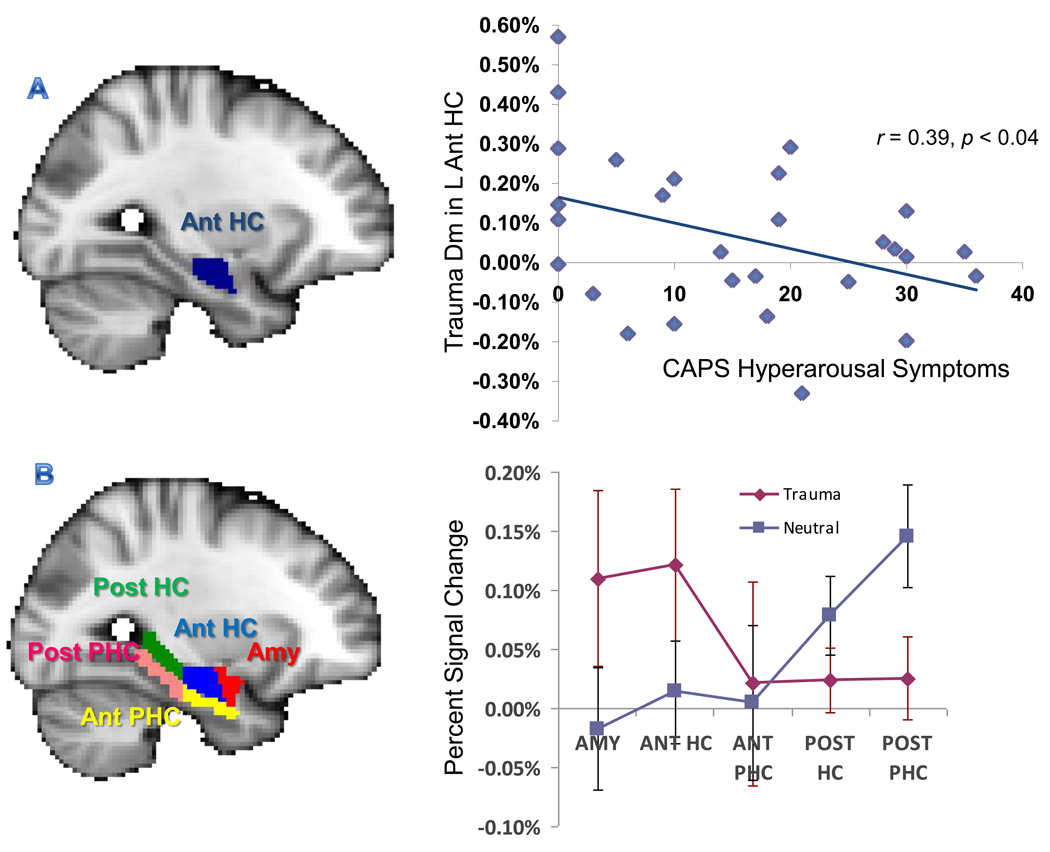
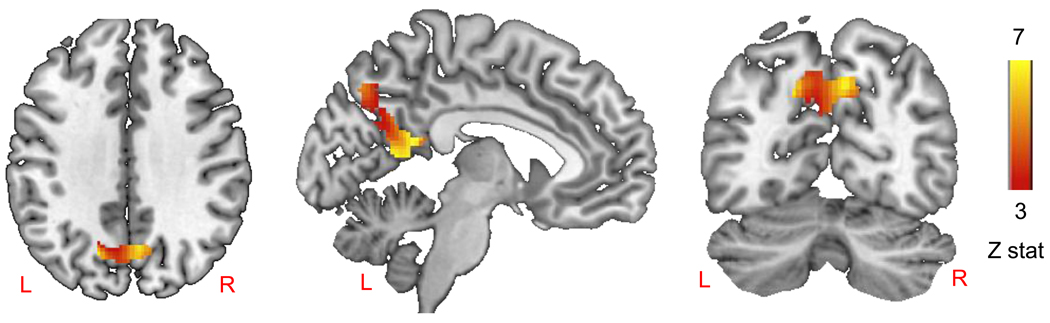
Neurobiological models of posttraumatic stress disorder (PTSD) suggest that altered activity in the medial temporal lobes (MTL) during encoding of traumatic memories contribute to the development and maintenance of the disorder. However, there is little direct evidence in the PTSD literature to support these models. The goal of the present study was to examine MTL activity during trauma encoding in combat veterans using the subsequent memory paradigm. Fifteen combat veterans diagnosed with PTSD and 14 trauma-exposed control participants viewed trauma-related and neutral pictures while undergoing event-related fMRI. Participants returned one week after scanning for a recognition memory test. Region-of-interest (ROI) and voxel-wise whole brain analyses were conducted to examine the neural correlates of successful memory encoding. Patients with PTSD showed greater false alarm rates for novel lures than the trauma-exposed control group, suggesting reliance on gist-based representations in lieu of encoding contextual details. Imaging analyses revealed reduced activity in the amygdala and hippocampus in PTSD patients during successful encoding of trauma-related stimuli. Reduction in left hippocampal activity was associated with high arousal symptoms on the Clinician-Administered PTSD Scale (CAPS). The behavioral false alarm rate for traumatic stimuli co-varied with activity in the bilateral precuneus. These results support neurobiological theories positing reduced hippocampal activity under conditions of high stress and arousal. Reduction in MTL activity for successfully encoded stimuli and increased precuneus activity may underlie reduced stimulus-specific encoding and greater gist memory in patients with PTSD, leading to maintenance of the disorder.
Published by Elsevier Ltd.
Figures
References
-
- Amir N, Stafford J, Freshman M, Foa E. Relationship between trauma narratives and trauma pathology. Journal of Traumatic Stress. 1998;11:385–392. - PubMed
-
- Beckmann CF, Jenkinson M, Smith SM. General multilevel linear modeling for group analysis in FMRI. Neuroimage. 2003;20:1052–1063. - PubMed
-
- Bleich A, Koslowsky M, Dolev A, Lerer B. Post-traumatic stress disorder and depression. An analysis of comorbidity. The British Journal of Psychiatry. 1997;170:479. - PubMed
-
- Brainerd C, Reyna V. Fuzzy-trace theory and false memory. Current Directions in Psychological Science. 2002;11:164.
Publication types
MeSH terms
Grants and funding
LinkOut - more resources
Full Text Sources
Medical
Miscellaneous
