Chromatin boundaries, insulators, and long-range interactions in the nucleus
- PMID: 21047907
- PMCID: PMC9373008
- DOI: 10.1101/sqb.2010.75.006
Chromatin boundaries, insulators, and long-range interactions in the nucleus
Abstract
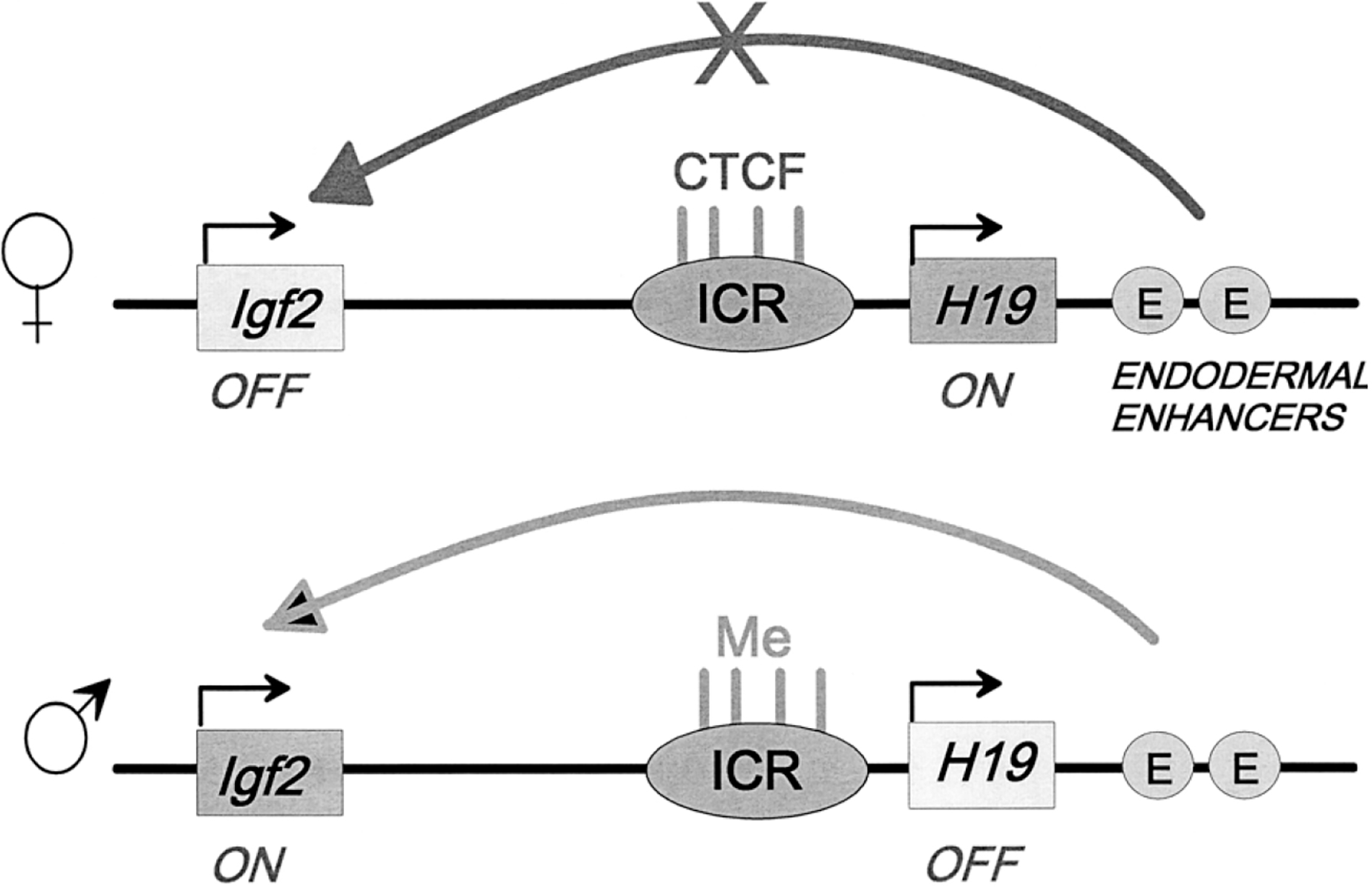
Within the genome, expressed genes marked by "open" chromatin are often adjacent to silent, heterochromatic regions. There are also regions containing neighboring active genes with different programs of expression. In both cases, DNA sequence elements may function as insulators, either providing barriers that prevent the incursion of heterochromatic signals into open domains or acting to block inappropriate contact between the enhancer of one gene and the promoter of another. The mechanisms associated with insulation are diverse: Enhancer-blocking insulation is largely associated with the ability to stabilize the formation of loop domains within the nucleus. Barrier insulation is often associated with the ability to block propagation of silencing histone modifications. Here, we provide examples of both kinds of insulator action, derived initially from studies of the compound insulator element at the 5' end of the chicken β-globin locus. Such elements appear to have more general regulatory roles in the genome that have been exploited to provide insulator function where necessary to demarcate separate domains within the nucleus.
Figures


References
-
- Bell AC, Felsenfeld G. 2000. Methylation of a CTCF-dependent boundary controls imprinted expression of the Igf2 gene. Nature 405: 482–485. - PubMed
-
- Bell AC, West AG, Felsenfeld G. 1999. The protein CTCF is required for the enhancer blocking activity of vertebrate insulators. Cell 98: 387–396. - PubMed
-
- Cai H, Levine M. 1995. Modulation of enhancer-promoter interactions by insulators in the Drosophila embryo. Nature 376: 533–536. - PubMed
-
- Chung JH, Whiteley M, Felsenfeld G. 1993. A 5′ element of the chicken β-globin domain serves as an insulator in human erythroid cells and protects against position effect in Drosophila. Cell 74: 505–514. - PubMed
Publication types
MeSH terms
Substances
Grants and funding
LinkOut - more resources
Full Text Sources
Other Literature Sources