


Evaluation of EGFR gene copy number as a predictive biomarker for the efficacy of cetuximab in combination with chemotherapy in the first-line treatment of recurrent and/or metastatic squamous cell carcinoma of the head and neck: EXTREME study
- PMID: 21048039
- PMCID: PMC3082162
- DOI: 10.1093/annonc/mdq588
Evaluation of EGFR gene copy number as a predictive biomarker for the efficacy of cetuximab in combination with chemotherapy in the first-line treatment of recurrent and/or metastatic squamous cell carcinoma of the head and neck: EXTREME study
Abstract
Background: The phase III EXTREME study demonstrated that combining cetuximab with platinum/5-fluorouracil (5-FU) significantly improved overall survival in the first-line treatment of patients with recurrent and/or metastatic squamous cell carcinoma of the head and neck (R/M SCCHN) compared with platinum/5-FU alone. The aim of this investigation was to evaluate elevated tumor EGFR gene copy number as a predictive biomarker in EXTREME study patients.
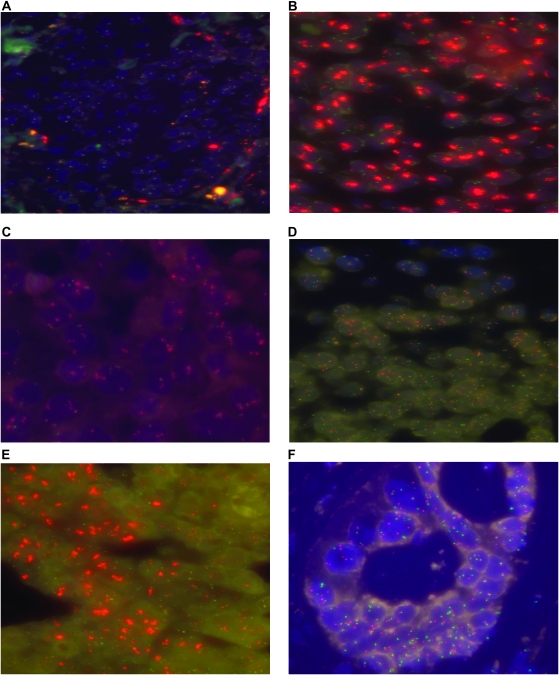
Patients and methods: Dual-color FISH was used to determine absolute and relative EGFR copy number. Models of differing stringencies were used to score and investigate whether increased copy number was predictive for the activity of cetuximab plus platinum/5-FU.
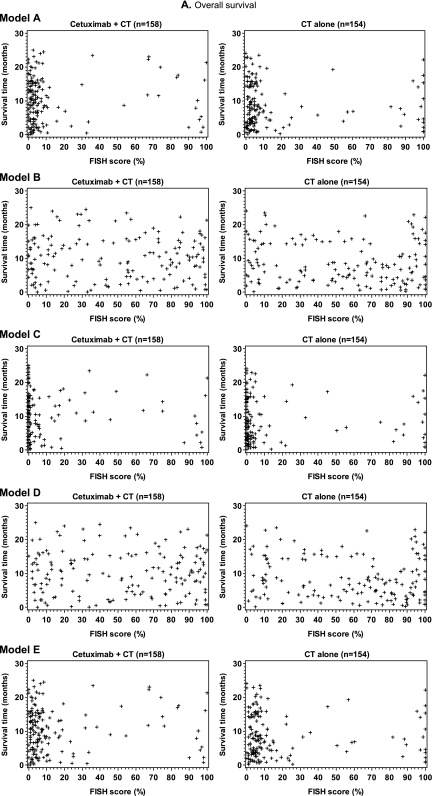
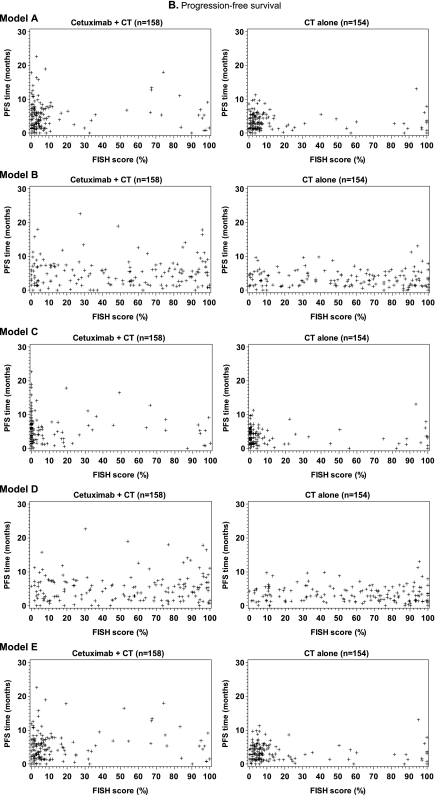
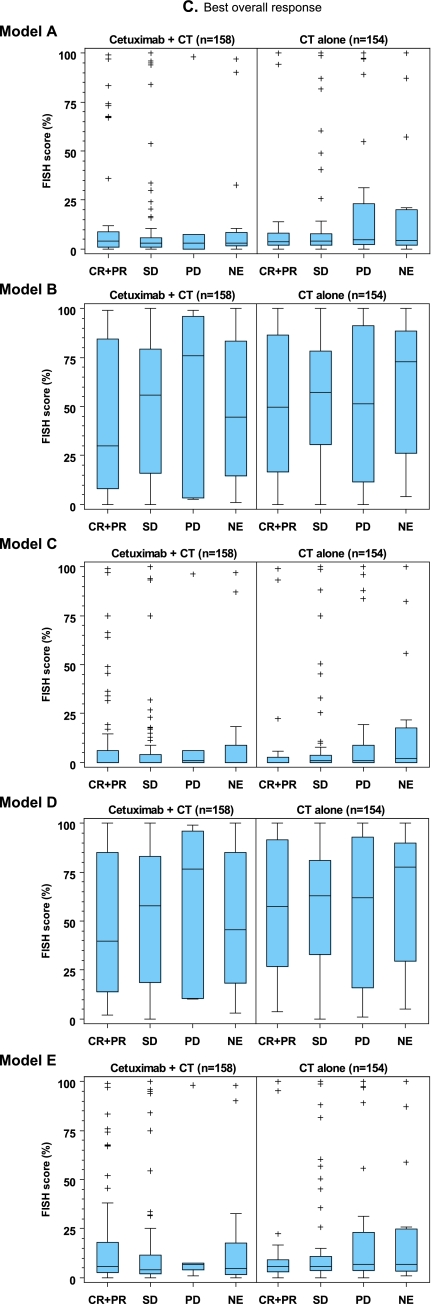
Results: Tumors from 312 of 442 patients (71%) were evaluable by FISH and met the criteria for statistical analysis. A moderate increase in EGFR copy number was common, with high-level amplification of the gene occurring in a small fraction of tumors (∼11%). Considering each of the models tested, no association of EGFR copy number with overall survival, progression-free survival or best overall response was found for patients treated with cetuximab plus platinum/5-FU.
Conclusion: Tumor EGFR copy number is not a predictive biomarker for the efficacy of cetuximab plus platinum/5-FU as first-line therapy for patients with R/M SCCHN.
Figures
References
-
- Vermorken JB, Mesia R, Rivera F, et al. Platinum-based chemotherapy plus cetuximab in head and neck cancer. N Engl J Med. 2008;359:1116–1127. - PubMed
-
- Bonner JA, Harari PM, Giralt J, et al. Radiotherapy plus cetuximab for locoregionally advanced head and neck cancer: 5-year survival data from a phase 3 randomised trial, and relation between cetuximab-induced rash and survival. Lancet Oncol. 2010;11:21–28. - PubMed
-
- Budach V, Stuschke M, Budach W, et al. Hyperfractionated accelerated chemoradiation with concurrent fluorouracil-mitomycin is more effective than dose-escalated hyperfractionated accelerated radiation therapy alone in locally advanced head and neck cancer: final results of the radiotherapy cooperative clinical trials group of the German Cancer Society 95-06 Prospective Randomized Trial. J Clin Oncol. 2005;23:1125–1135. - PubMed
-
- Denis F, Garaud P, Bardet E, et al. Final results of the 94-01 French Head and Neck Oncology and Radiotherapy Group randomized trial comparing radiotherapy alone with concomitant radiochemotherapy in advanced-stage oropharynx carcinoma. J Clin Oncol. 2004;22:69–76. - PubMed
-
- Semrau R, Mueller RP, Stuetzer H, et al. Efficacy of intensified hyperfractionated and accelerated radiotherapy and concurrent chemotherapy with carboplatin and 5-fluorouracil: updated results of a randomized multicentric trial in advanced head-and-neck cancer. Int J Radiat Oncol Biol Phys. 2006;64:1308–1316. - PubMed
Publication types
MeSH terms
Substances
LinkOut - more resources
Full Text Sources
Other Literature Sources
Medical
Research Materials
Miscellaneous
