Factors impacting corneal epithelial barrier function against Pseudomonas aeruginosa traversal
- PMID: 21051692
- PMCID: PMC3101686
- DOI: 10.1167/iovs.10-6125
Factors impacting corneal epithelial barrier function against Pseudomonas aeruginosa traversal
Abstract
Purpose: Mechanisms determining epithelial resistance versus susceptibility to microbial traversal in vivo remain poorly understood. Here, a novel murine model was used to explore factors influencing the corneal epithelial barrier to Pseudomonas aeruginosa penetration.
Methods: Murine corneas were blotted with tissue paper before inoculation with green fluorescent protein-expressing P. aeruginosa. The impact of blotting on epithelial integrity was evaluated by susceptibility to fluorescein staining and histology. Using fluorescence imaging, blotted corneas were compared to nonblotted corneas for susceptibility to bacterial binding and epithelial penetration after 5 hours or were monitored for disease development. In some experiments, inoculation was performed ex vivo to exclude tear fluid or corneas were pretreated with EGTA to disrupt Ca(2+)-dependent factors. The role of surfactant protein D (SP-D), which inhibits P. aeruginosa cell invasion in vitro, was examined using knockout mice.
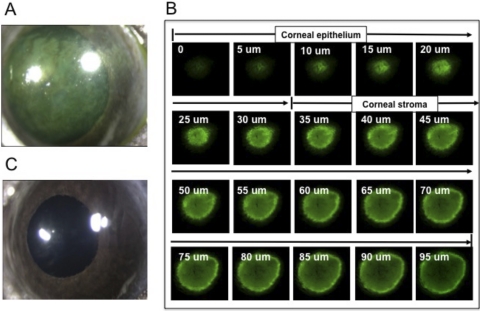
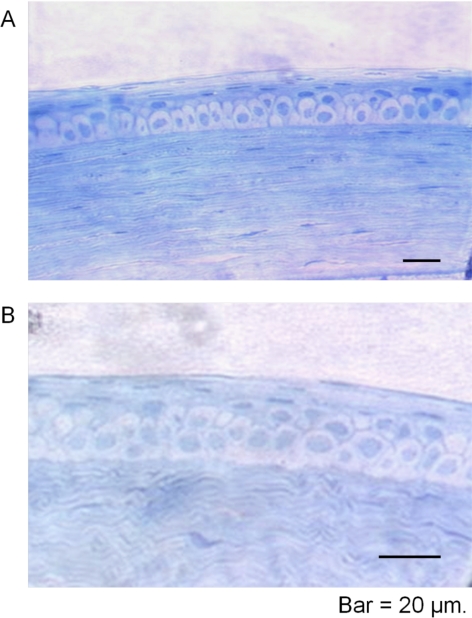
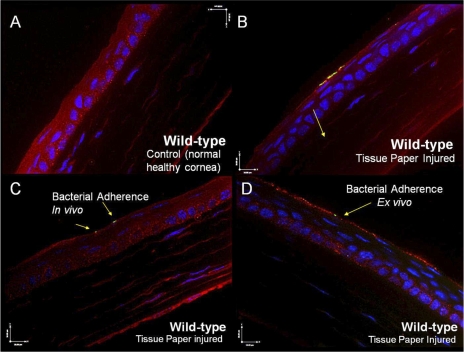
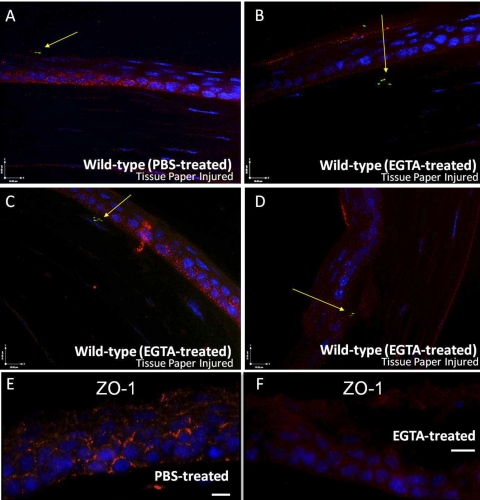
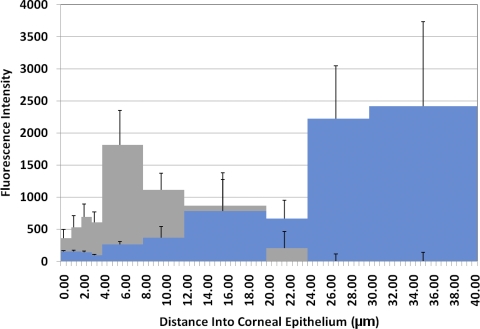
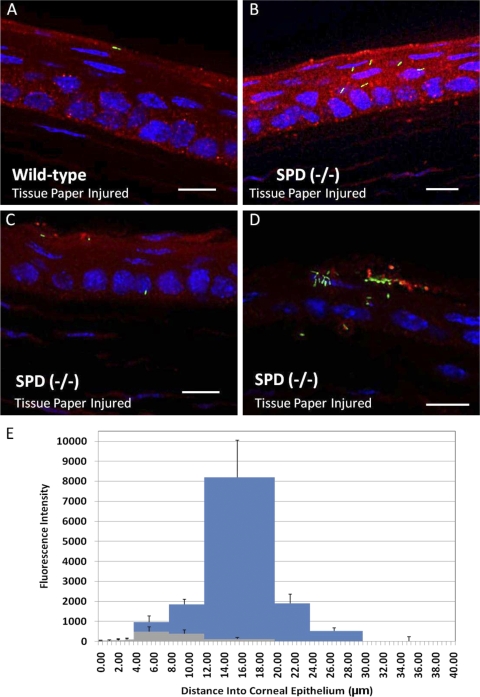
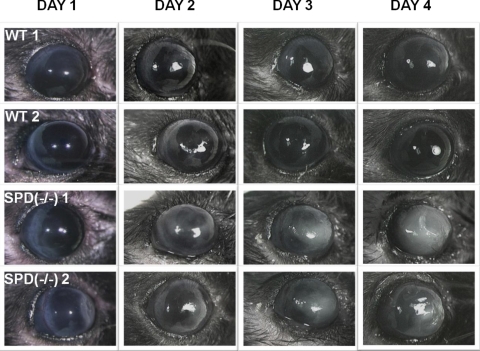
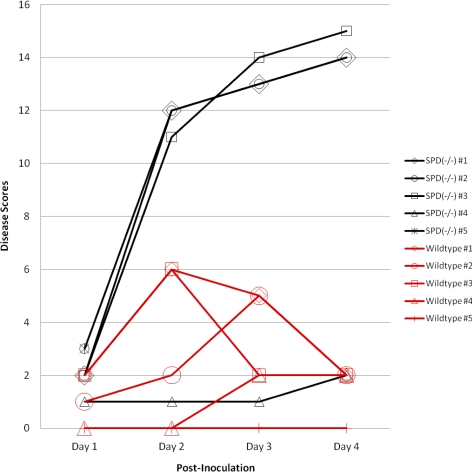
Results: Blotting enabled fluorescein penetration through the epithelium into the underlying stroma without obvious disruption to corneal morphology. Although blotting enabled bacterial binding to the otherwise adhesion-resistant epithelial surface, adherent bacteria did not penetrate the surface or initiate pathology. In contrast, bacteria penetrated blotted corneas after EGTA treatment and in SP-D knockouts. Visible disease occurred and progressed only in aged, blotted, and EGTA-treated, SP-D knockout mice.
Conclusions: Neither fluorescein staining nor bacterial adhesion necessarily predict or enable corneal susceptibility to bacterial penetration or disease. Corneal epithelial defenses limiting traversal by adherent bacteria include EGTA-sensitive factors and SP-D. Understanding mechanisms modulating epithelial traversal by microbes could improve our understanding of susceptibility to infection and may indicate new strategies for preventing disease.
Figures
Comment in
-
Innate resistance of corneas to pathogen infections.Invest Ophthalmol Vis Sci. 2011 Jun 13;52(7):4192. doi: 10.1167/iovs.11-7594. Invest Ophthalmol Vis Sci. 2011. PMID: 21670478 No abstract available.
References
-
- Cheng KH, Leung SL, Hoekman HW, et al. Incidence of contact-lens-associated microbial keratitis and its related morbidity. Lancet. 1999;354:181–185 - PubMed
-
- Cruciani F, Cuozzo G, Di Pillo S, Cavallaro M. Predisposing factors, clinical and microbiological aspects of bacterial keratitis: a clinical study. Clin Ther. 2009;160:207–210 - PubMed
-
- Stapleton F, Keay L, Edwards K, et al. The incidence of contact lens-related microbial keratitis in Australia. Ophthalmology. 2008;115:1655–1662 - PubMed
-
- Hazlett LD. Corneal response to Pseudomonas aeruginosa infection. Prog Retin Eye Res. 2004;23:1–30 - PubMed
Publication types
MeSH terms
Substances
Grants and funding
LinkOut - more resources
Full Text Sources
Molecular Biology Databases
Miscellaneous