


Heroin-dependent inmates' experiences with buprenorphine or methadone maintenance
- PMID: 21053756
- PMCID: PMC3527632
- DOI: 10.1080/02791072.2010.10400696
Heroin-dependent inmates' experiences with buprenorphine or methadone maintenance
Abstract
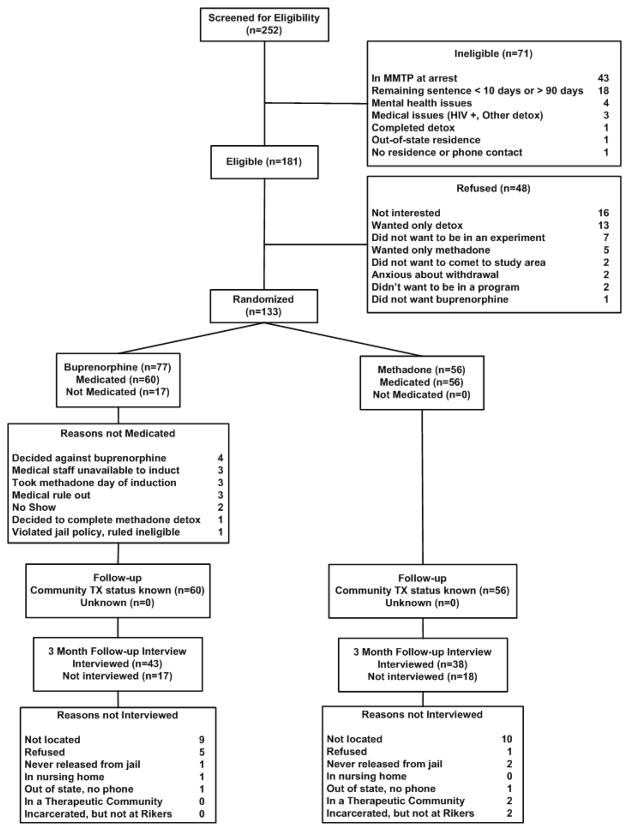
Methadone and buprenorphine are both efficacious treatments for opioid dependency, but they also have different pharmacological properties and clinical delivery methods that can affect their acceptability to patients. This study was intended to increase our knowledge of heroin-dependent individuals' perceptions of methadone vs. buprenorphine maintenance based on actual experiences with each. The study sample consists of heroin-dependent men at the Rikers Island jail in New York City who were voluntarily randomly assigned to methadone or buprenorphine maintenance in jail. Methadone patients were more likely to report feeling uncomfortable the first few days, having side/withdrawal effects during treatment, and being concerned about continued dependency on medication after release. In contrast, buprenorphine patients' main issue was the bitter taste. All of the buprenorphine patients stated that they would recommend the medication to others, with almost all preferring it to methadone. Ninety-three percent of buprenorphine vs. 44% of methadone patients intended to enroll in those respective treatments after release, with an added one-quarter of the methadone patients intending to enroll in buprenorphine instead. These results reinforce the importance of increasing access to buprenorphine treatment in the community for indigent heroin-dependent offenders.
References
-
- Brown BS, Benn GJ, Jansen DR. Methadone maintenance: Some client opinions. American Journal of Psychiatry. 1975;132:623–626. - PubMed
-
- Center for Substance Abuse Treatment. Treatment Improvement Protocol (TIP) Series 40 DHHS Publication No (SMA) 04-3939. Rockville, MD: Substance Abuse and Mental Health Services Administration; 2004. Clinical Guidelines for the Use of Buprenorphine in the Treatment of Opioid Addiction. - PubMed
-
- Coffey A, Atkinson P. Making Sense of Qualitative Data. Thousand Oaks, CA: Sage; 1996.
-
- Eklund C, Hiltunen AJ, Melin L, Borg S. Abstinence fear in methadone maintenance withdrawal: a possible obstacle for getting off methadone. Substance Use & Misuse. 1997;32 (6):779–92. - PubMed
Publication types
MeSH terms
Substances
Grants and funding
LinkOut - more resources
Full Text Sources
Medical