


N-cadherin and neuroligins cooperate to regulate synapse formation in hippocampal cultures
- PMID: 21056983
- PMCID: PMC3013044
- DOI: 10.1074/jbc.M110.176305
N-cadherin and neuroligins cooperate to regulate synapse formation in hippocampal cultures
Abstract
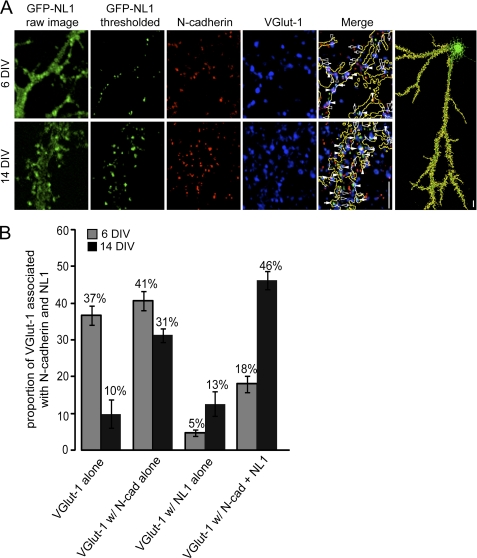
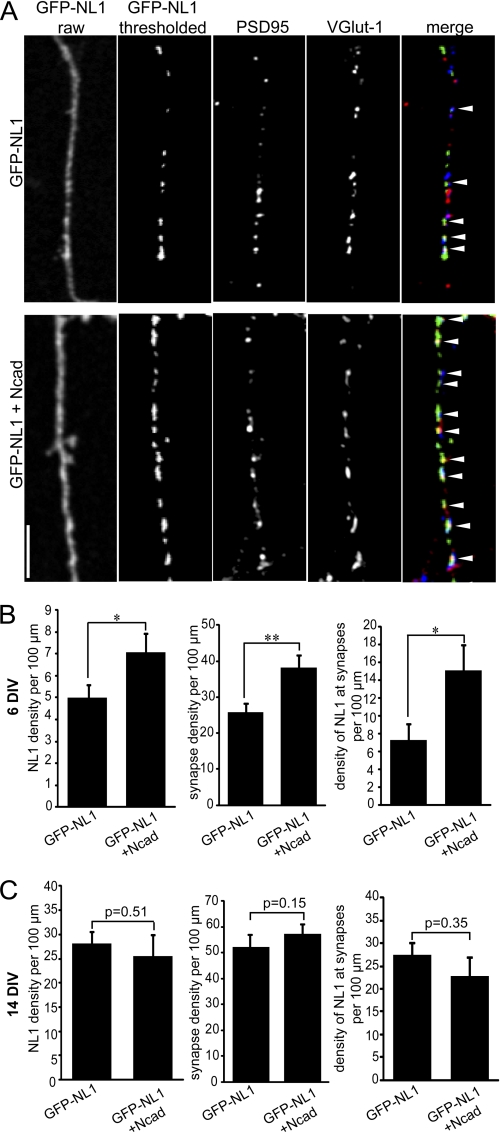
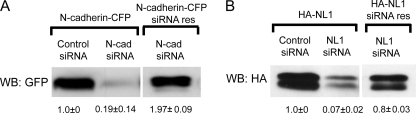
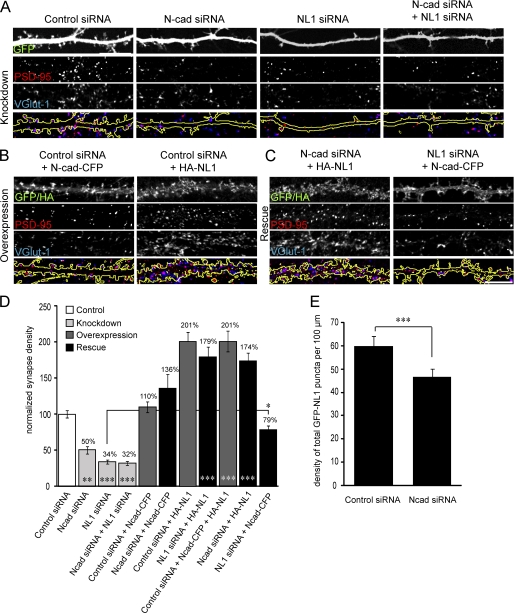
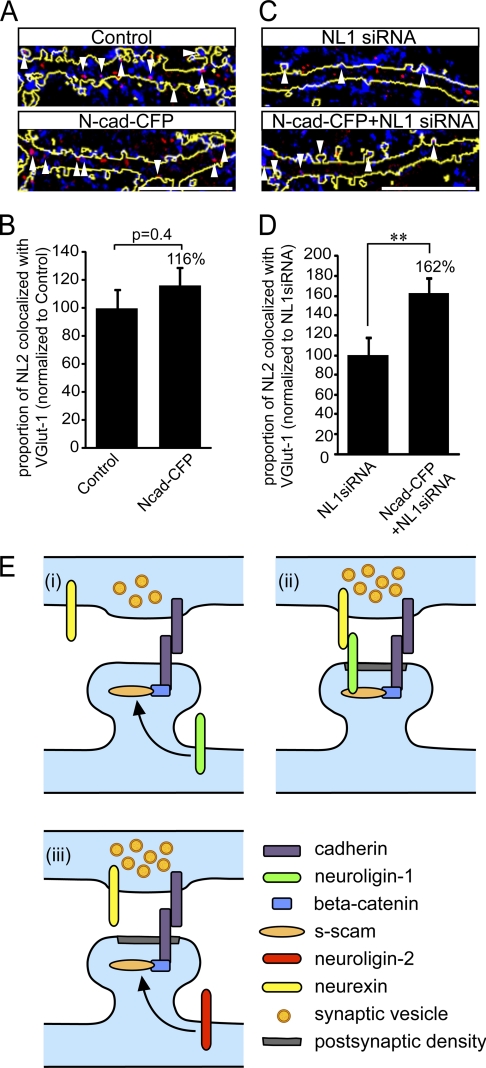
Cadherins and neuroligins (NLs) represent two families of cell adhesion proteins that are essential for the establishment of synaptic connections in vitro; however, it remains unclear whether these proteins act in concert to regulate synapse density. Using a combination of overexpression and knockdown analyses in primary hippocampal neurons, we demonstrate that NL1 and N-cadherin promote the formation of glutamatergic synapses through a common functional pathway. Analysis of the spatial relationship between N-cadherin and NL1 indicates that in 14-day in vitro cultures, almost half of glutamatergic synapses are associated with both proteins, whereas only a subset of these synapses are associated with N-cadherin or NL1 alone. This suggests that NL1 and N-cadherin are spatially distributed in a manner that enables cooperation at synapses. In young cultures, N-cadherin clustering and its association with synaptic markers precede the clustering of NL1. Overexpression of N-cadherin at this time point enhances NL1 clustering and increases synapse density. Although N-cadherin is not sufficient to enhance NL1 clustering and synapse density in more mature cultures, knockdown of N-cadherin at later time points significantly attenuates the density of NL1 clusters and synapses. N-cadherin overexpression can partially rescue synapse loss in NL1 knockdown cells, possibly due to the ability of N-cadherin to recruit NL2 to glutamatergic synapses in these cells. We demonstrate that cadherins and NLs can act in concert to regulate synapse formation.
Figures
References
MeSH terms
Substances
LinkOut - more resources
Full Text Sources
Research Materials
