


Postnatal weight gain modifies severity and functional outcome of oxygen-induced proliferative retinopathy
- PMID: 21056995
- PMCID: PMC2993262
- DOI: 10.2353/ajpath.2010.100526
Postnatal weight gain modifies severity and functional outcome of oxygen-induced proliferative retinopathy
Abstract
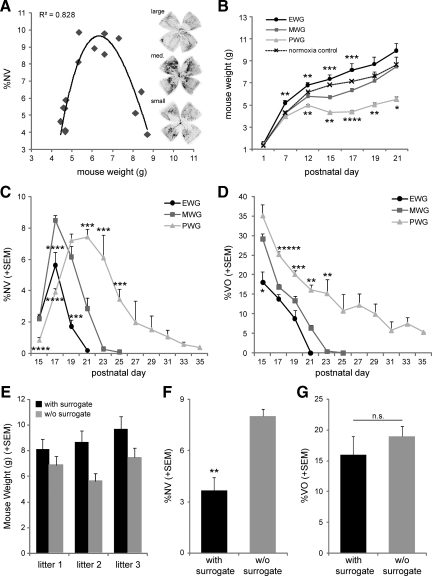
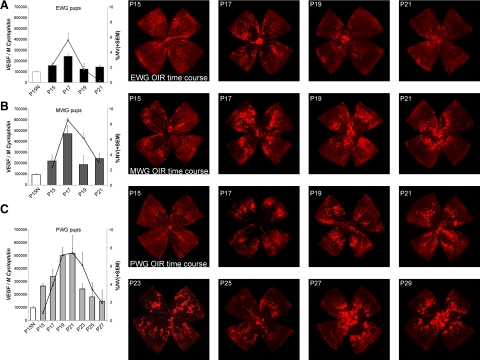
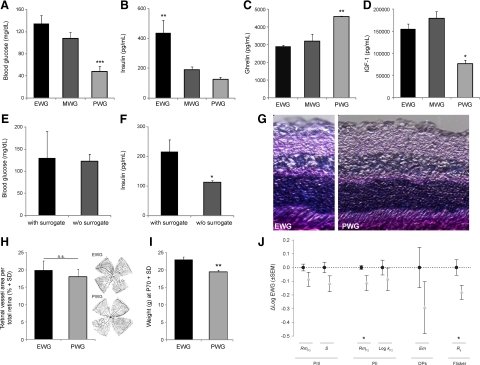
In clinical studies, postnatal weight gain is strongly associated with retinopathy of prematurity (ROP). However, animal studies are needed to investigate the pathophysiological mechanisms of how postnatal weight gain affects the severity of ROP. In the present study, we identify nutritional supply as one potent parameter that affects the extent of retinopathy in mice with identical birth weights and the same genetic background. Wild-type pups with poor postnatal nutrition and poor weight gain (PWG) exhibit a remarkably prolonged phase of retinopathy compared to medium weight gain or extensive weight gain pups. A high (r(2) = 0.83) parabolic association between postnatal weight gain and oxygen-induced retinopathy severity is observed, as is a significantly prolonged phase of proliferative retinopathy in PWG pups (20 days) compared with extensive weight gain pups (6 days). The extended retinopathy is concomitant with prolonged overexpression of retinal vascular endothelial growth factor in PWG pups. Importantly, PWG pups show low serum levels of nonfasting glucose, insulin, and insulin-like growth factor-1 as well as high levels of ghrelin in the early postoxygen-induced retinopathy phase, a combination indicative of poor metabolic supply. These differences translate into visual deficits in adult PWG mice, as demonstrated by impaired bipolar and proximal neuronal function. Together, these results provide evidence for a pathophysiological correlation between poor postnatal nutritional supply, slow weight gain, prolonged retinal vascular endothelial growth factor overexpression, protracted retinopathy, and reduced final visual outcome.
Figures
References
-
- Saugstad OD. Oxygen and retinopathy of prematurity. J Perinatol. 2006;26(Suppl 1):S46–S50. discussion S63–S44. - PubMed
-
- Sears JE, Pietz J, Sonnie C, Dolcini D, Hoppe G. A change in oxygen supplementation can decrease the incidence of retinopathy of prematurity. Ophthalmology. 2009;116:513–518. - PubMed
-
- Hellstrom A, Hard AL, Engstrom E, Niklasson A, Andersson E, Smith L, Lofqvist C. Early weight gain predicts retinopathy in preterm infants: new, simple, efficient approach to screening. Pediatrics. 2009;123:e638–e645. - PubMed
-
- Fortes Filho JB, Bonomo PP, Maia M, Procianoy RS. Weight gain measured at 6 weeks after birth as a predictor for severe retinopathy of prematurity: study with 317 very low birth weight preterm babies. Graefes Arch Clin Exp Ophthalmol. 2009;247:831–836. - PubMed
-
- Hellstrom A, Ley D, Hansen-Pupp I, Niklasson A, Smith L, Lofqvist C, Hard AL. New insights into the development of retinopathy of prematurity: importance of early weight gain. Acta Paediatr. 2010;99:502–508. - PubMed
Publication types
MeSH terms
Substances
Grants and funding
LinkOut - more resources
Full Text Sources
Other Literature Sources
