


Changes in cell wall synthesis and ultrastructure during paradoxical growth effect of caspofungin on four different Candida species
- PMID: 21060107
- PMCID: PMC3019691
- DOI: 10.1128/AAC.00633-10
Changes in cell wall synthesis and ultrastructure during paradoxical growth effect of caspofungin on four different Candida species
Abstract
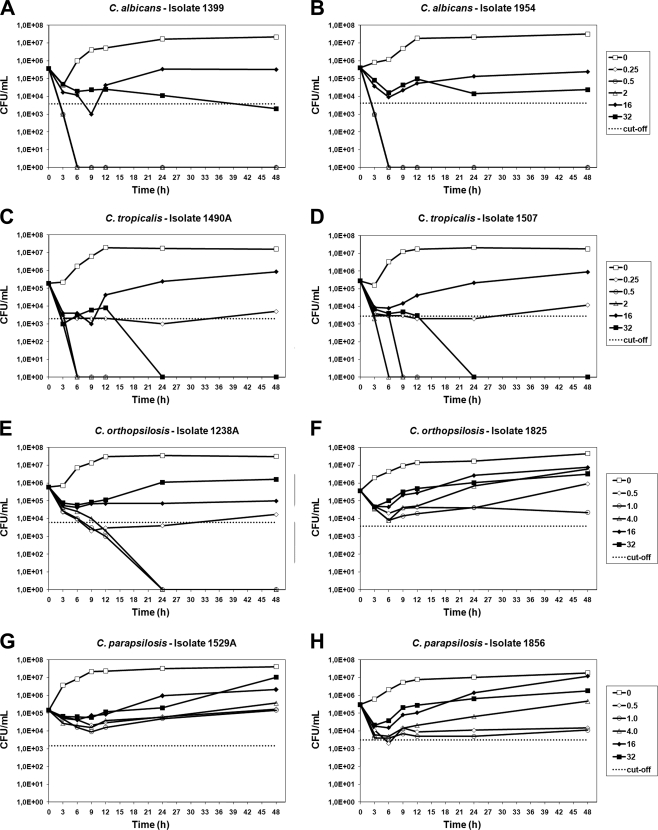
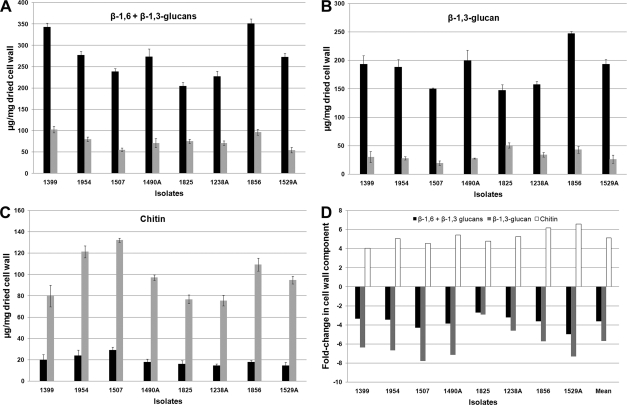
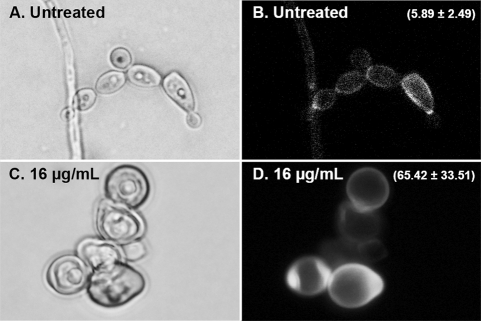
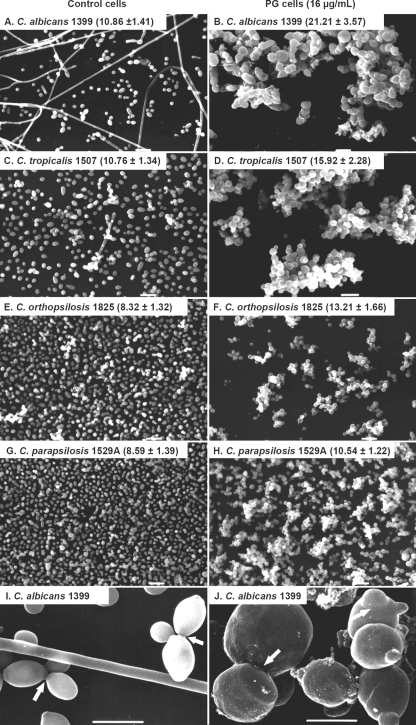
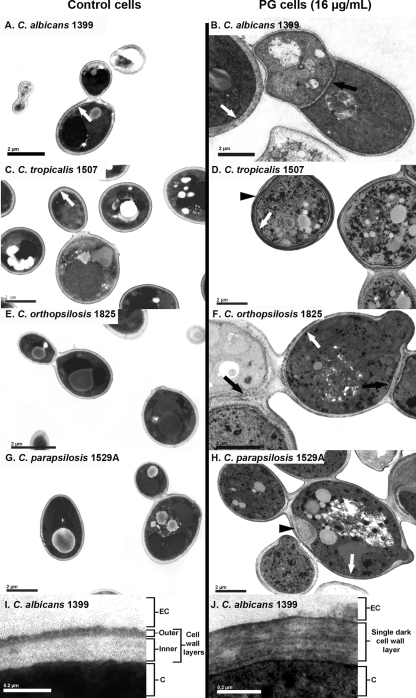
Paradoxical growth (PG) has been described for echinocandins and is characterized by cell growth at drug concentrations above the MIC. In this study, two isolates each of Candida albicans, C. tropicalis, C. orthopsilosis, and C. parapsilosis, all of which displaying PG in response to caspofungin, were subjected to MIC, minimal fungicidal concentration (MFC), and time-kill curve assays to evaluate the levels of PG. Cell wall components and ultrastructural modifications of the PG cells were also investigated. The results showed that when cell growth and survival were evaluated by MFC or time-kill curve assays, high concentrations of caspofungin did not show fungicidal activity against PG cells. Furthermore, for C. parapsilosis and C. orthopsilosis, time-kill curves were more discriminatory than MFCs in detecting the PG effect. The four different Candida species studied demonstrated similar alterations in cell wall components and ultrastructure associated with PG. In PG cells, β-1,3-glucan content decreased from 2.7- to 7.8-fold, whereas chitin content increased from 4.0- to 6.6-fold. An electron microscopy study of the PG cells revealed morphological alterations, clumping of cells, enlarged cells, the absence of filamentation, abnormal septa, and accumulation of chitin in the cell wall. Also, PG cells basically exhibited a single dark high-density layer in the cell wall, indicating the loss of the β-1,3-glucan layer. Our results present novel details about the ultrastructural alterations that occur in C. albicans, C. parapsilosis, C. orthopsilosis, and C. tropicalis during PG and show that chitin is the major component of the cell walls of PG cells. Stimulation of chitin synthesis may represent a rescue mechanism against caspofungin activity.
Figures
References
-
- Bizerra, F. C., C. V. Nakamura, C. de Poersch, T. I. Estivalet Svidzinski, R. M. Borsato Quesada, S. Goldenberg, M. A. Krieger, and S. F. Yamada-Ogatta. 2008. Characteristics of biofilm formation by Candida tropicalis and antifungal resistance. FEMS Yeast Res. 8:442-450. - PubMed
-
- Canton, E., J. Peman, M. Romero, A. Valentin, and M. Gobernado. 2007. The fungicidal activity and paradoxical effect of caspofungin against yeast. Influence of culture medium and incubation time. Rev. Esp. Quimioter. 20:433-441. (In Spanish.) - PubMed
Publication types
MeSH terms
Substances
LinkOut - more resources
Full Text Sources
