Non-syndromic multiple supernumerary teeth in a family unit with a normal karyotype: case report
- PMID: 21060725
- PMCID: PMC2974166
- DOI: 10.7150/ijms.7.378
Non-syndromic multiple supernumerary teeth in a family unit with a normal karyotype: case report
Abstract
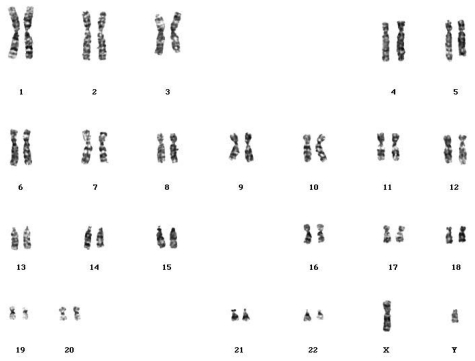
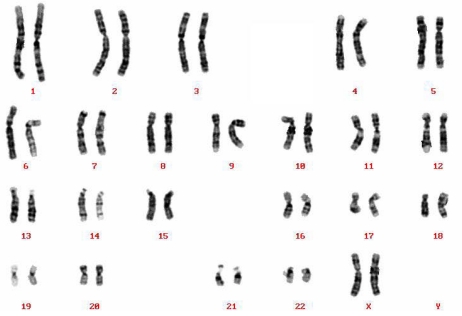
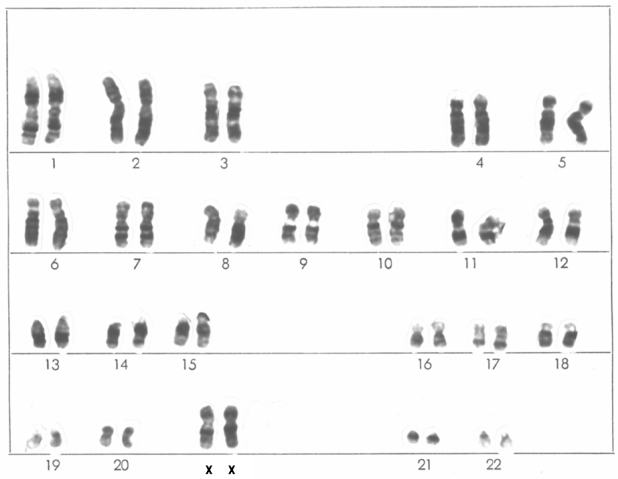
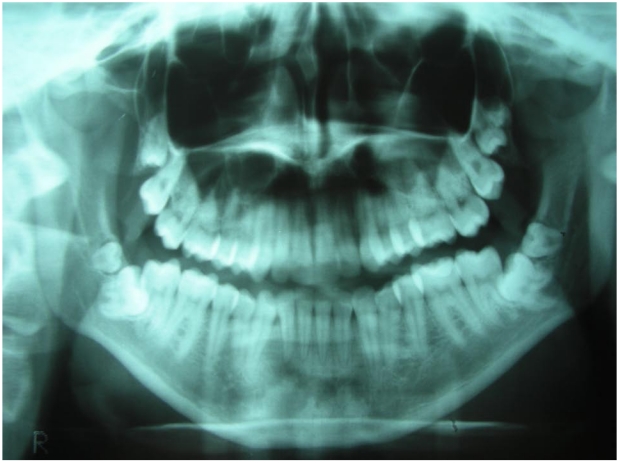
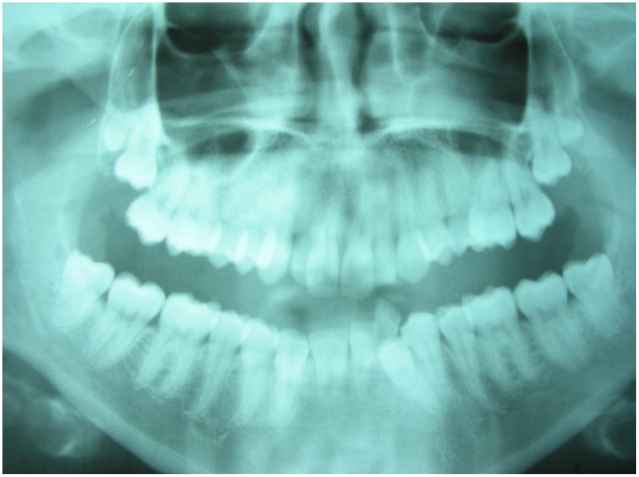
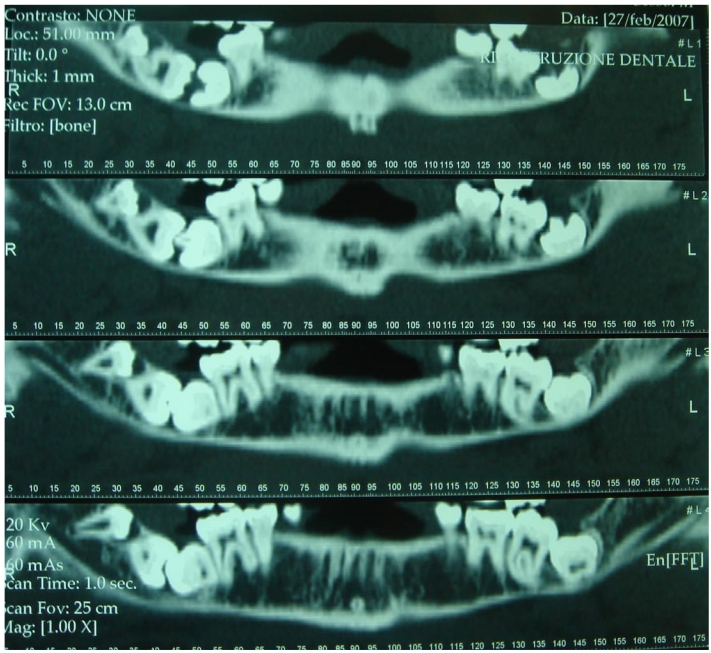
Introduction. Hyperdontia is an odontostomatologic anomaly characterized by an excess in tooth number. It seems to occur more often in patients with hereditary factors concerning this anomaly: this case represents a rare form of hyperdontia, with bilateral multiple supernumerary teeth, with evident penetrance of the phenotype in the family unit engaged in the present study. The karyotype determination excludes a pathogenesis on chromosomal basis.Case report. A 30 years old patient came to our observation with five impacted teeth (1.8, 2.8, 3.8, 4.7 and 4.8), as well as with the presence of an impacted supernumerary tooth (distomolar 4.9). The patient was suggested to allow us to perform a radiologic screening to his two sisters aged 17 and 13 years.The X-ray photography showed that the elder sister had nine impacted teeth; these were 1.8 - 1.9 - 2.8 - 2.9 - 2.10 - 3.8 - 3.9 - 4.8 - 4.9; while the youngest sister had four impacted teeth, that is 1.8 - 1.9 - 2.8 - 2.9.Conclusions. The value of the present case report can be used as a paradigm for the assessment of the hereditary factors predisposing the onset of hyperdontia, and for the consequent management by oral surgeon of family units in which the odontostomatologic anomaly was detected without any syndromic forms.
Keywords: Hyperdontia; impacted teeth.; supernumerary teeth.
Conflict of interest statement
Conflict of Interest: The authors have declared that no conflict of interest exists.
Figures
References
-
- Capozzi L, Gombos F, Masi P, Modica R, Valletta G. Patologia speciale odontostomatologica. Firenze, Italy: USES publisher; 1987.
-
- Cassetta M, Russomanno MR. L'iperdontia nei settori latero-posteriori; indagine epidemiologica su 20398 pazienti. Riv Ital Stomatol. 1994;63(11):565–73.
-
- Orlando S, Bernardini U.D. Sulle anomalie dentali numeriche per eccesso. Riv Ital Stomatol. 1966;21(12):1267–1322. - PubMed
-
- Mason C, Rule DC. Midline supernumeraries: a family affair. Dent Update. 1995;22(1):34–5. - PubMed
-
- Pezzoli M, Vercellino V, Borio P.S. Considerazioni cliniche sulle anomalie dentarie di numero, per eccesso, nella dentizione permanente. Min. Stomat. 1969;18:524–34. - PubMed
Publication types
MeSH terms
LinkOut - more resources
Full Text Sources