


Diagnostic accuracy of different imaging modalities in detection of proximal caries
- PMID: 21062944
- PMCID: PMC3520212
- DOI: 10.1259/dmfr/28628723
Diagnostic accuracy of different imaging modalities in detection of proximal caries
Abstract
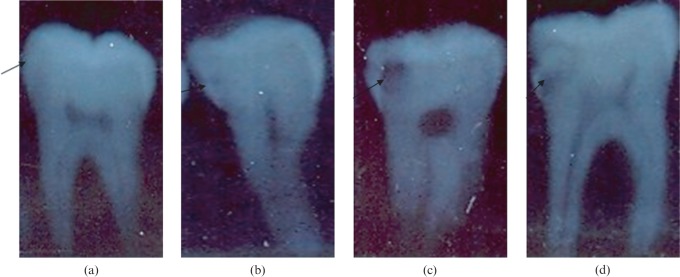
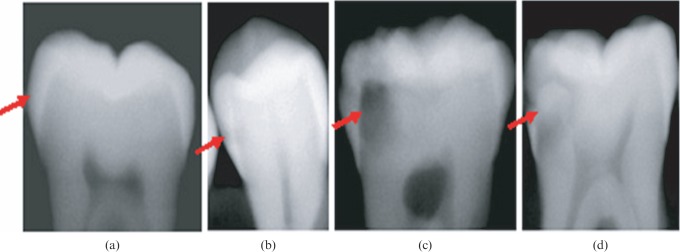
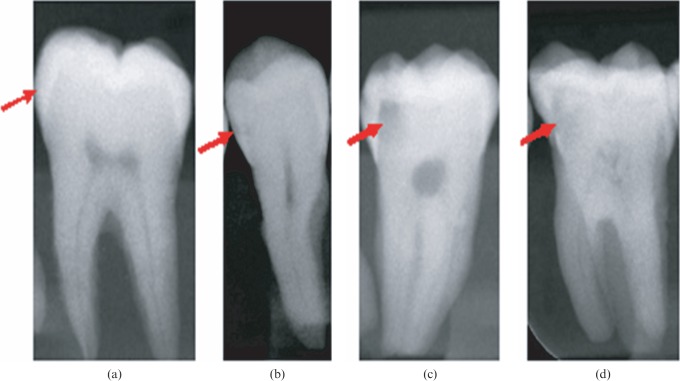
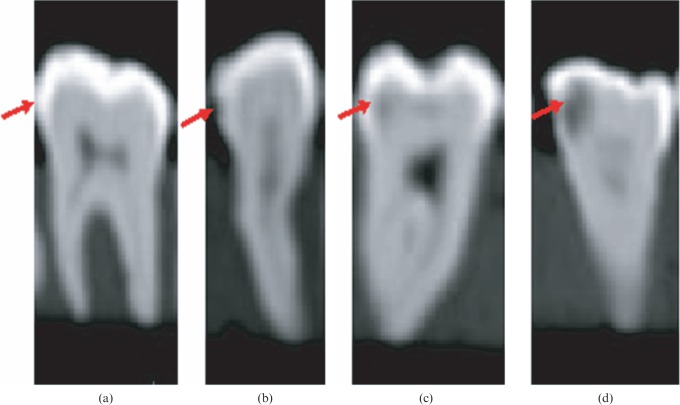
Objective: The purpose of this study was to assess the in vitro diagnostic ability of visual inspection, film, charge-coupled device (CCD) sensor, photostimulable phosphor (PSP) sensor and cone beam CT in the detection of proximal caries in posterior teeth compared with the histological gold standard.
Methods: Visual inspection, film, CCD, PSP and cone beam CT images were used to detect proximal caries in the mesial and distal surfaces of 138 teeth (276 surfaces). Visual inspection and evaluation of all intraoral digital and conventional radiographs and cone beam CT images were performed twice by three oral radiologists. Weighted kappa coefficients were calculated to assess intra- and interobserver agreement for each image set, and scores were compared with the histological gold standard using receiver operating characteristic (ROC) analysis to evaluate diagnostic ability.
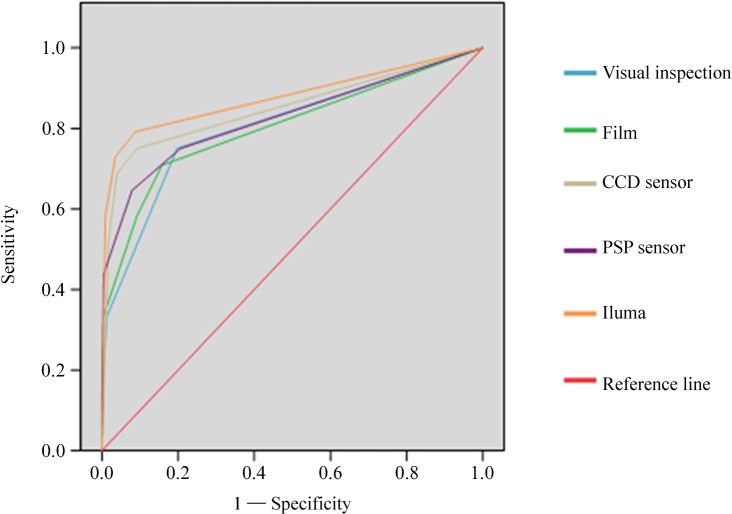
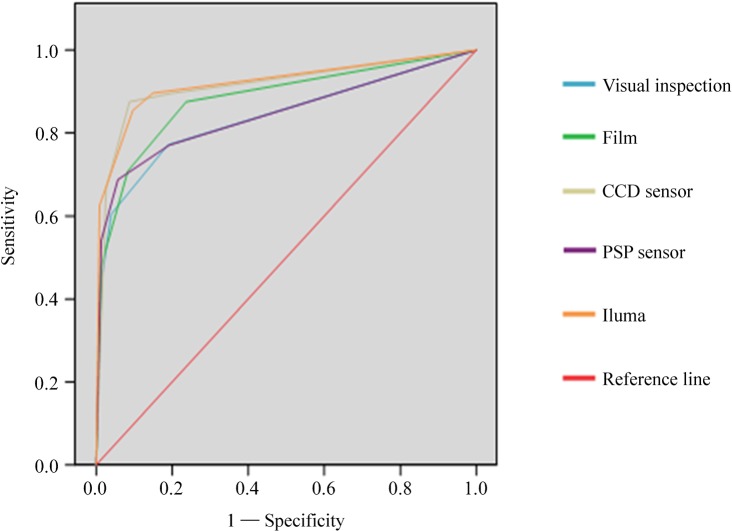
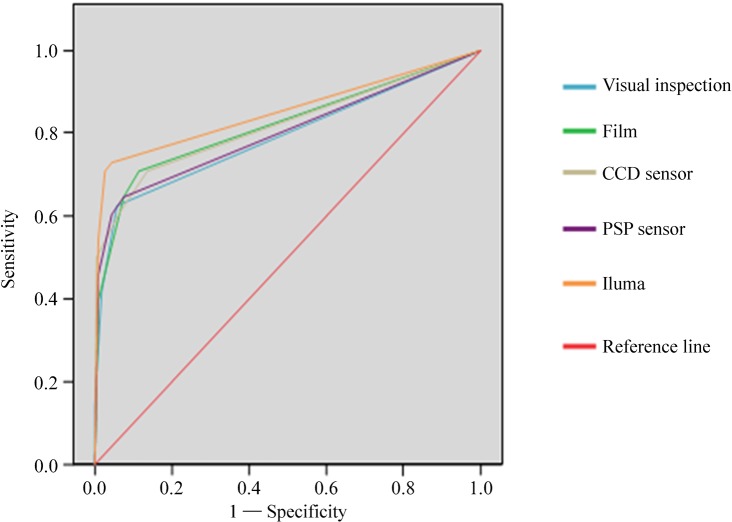
Results: Intraobserver kappa coefficients calculated for each observer for each method of detecting caries ranged from 0.739 to 0.928. Strong interobserver agreement ranging from 0.631 to 0.811 was found for all detection methods. The highest Az values for all three observers were obtained with the cone beam CT images; however, differences between detection methods were not statistically significant (P > 0.05).
Conclusion: Visual inspection, film, CCD, PSP plates and cone beam CT performed similarly in the detection of proximal caries.
Figures
References
-
- Pereira AC, Verdonschot EH, Huysmans MC. Caries detection methods: can they aid decision making for invasive sealant treatment? Caries Res 2001;35:83–89 - PubMed
-
- Attrill DC, Ashley PF. Occlusal caries detection in primary teeth: a comparison of DIAGNOdent with conventional methods. Br Dent J 2001;190:440–443 - PubMed
-
- Ohki M, Okano T, Nakamura T. Factors determining the diagnostic accuracy of digitized conventional intra-oral radiographs. Dentomaxillofac Radiol 1994;23:77–82 - PubMed
-
- Haak R, Wicht MJ, Noack MJ. Conventional, digital and contrast-enhanced bite-wing radiographs in the decision to restore proximal carious lesions. Caries Res 2001;35:193–199 - PubMed
-
- Moystad A, Svanaes DB, Risnes S, Larheim TA, Gröndahl HG. Detection of proximal caries with a storage phosphor system. A comparison of enhanced digital images with dental x-ray film. Dentomaxillofac Radiol 1996;25:202–206 - PubMed
Publication types
MeSH terms
LinkOut - more resources
Full Text Sources
Medical
Miscellaneous
