Insulin-like growth factor I suppresses bone morphogenetic protein signaling in prostate cancer cells by activating mTOR signaling
- PMID: 21062988
- PMCID: PMC3285447
- DOI: 10.1158/0008-5472.CAN-10-1119
Insulin-like growth factor I suppresses bone morphogenetic protein signaling in prostate cancer cells by activating mTOR signaling
Retraction in
-
Retraction: Insulin-Like Growth Factor I Suppresses Bone Morphogenetic Protein Signaling in Prostate Cancer Cells by Activating mTOR Signaling.Cancer Res. 2020 May 1;80(9):1902. doi: 10.1158/0008-5472.CAN-20-0679. Cancer Res. 2020. PMID: 32366529 Free PMC article. No abstract available.
Abstract
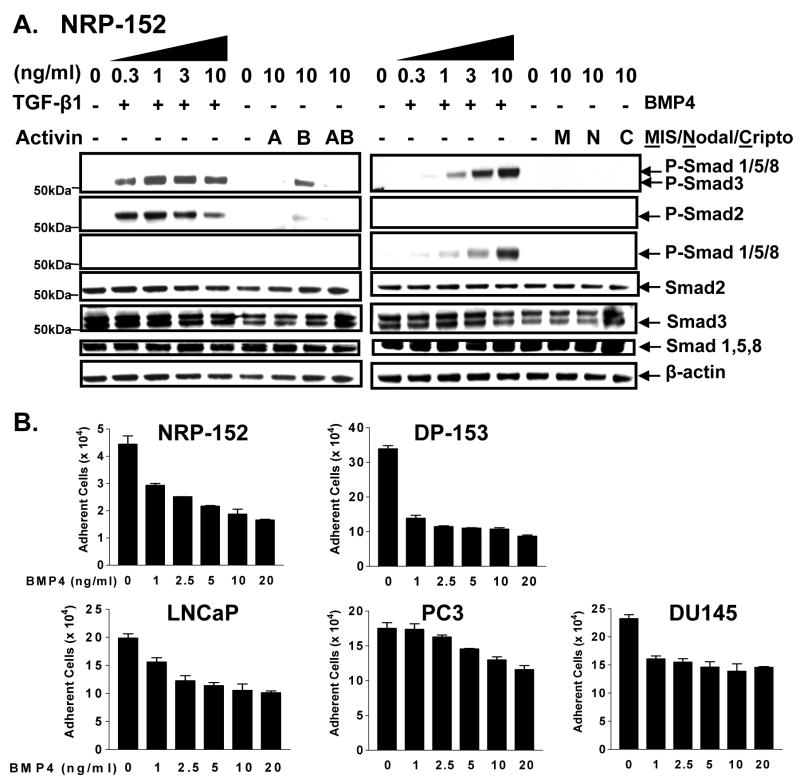
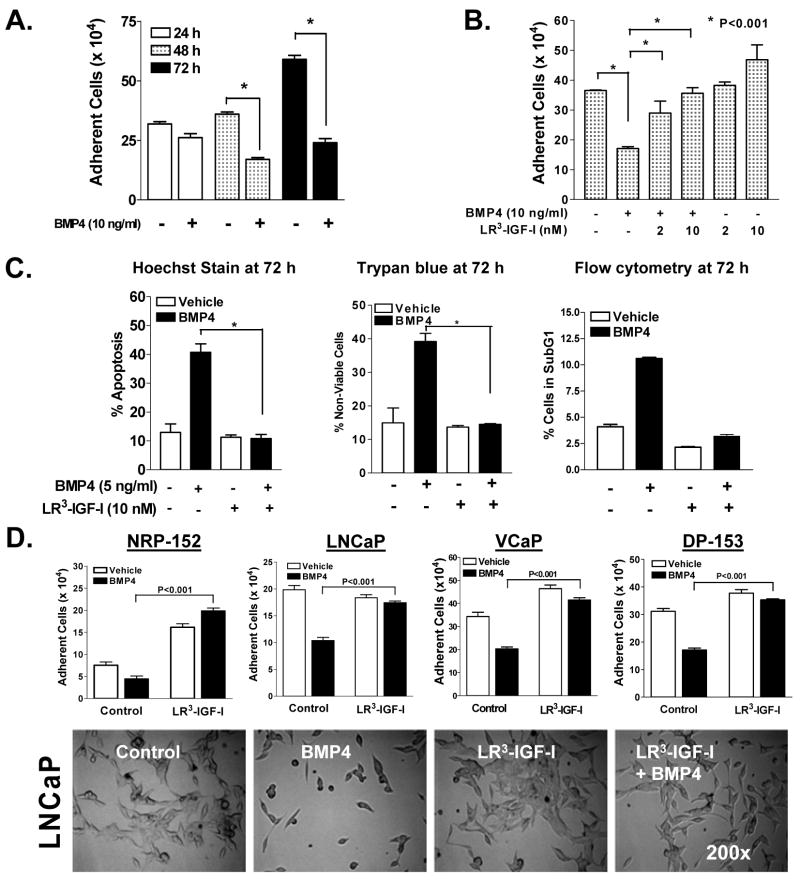
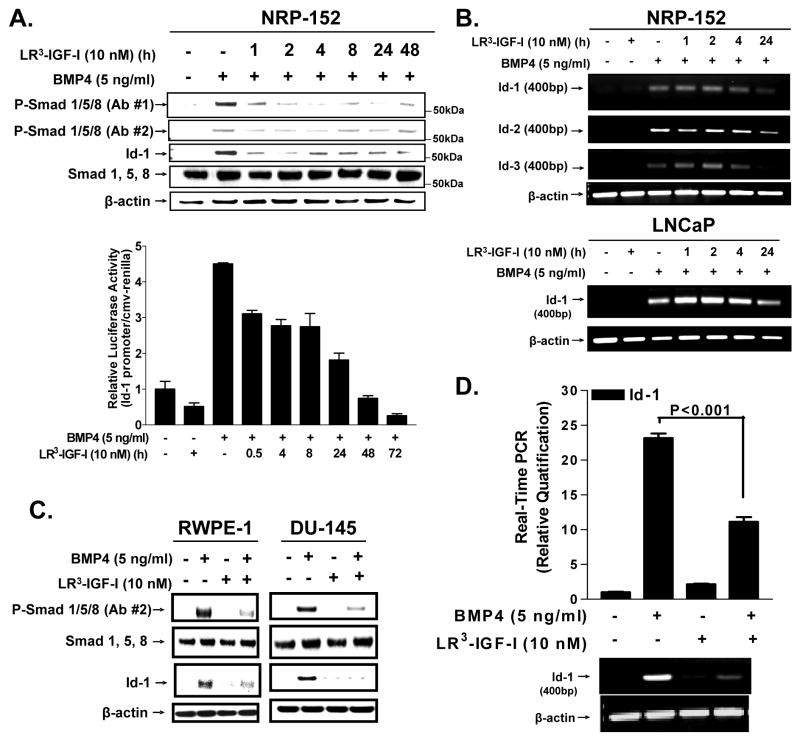
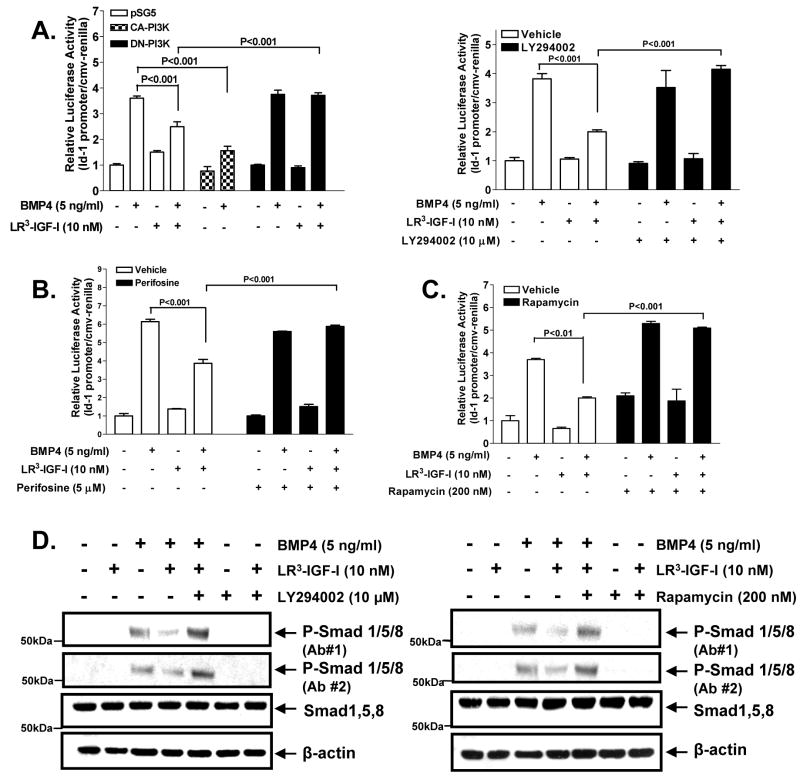
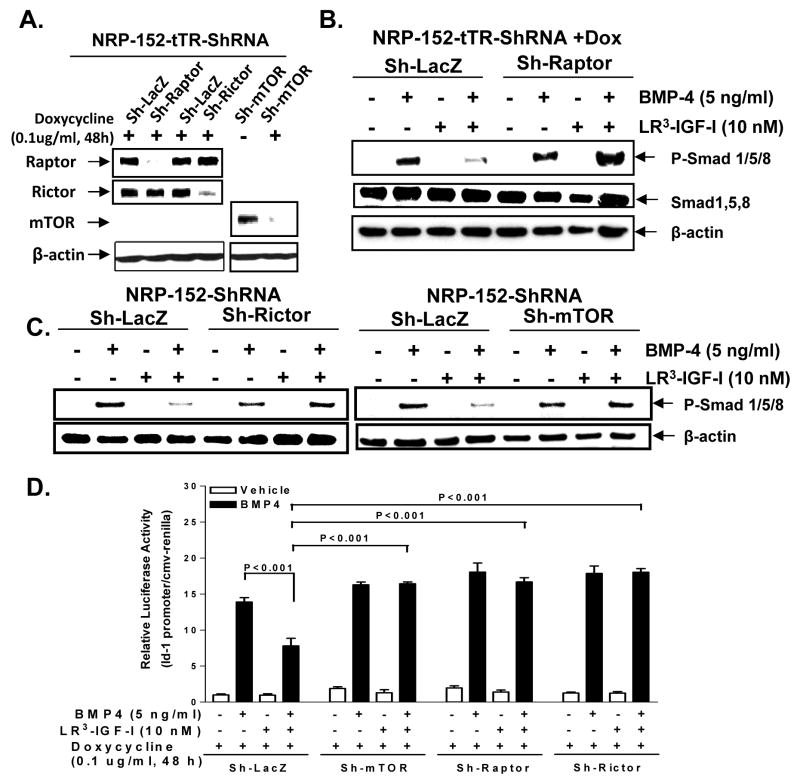
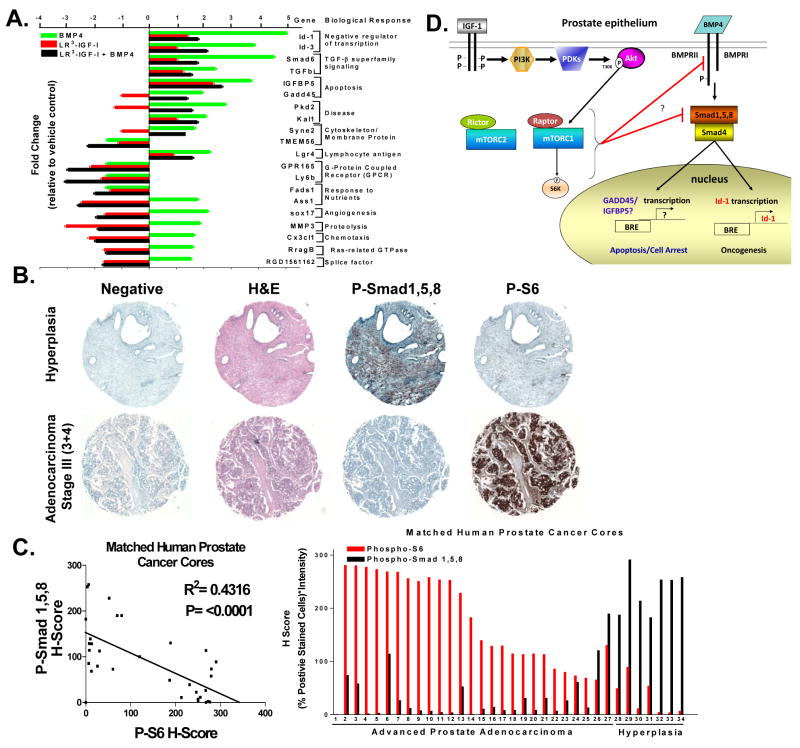
Insulin-like growth factor (IGF) I and bone morphogenetic proteins (BMP) are critical regulators of prostate tumor cell growth. In this report, we offer evidence that a critical support of IGF-I in prostate cancer is mediated by its ability to suppress BMP4-induced apoptosis and Smad-mediated gene expression. Suppression of BMP4 signaling by IGF-I was reversed by chemical inhibitors of phosphoinositide 3-kinase (PI3K), Akt, or mTOR; by enforced expression of wild-type PTEN or dominant-negative PI3K; or by small hairpin RNA-mediated silencing of mTORC1/2 subunits Raptor or Rictor. Similarly, IGF-I suppressed BMP4-induced transcription of the Id1, Id2, and Id3 genes that are crucially involved in prostate tumor progression through PI3K-dependent and mTORC1/2-dependent mechanisms. Immunohistochemical analysis of non-malignant and malignant prostate tissues offered in vivo support for our model that IGF-I-mediated activation of mTOR suppresses phosphorylation of the BMP-activated Smad transcription factors. Our results offer the first evidence that IGF-I signaling through mTORC1/2 is a key homeostatic regulator of BMP4 function in prostate epithelial cells, acting at two levels to repress both the proapoptotic and pro-oncogenic signals of BMP-activated Smads. We suggest that deregulation of this homeostatic control may be pivotal to the development and progression of prostate cancer, providing important implications and new potential targets for the therapeutic intervention of this malignancy.
Copyright © 2010 AACR.
Figures
References
-
- Wozney JM, Rosen V, Celeste AJ, et al. Novel regulators of bone formation: molecular clones and activities. Science. 1988;242:1528–34. - PubMed
-
- Nohno T, Ishikawa T, Saito T, et al. Identification of a human type II receptor for bone morphogenetic protein-4 that forms differential heteromeric complexes with bone morphogenetic protein type I receptors. J Biol Chem. 1995;270:22522–6. - PubMed
-
- Macias-Silva M, Hoodless PA, Tang SJ, Buchwald M, Wrana JL. Specific activation of Smad1 signaling pathways by the BMP7 type I receptor, ALK2. J Biol Chem. 1998;273:25628–36. - PubMed
-
- Massague J. Receptors for the TGF-beta family. Cell. 1992;69:1067–70. - PubMed
Publication types
MeSH terms
Substances
Grants and funding
- R01AG031903/AG/NIA NIH HHS/United States
- 5T32CA059366-15/CA/NCI NIH HHS/United States
- R01 CA102074/CA/NCI NIH HHS/United States
- T32 CA059366/CA/NCI NIH HHS/United States
- 1F31CA142311-01/CA/NCI NIH HHS/United States
- P30 CA-43703/CA/NCI NIH HHS/United States
- R01 CA134878/CA/NCI NIH HHS/United States
- R01 AG031903/AG/NIA NIH HHS/United States
- R01CA102074/CA/NCI NIH HHS/United States
- P30 CA043703/CA/NCI NIH HHS/United States
- R01 CA092102/CA/NCI NIH HHS/United States
- R01CA092102/CA/NCI NIH HHS/United States
- P30 CA43703/CA/NCI NIH HHS/United States
- F31 CA142311/CA/NCI NIH HHS/United States
LinkOut - more resources
Full Text Sources
Research Materials
Miscellaneous