


Tamoxifen-independent recombination in the RIP-CreER mouse
- PMID: 21063464
- PMCID: PMC2965077
- DOI: 10.1371/journal.pone.0013533
Tamoxifen-independent recombination in the RIP-CreER mouse
Abstract
Background: The inducible Cre-lox system is a valuable tool to study gene function in a spatial and time restricted fashion in mouse models. This strategy relies on the limited background activity of the modified Cre recombinase (CreER) in the absence of its inducer, the competitive estrogen receptor ligand, tamoxifen. The RIP-CreER mouse (Tg (Ins2-cre/Esr1) 1Dam) is among the few available β-cell specific CreER mouse lines and thus it has been often used to manipulate gene expression in the insulin-producing cells of the endocrine pancreas.
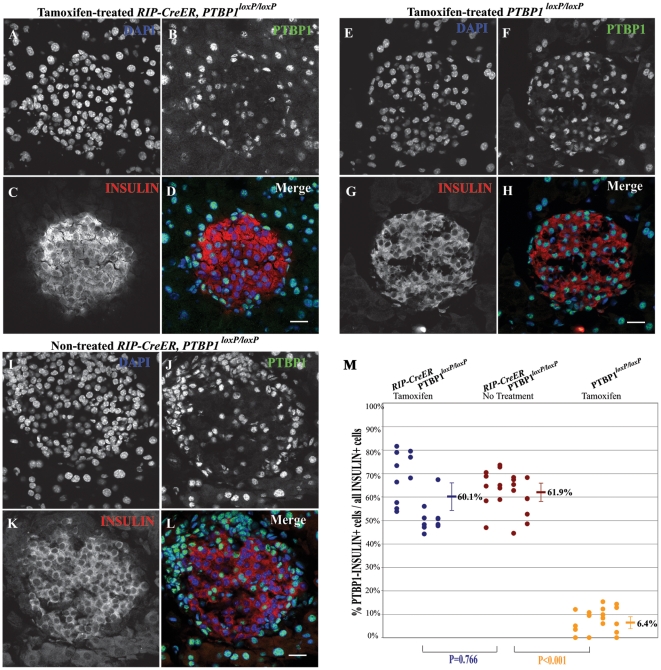
Principal findings: Here, we report the detection of tamoxifen-independent Cre activity as early as 2 months of age in RIP-CreER mice crossed with three distinct reporter strains.
Significance: Evidence of Cre-mediated recombination of floxed alleles even in the absence of tamoxifen administration should warrant cautious use of this mouse for the study of pancreatic β-cells.
Conflict of interest statement
Figures



References
-
- Feil R. Conditional somatic mutagenesis in the mouse using site-specific recombinases. Handb Exp Pharmacol. 2007. pp. 3–28. - PubMed
-
- Joyner AL, Zervas M. Genetic inducible fate mapping in mouse: establishing genetic lineages and defining genetic neuroanatomy in the nervous system. Dev Dyn. 2006;235:2376–2385. - PubMed
Publication types
MeSH terms
Substances
LinkOut - more resources
Full Text Sources
Molecular Biology Databases
Research Materials
Miscellaneous
