


Pnpla3/Adiponutrin deficiency in mice does not contribute to fatty liver disease or metabolic syndrome
- PMID: 21068004
- PMCID: PMC3023552
- DOI: 10.1194/jlr.M011205
Pnpla3/Adiponutrin deficiency in mice does not contribute to fatty liver disease or metabolic syndrome
Abstract
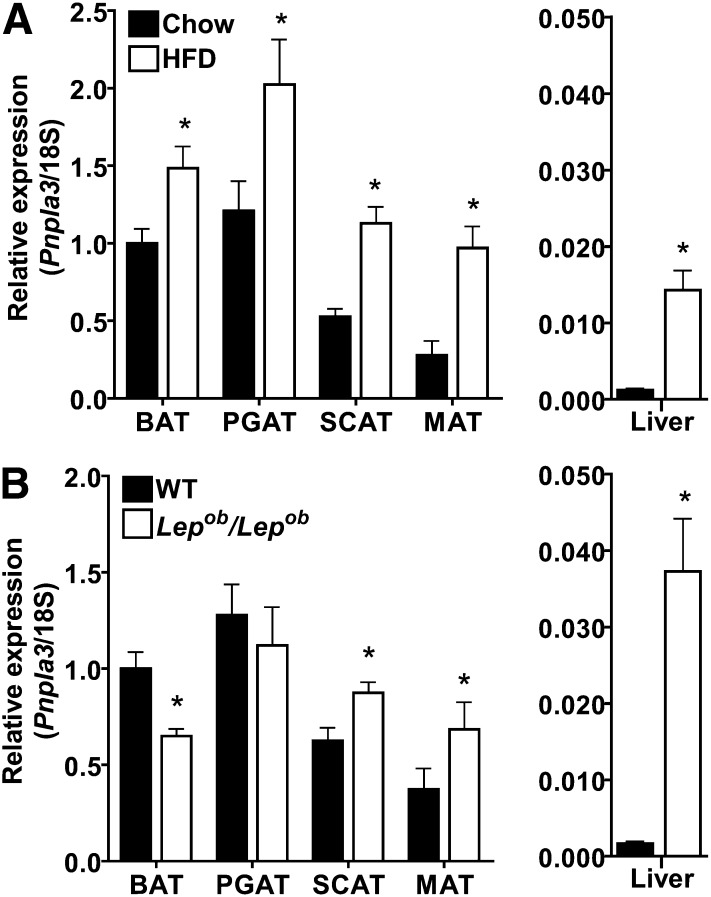
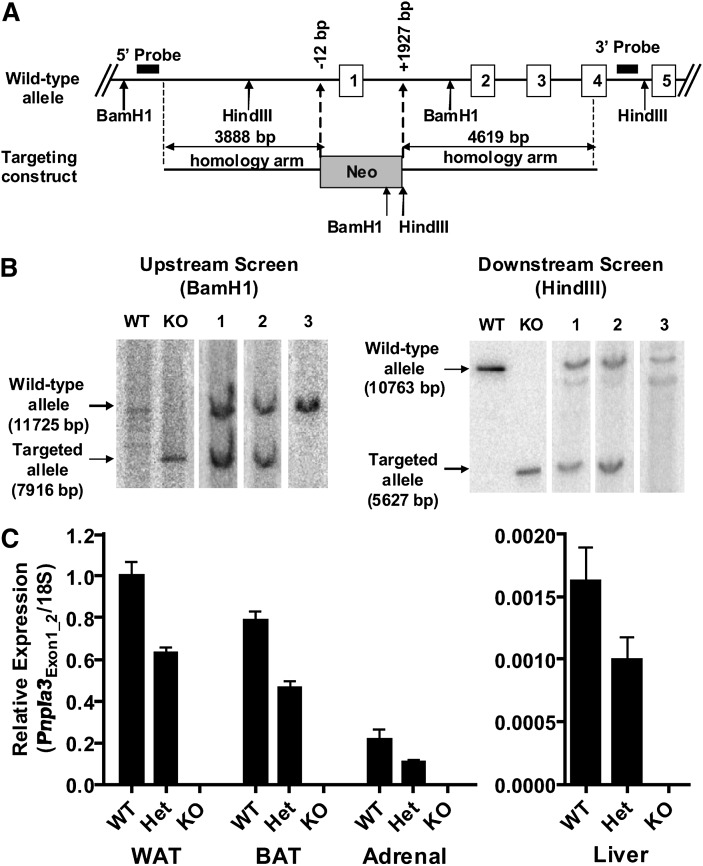
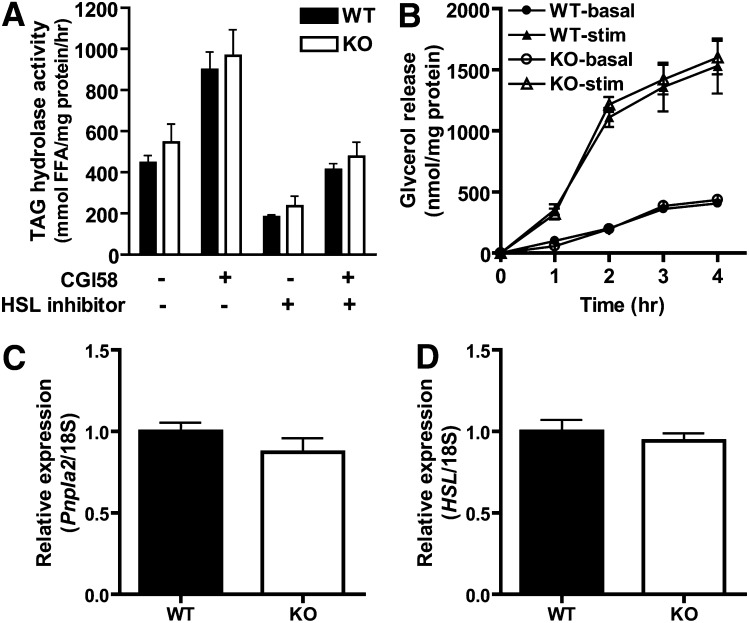
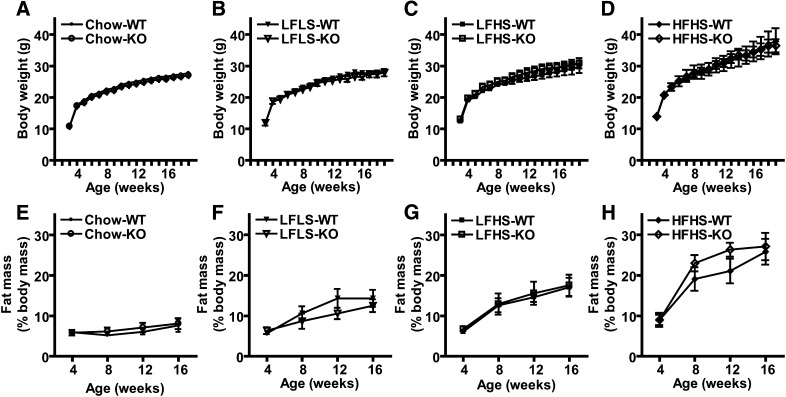
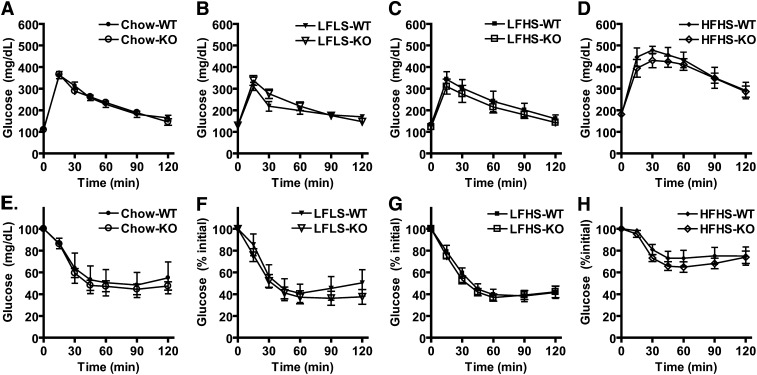
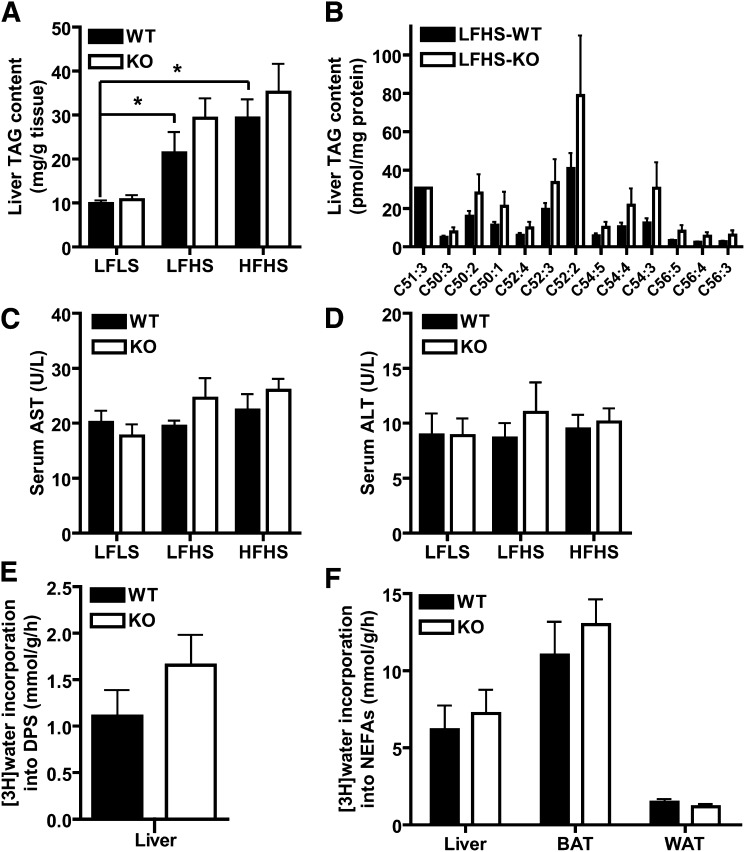
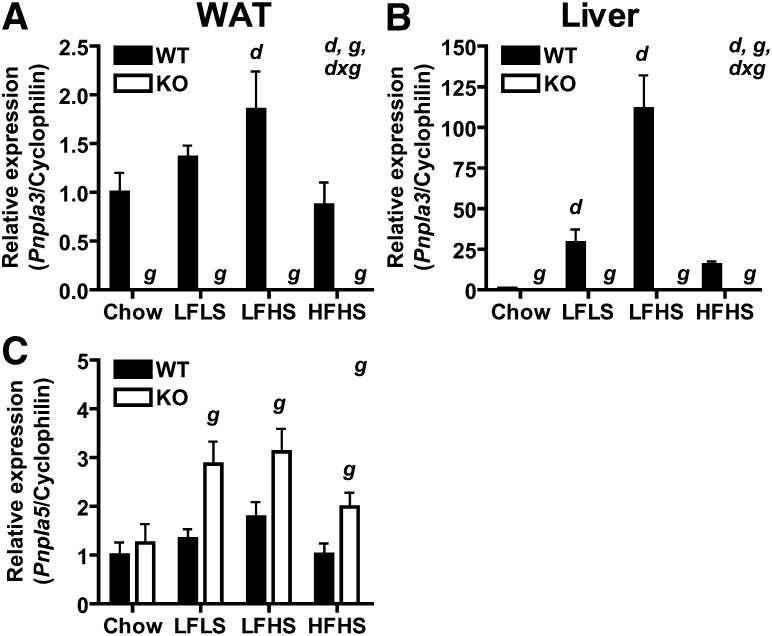
PNPLA3 (adiponutrin, calcium-independent phospholipase A(2) epsilon [iPLA(2)ε]) is an adipose-enriched, nutritionally regulated protein that belongs to the patatin-like phospholipase domain containing (PNPLA) family of lipid metabolizing proteins. Genetic variations in the human PNPLA3 gene (i.e., the rs738409 I148M allele) has been strongly and repeatedly associated with fatty liver disease. Although human PNPLA3 has triacylglycerol (TAG) hydrolase and transacylase activities in vitro, its in vivo function and physiological relevance remain controversial. The objective of this study was to determine the metabolic consequences of global targeted deletion of the Pnpla3 gene in mice. We found that Pnpla3 mRNA expression is altered in adipose tissue and liver in response to acute and chronic nutritional challenges. However, global targeted deletion of the Pnpla3 gene in mice did not affect TAG hydrolysis, nor did it influence energy/glucose/lipid homoeostasis or hepatic steatosis/injury. Experimental interventions designed to increase Pnpla3 expression (refeeding, high-sucrose diet, diet-induced obesity, and liver X receptor agonism) likewise failed to reveal differences in the above-mentioned metabolic phenotypes. Expression of the Pnpla3 paralog, Pnpla5, was increased in adipose tissue but not in liver of Pnpla3-deficient mice, but compensatory regulation of genes involved in TAG metabolism was not identified. Together these data argue against a role for Pnpla3 loss-of-function in fatty liver disease or metabolic syndrome in mice.
Figures
References
-
- Schaffer J. E. 2003. Lipotoxicity: when tissues overeat. Curr. Opin. Lipidol. 14: 281–287. - PubMed
-
- Unger R. H. 2003. Minireview: weapons of lean body mass destruction: the role of ectopic lipids in the metabolic syndrome. Endocrinology. 144: 5159–5165. - PubMed
-
- Stefan N., Kantartzis K., Haring H. U. 2008. Causes and metabolic consequences of Fatty liver. Endocr. Rev. 29: 939–960. - PubMed
-
- Marchesini G., Brizi M., Bianchi G., Tomassetti S., Bugianesi E., Lenzi M., McCullough A. J., Natale S., Forlani G., Melchionda N. 2001. Nonalcoholic fatty liver disease: a feature of the metabolic syndrome. Diabetes. 50: 1844–1850. - PubMed
Publication types
MeSH terms
Substances
Grants and funding
- F 3001/FWF_/Austrian Science Fund FWF/Austria
- P01 HL020948/HL/NHLBI NIH HHS/United States
- P01 HL-020948/HL/NHLBI NIH HHS/United States
- Z 136/FWF_/Austrian Science Fund FWF/Austria
- HHMI/Howard Hughes Medical Institute/United States
- F 3002/FWF_/Austrian Science Fund FWF/Austria
- P01 HL-057278/HL/NHLBI NIH HHS/United States
- RL1 HL-092550/HL/NHLBI NIH HHS/United States
- P30 DK036836/DK/NIDDK NIH HHS/United States
- RL1 HL092550/HL/NHLBI NIH HHS/United States
- P30-DK-036836/DK/NIDDK NIH HHS/United States
- P01 HL057278/HL/NHLBI NIH HHS/United States
LinkOut - more resources
Full Text Sources
Other Literature Sources
Medical
Molecular Biology Databases
Research Materials
