


Female sticklebacks transfer information via eggs: effects of maternal experience with predators on offspring
- PMID: 21068041
- PMCID: PMC3081764
- DOI: 10.1098/rspb.2010.1819
Female sticklebacks transfer information via eggs: effects of maternal experience with predators on offspring
Abstract
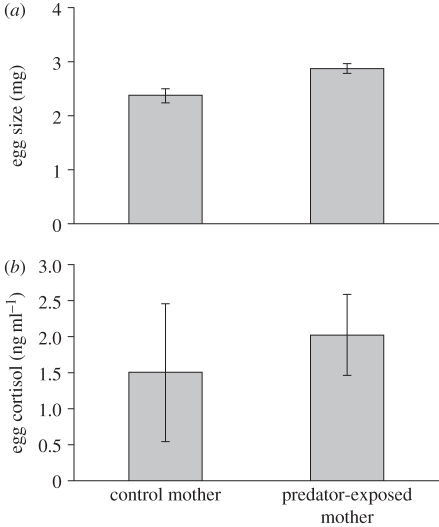
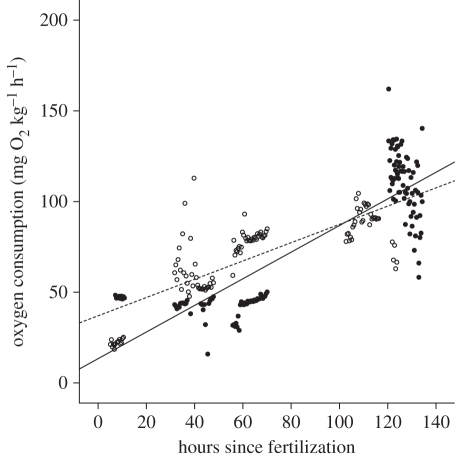
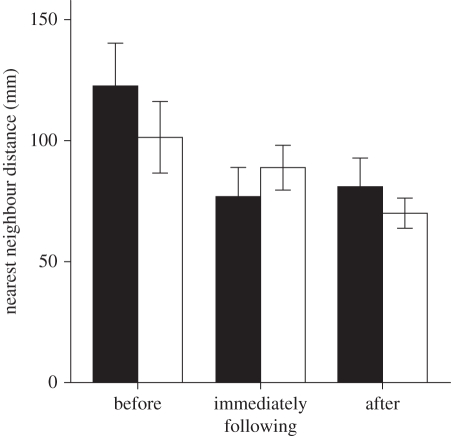
There is growing evidence that maternal experience influences offspring via non-genetic mechanisms. When female three-spined sticklebacks (Gasterosteus aculeatus) were exposed to the threat of predation, they produced larger eggs with higher cortisol content, which consumed more oxygen shortly after fertilization compared with a control group. As juveniles, the offspring of predator-exposed mothers exhibited tighter shoaling behaviour, an antipredator defence. We did not detect an effect of maternal exposure to predation risk on the somatic growth of fry. Altogether, we found that exposure to an ecologically relevant stressor during egg formation had several long-lasting consequences for offspring, some of which might be mediated by exposure to maternally derived cortisol. These results support the hypothesis that female sticklebacks might influence the development, growth and behaviour of their offspring via eggs to match their future environment.
Figures
References
-
- Storm J. J., Lima S. L. 2010. Mothers forewarn offspring about predators: a transgenerational maternal effect on behaviour. Am. Nat. 175, 382–390 10.1086/650443 (doi:10.1086/650443) - DOI - PubMed
-
- Clarke A. S., Schneider M. L. 1993. Prenatal stress has long-term effects on behavioural responses to stress in juvenile rhesus monkeys. Dev. Psychobiol. 26, 293–304 10.1002/dev.420260506 (doi:10.1002/dev.420260506) - DOI - PubMed
-
- Nishio H., Kasuga S., Ushijima M., Harada Y. 2001. Prenatal stress and postnatal development of neonatal rats: sex dependent effects on emotional behavior and learning ability of neonatal rats. Int. J. Dev. Neurosci. 19, 37–45 10.1016/S0736-5748(00)00070-8 (doi:10.1016/S0736-5748(00)00070-8) - DOI - PubMed
-
- Sheriff M. J., Krebs C. J., Boonstra R. 2010. The ghosts of predators past: population cycles and the role of maternal programming under fluctuating predation risk. Ecology 91, 2983–2994 10.1890/09-1108.1 (doi:10.1890/09-1108.1) - DOI - PubMed
-
- Gil D. 2008. Hormones in avian eggs: physiology, ecology and behaviour. Adv. Stud. Behav. 38, 337–398 10.1016/S0065-3454(08)00007-7 (doi:10.1016/S0065-3454(08)00007-7) - DOI
MeSH terms
Grants and funding
LinkOut - more resources
Full Text Sources
Medical
Research Materials
