GPR119 regulates murine glucose homeostasis through incretin receptor-dependent and independent mechanisms
- PMID: 21068156
- PMCID: PMC3082521
- DOI: 10.1210/en.2010-1047
GPR119 regulates murine glucose homeostasis through incretin receptor-dependent and independent mechanisms
Abstract
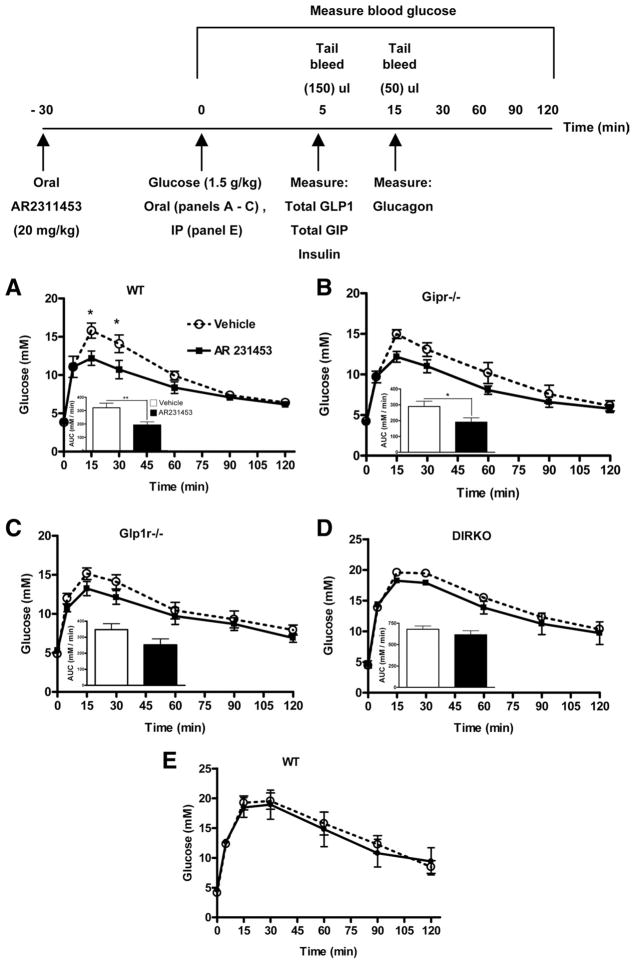
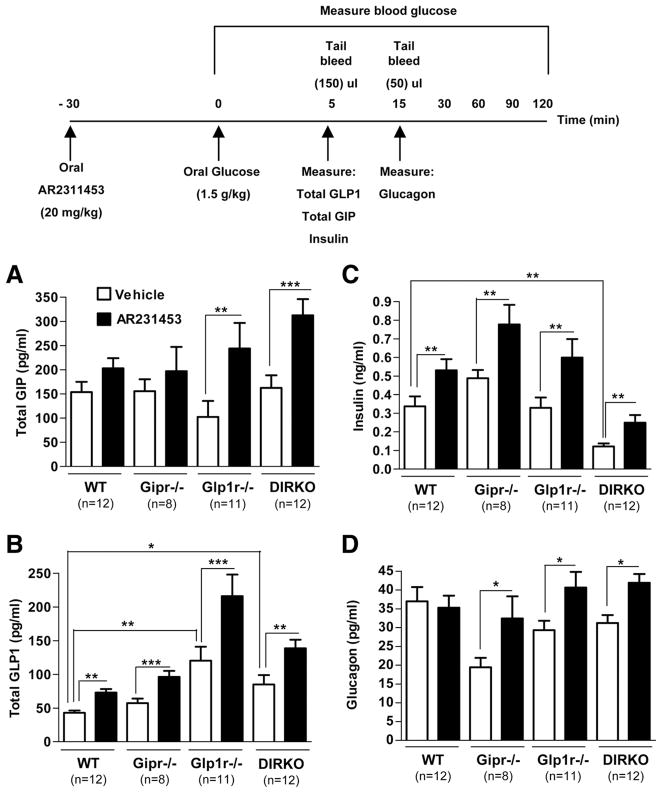
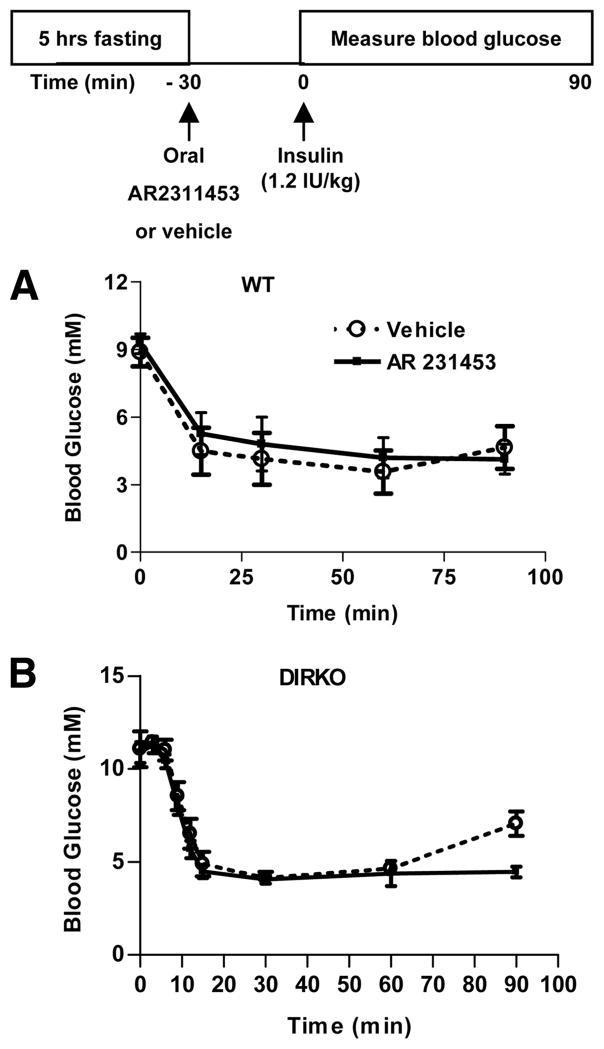
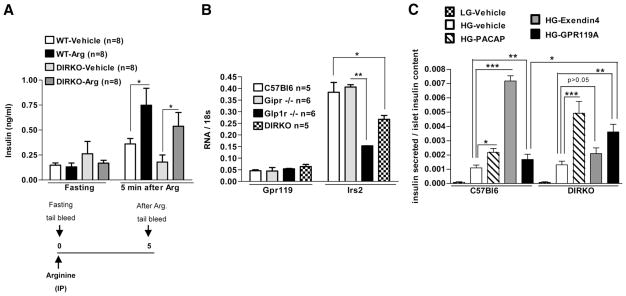
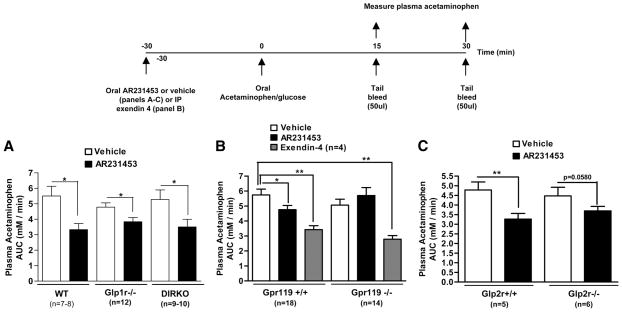
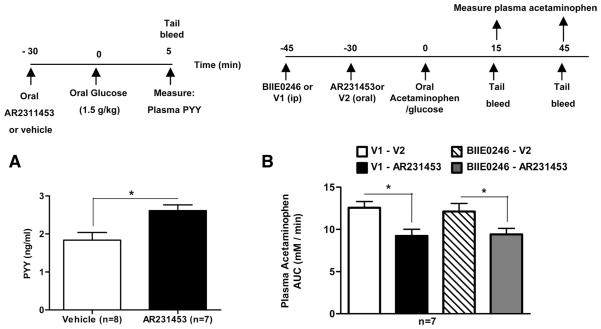
G protein-coupled receptor 119 (GPR119) was originally identified as a β-cell receptor. However, GPR119 activation also promotes incretin secretion and enhances peptide YY action. We examined whether GPR119-dependent control of glucose homeostasis requires preservation of peptidergic pathways in vivo. Insulin secretion was assessed directly in islets, and glucoregulation was examined in wild-type (WT), single incretin receptor (IR) and dual IR knockout (DIRKO) mice. Experimental endpoints included plasma glucose, insulin, glucagon, glucagon-like peptide-1 (GLP-1), glucose-dependent insulinotropic peptide (GIP), and peptide YY. Gastric emptying was assessed in WT, Glp1r-/-, DIRKO, Glp2r-/-, and GPR119-/- mice treated with the GPR119 agonist AR231453. AR231453 stimulated insulin secretion from WT and DIRKO islets in a glucose-dependent manner, improved glucose homeostasis, and augmented plasma levels of GLP-1, GIP, and insulin in WT and Gipr-/- mice. In contrast, although AR231453 increased levels of GLP-1, GIP, and insulin, it failed to lower glucose in Glp1r-/- and DIRKO mice. Furthermore, AR231453 did not improve ip glucose tolerance and had no effect on insulin action in WT and DIRKO mice. Acute GPR119 activation with AR231453 inhibited gastric emptying in Glp1r-/-, DIRKO, Glp2r-/-, and in WT mice independent of the Y2 receptor (Y2R); however, AR231453 did not control gastric emptying in GPR119-/- mice. Our findings demonstrate that GPR119 activation directly stimulates insulin secretion from islets in vitro, yet requires intact IR signaling and enteral glucose exposure for optimal control of glucose tolerance in vivo. In contrast, AR231453 inhibits gastric emptying independent of incretin, Y2R, or Glp2 receptors through GPR119-dependent pathways. Hence, GPR119 engages multiple complementary pathways for control of glucose homeostasis.
Figures
References
-
- Pederson RA, Schubert HE, Brown JC. Gastric inhibitory polypeptide. Its physiologic release and insulinotropic action in the dog. Diabetes. 1975;24:1050–1056. - PubMed
-
- Drucker DJ. The biology of incretin hormones. Cell Metab. 2006;3:153–165. - PubMed
-
- Deacon CF. Therapeutic strategies based on glucagon-like peptide 1. Diabetes. 2004;53:2181–2189. - PubMed
-
- Drucker DJ, Nauck MA. The incretin system: glucagon-like peptide-1 receptor agonists and dipeptidyl peptidase-4 inhibitors in type 2 diabetes. Lancet. 2006;368:1696–1705. - PubMed
-
- Ahrén B. Islet G protein-coupled receptors as potential targets for treatment of type 2 diabetes. Nat Rev Drug Discov. 2009;8:369–385. - PubMed
Publication types
MeSH terms
Substances
Grants and funding
LinkOut - more resources
Full Text Sources
Other Literature Sources
Medical
Molecular Biology Databases