


Social stratification of body weight trajectory in middle-age and older americans: results from a 14-year longitudinal study
- PMID: 21068396
- PMCID: PMC3470852
- DOI: 10.1177/0898264310385930
Social stratification of body weight trajectory in middle-age and older americans: results from a 14-year longitudinal study
Abstract
Objective: To depict the trajectory of BMI from middle to late adulthood and to examine social variations in BMI trajectories.
Method: Eight waves (1992-2006) of the Health and Retirement Study involving a nationally representative sample of Americans aged 51 to 61 years at baseline were used. Changes in BMI were analyzed using hierarchical linear modeling with time-constant and time-varying covariates.
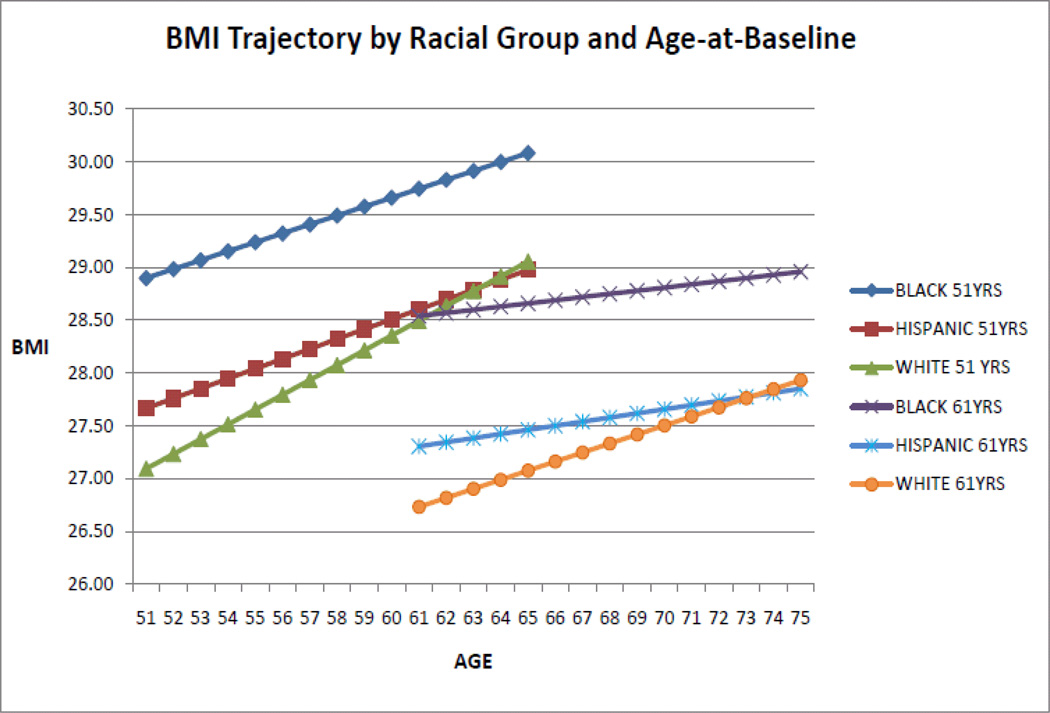
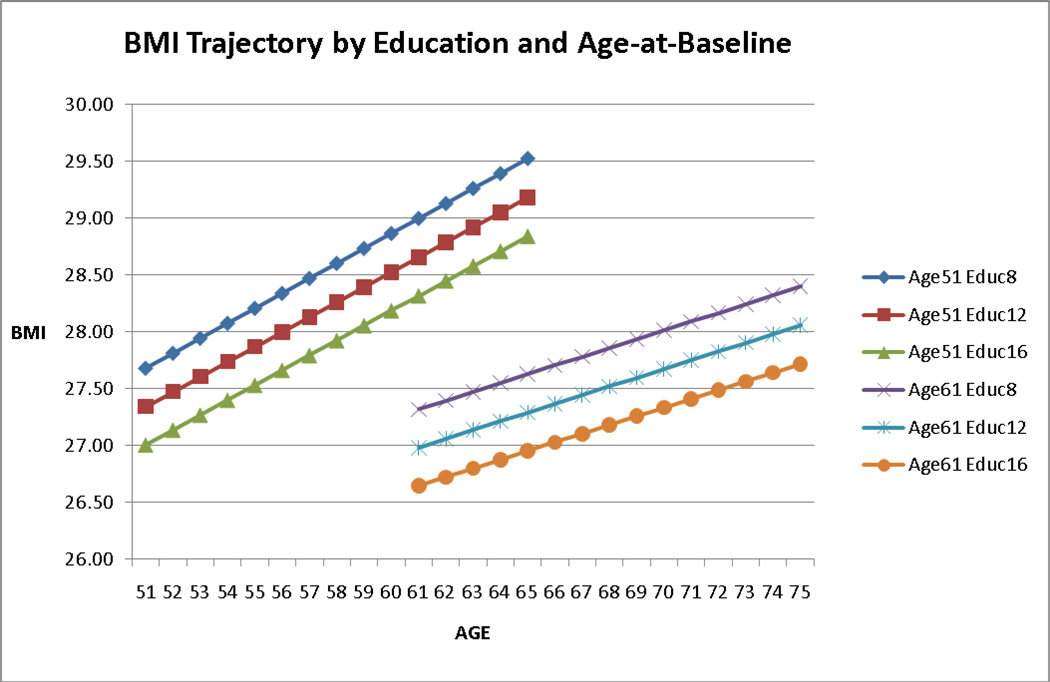
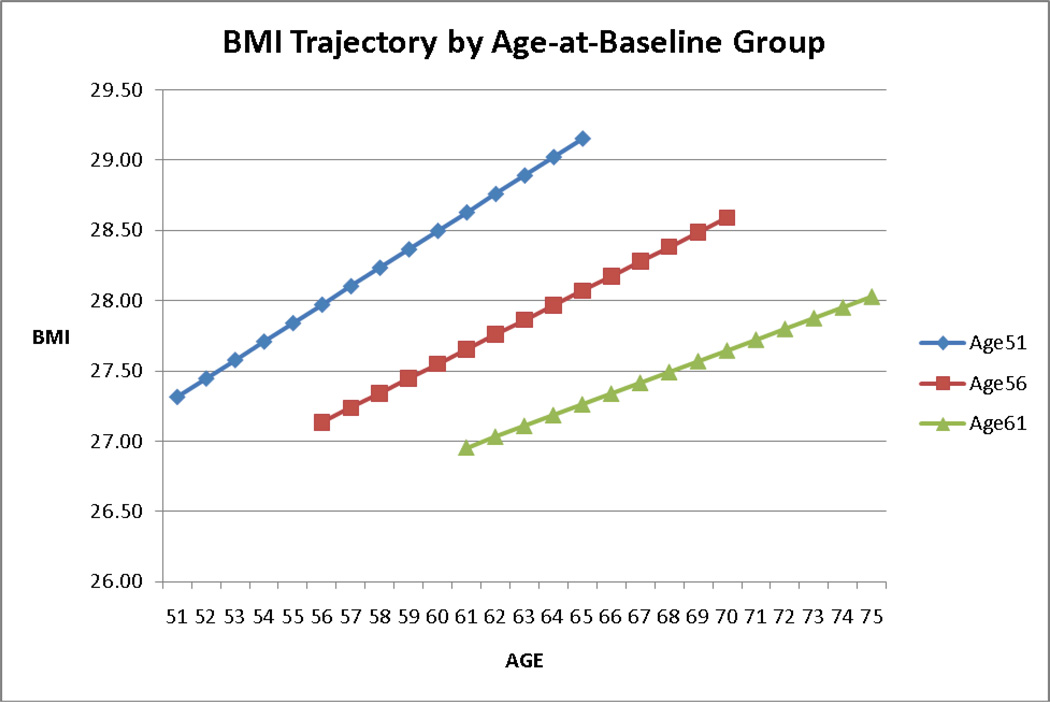
Results: BMI increased linearly over time. Compared with Caucasians, African-Americans had higher BMI levels, while Hispanics had similar BMI levels, but lower rates of increase over time. Higher education predicted lower BMI levels and was not associated with the rate of change. Younger age-at-baseline predicted lower BMI level and lower rate of increase. No gender differences were found.
Discussion: Observed racial/ethnic and educational differences in BMI trajectory from middle to old age inform policies and interventions aimed at modifying health risks and reducing health disparities in old age.
Conflict of interest statement
Figures
References
-
- Adler NE, Marmot M, McEwen BS, Stewart J, editors. Socioeconomic status and health in industrialized nations: Social, psychological, and biological pathways. 1. Vol. 896. New York, NY: The Annals of the New York Academy of Sciences; 1999. - PubMed
-
- Adler NE, Ostrove JM. Socioeconomic status and health: What we know and what we don't. In: Adler NE, Marmot M, McEwen BS, Stewart J, editors. Socioeconomic status and health in industrialized nations: Social, psychological, and biological pathways. 1. Vol. 896. New York, NY: The Annals of the New York Academy of Sciences; 1999. pp. 3–15. - PubMed
-
- Akresh IR. Dietary assimilation and health among Hispanic immigrants to the United States. Journal of Health and Social Behavior. 2007;48(4):404–417. - PubMed
-
- Alwin DF, Wray LA. A life-span developmental perspective on social status and health. Journal of Gerontology: Social Sciences. 2005;60(2):7–14. - PubMed
Publication types
MeSH terms
Grants and funding
LinkOut - more resources
Full Text Sources
Medical
