


Cyanobacteria and chloroflexi-dominated hypolithic colonization of quartz at the hyper-arid core of the Atacama Desert, Chile
- PMID: 21069402
- PMCID: PMC3017302
- DOI: 10.1007/s00792-010-0334-3
Cyanobacteria and chloroflexi-dominated hypolithic colonization of quartz at the hyper-arid core of the Atacama Desert, Chile
Abstract
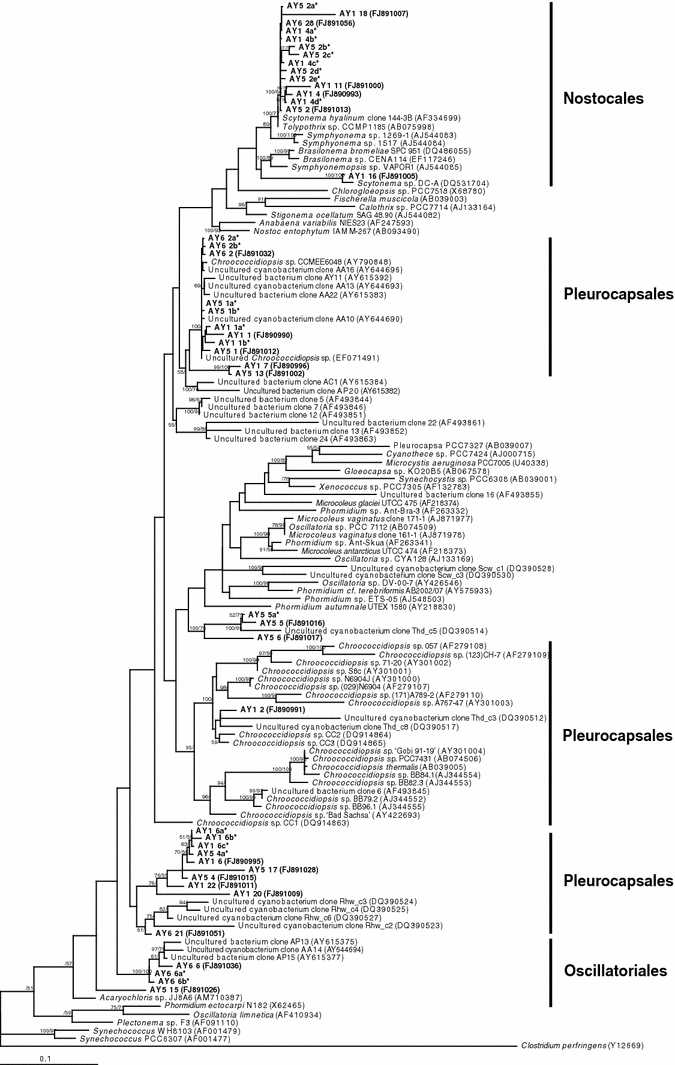
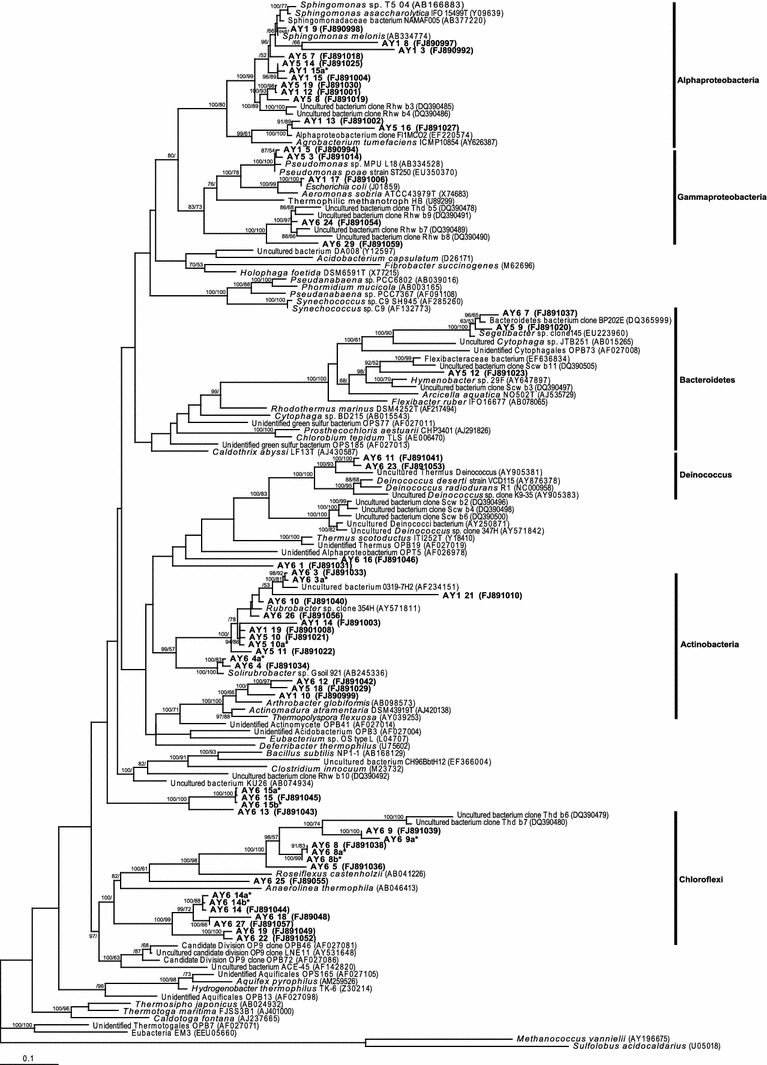
Quartz stones are ubiquitous in deserts and are a substrate for hypoliths, microbial colonists of the underside of such stones. These hypoliths thrive where extreme temperature and moisture stress limit the occurrence of higher plant and animal life. Several studies have reported the occurrence of green hypolithic colonization dominated by cyanobacteria. Here, we describe a novel red hypolithic colonization from Yungay, at the hyper-arid core of the Atacama Desert in Chile. Comparative analysis of green and red hypoliths from this site revealed markedly different microbial community structure as revealed by 16S rRNA gene clone libraries. Green hypoliths were dominated by cyanobacteria (Chroococcidiopsis and Nostocales phylotypes), whilst the red hypolith was dominated by a taxonomically diverse group of chloroflexi. Heterotrophic phylotypes common to all hypoliths were affiliated largely to desiccation-tolerant taxa within the Actinobacteria and Deinococci. Alphaproteobacterial phylotypes that affiliated with nitrogen-fixing taxa were unique to green hypoliths, whilst Gemmatimonadetes phylotypes occurred only on red hypolithon. Other heterotrophic phyla recovered with very low frequency were assumed to represent functionally relatively unimportant taxa.
Figures
References
-
- Broady PA. The distribution of terrestrial and hydro-terrestrial algal associations at three contrasting locations in southern Victoria Land, Antarctica. Algalogical Stud. 2005;118:95–112. doi: 10.1127/1864-1318/2006/0118-0095. - DOI
Publication types
MeSH terms
Substances
LinkOut - more resources
Full Text Sources
Molecular Biology Databases
