


A new generation fatty acid amide hydrolase inhibitor protects against kainate-induced excitotoxicity
- PMID: 21069475
- PMCID: PMC4124033
- DOI: 10.1007/s12031-010-9472-4
A new generation fatty acid amide hydrolase inhibitor protects against kainate-induced excitotoxicity
Abstract
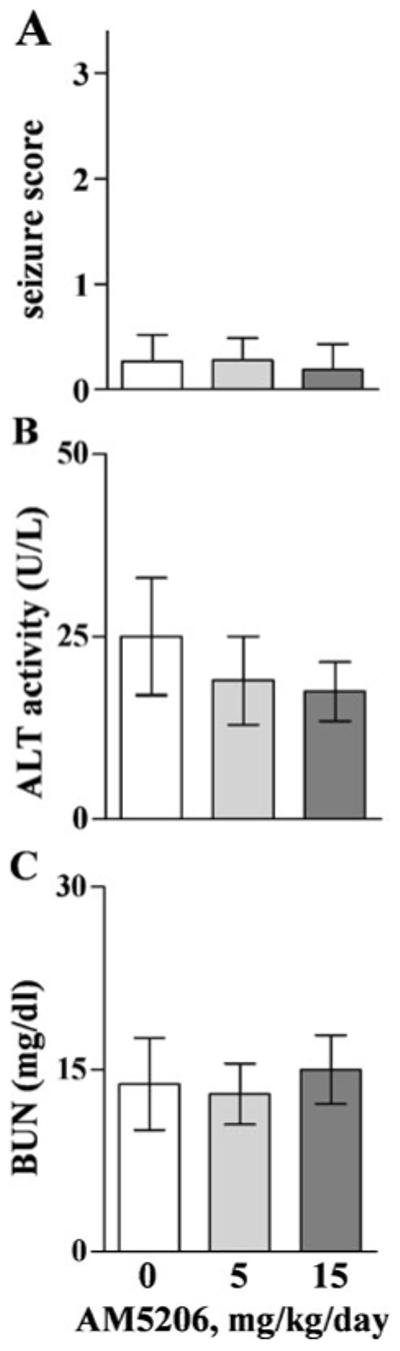
Endocannabinoids, including anandamide (AEA), have been implicated in neuroprotective on-demand responses. Related to such a response to injury, an excitotoxic kainic acid (KA) injection (i.p.) was found to increase AEA levels in the brain. To modulate the endocannabinoid response during events of excitotoxicity in vitro and in vivo, we utilized a new generation compound (AM5206) that selectively inhibits the AEA deactivating enzyme fatty acid amide hydrolase (FAAH). KA caused calpain-mediated spectrin breakdown, declines in synaptic markers, and disruption of neuronal integrity in cultured hippocampal slices. FAAH inhibition with AM5206 protected against the neurodegenerative cascade assessed in the slice model 24 h postinsult. In vivo, KA administration induced seizures and the same neurodegenerative events exhibited in vitro. When AM5206 was injected immediately after KA in rats, the seizure scores were markedly reduced as were levels of cytoskeletal damage and synaptic protein decline. The pre- and postsynaptic proteins were protected by the FAAH inhibitor to levels comparable to those found in healthy control brains. These data support the idea that endocannabinoids are released and converge on pro-survival pathways that prevent excitotoxic progression.
Figures


References
-
- Araujo BH, Torres LB, Cossa AC, Naffah-Mazzacoratti Mda G, Cavalheiro EA. Hippocampal expression and distribution of CB1 receptors in the Amazonian rodent Proechimys: an animal model of resistance to epilepsy. Brain Res. 2010;1335:35–40. - PubMed
-
- Arida RM, Scorza FA, de Amorim CR, Cavalheiro EA. Proechimys guyannensis: an animal model of resistance to epilepsy. Epilepsia. 2005;46(Suppl 5):189–197. - PubMed
-
- Bahr BA. Long-term hippocampal slices: a model system for investigating synaptic mechanisms and pathologic processes. J Neurosci Res. 1995;42:294–305. - PubMed
-
- Bahr BA, Abai B, Gall CM, Vanderklish PW, Hoffman KB, Lynch G. Induction of β-amyloid-containing polypeptides in hippocampus: evidence for a concomitant loss of synaptic proteins and interactions with an excitotoxin. Exp Neurol. 1994;129:81–94. - PubMed
-
- Bahr BA, Bendiske J, Brown QB, Munirathinam S, Caba E, Rudin M, Urwyler S, Sauter A, Rogers G. Survival signaling and selective neuroprotection through glutamatergic transmission. Exp Neurol. 2002;174:37–47. - PubMed
Publication types
MeSH terms
Substances
Grants and funding
LinkOut - more resources
Full Text Sources
