. 2011 Oct;31(5):333-43.
doi: 10.1042/BSR20100124.

A brain-derived MeCP2 complex supports a role for MeCP2 in RNA processing

Affiliations

A brain-derived MeCP2 complex supports a role for MeCP2 in RNA processing

Steven W Long et al. Biosci Rep. 2011 Oct.

Abstract

Mutations in MECP2 (methyl-CpG-binding protein 2) are linked to the severe postnatal neurodevelopmental disorder RTT (Rett syndrome). MeCP2 was originally characterized as a transcriptional repressor that preferentially bound methylated DNA; however, recent results indicate MeCP2 is a multifunctional protein. MeCP2 binding is now associated with certain expressed genes and involved in nuclear organization as well, indicating that its gene regulatory function is context-dependent. In addition, MeCP2 is proposed to regulate mRNA splicing and a mouse model for RTT shows aberrant mRNA splicing. To further understand MeCP2 and potential roles in RTT pathogenesis, we have employed a biochemical approach to identify the MeCP2 protein complexes present in the mammalian brain. We show that MeCP2 exists in at least four biochemically distinct pools in the brain and characterize one novel brain-derived MeCP2 complex that contains the splicing factor Prpf3 (pre-mRNA processing factor 3). MeCP2 directly interacts with Prpf3 in vitro and in vivo and many MECP2 RTT truncations disrupt the MeCP2-Prpf3 complex. In addition, MeCP2 and Prpf3 associate in vivo with mRNAs from genes known to be expressed when their promoters are associated with MeCP2. These results support a role for MeCP2 in mRNA biogenesis and suggest an additional mechanism for RTT pathophysiology.


Figures

Figure 1
Figure 1. Brain-derived nuclear MeCP2 exists in multiple biochemically distinct pools
(A) Chromatographic separation of crude rat brain nuclear extract by strong anion exchange (MonoQ resin) results in three distinct pools of MeCP2 as indicated by western blot using the MeCP2 7–18 antibody (Figure S1). The majority of MeCP2 does not bind the column (QF), while the bound MeCP2 elutes in two peaks, at 230mM NaCl (QB1/2) and 450mM NaCl (QB3). (B) MonoQ resin-bound fractions of MeCP2 were treated with (+) or without benzonase nuclease and tested for ability to re-bind the Mono Q. Western blot analysis for MeCP2 of MonoQ flow thru, wash, and 1000mM NaCl step elution shows benzonase treatment does not affect binding of MeCP2 to the Mono Q column. (C) Plasmid spiked MonoQ fractions treated with benzonase (+) or untreated (−) in parallel served as controls for benzonase treatment.
Figure 2
Figure 2. The QB2 pool of MeCP2 co-purifies with 6 candidate proteins including Prpf3
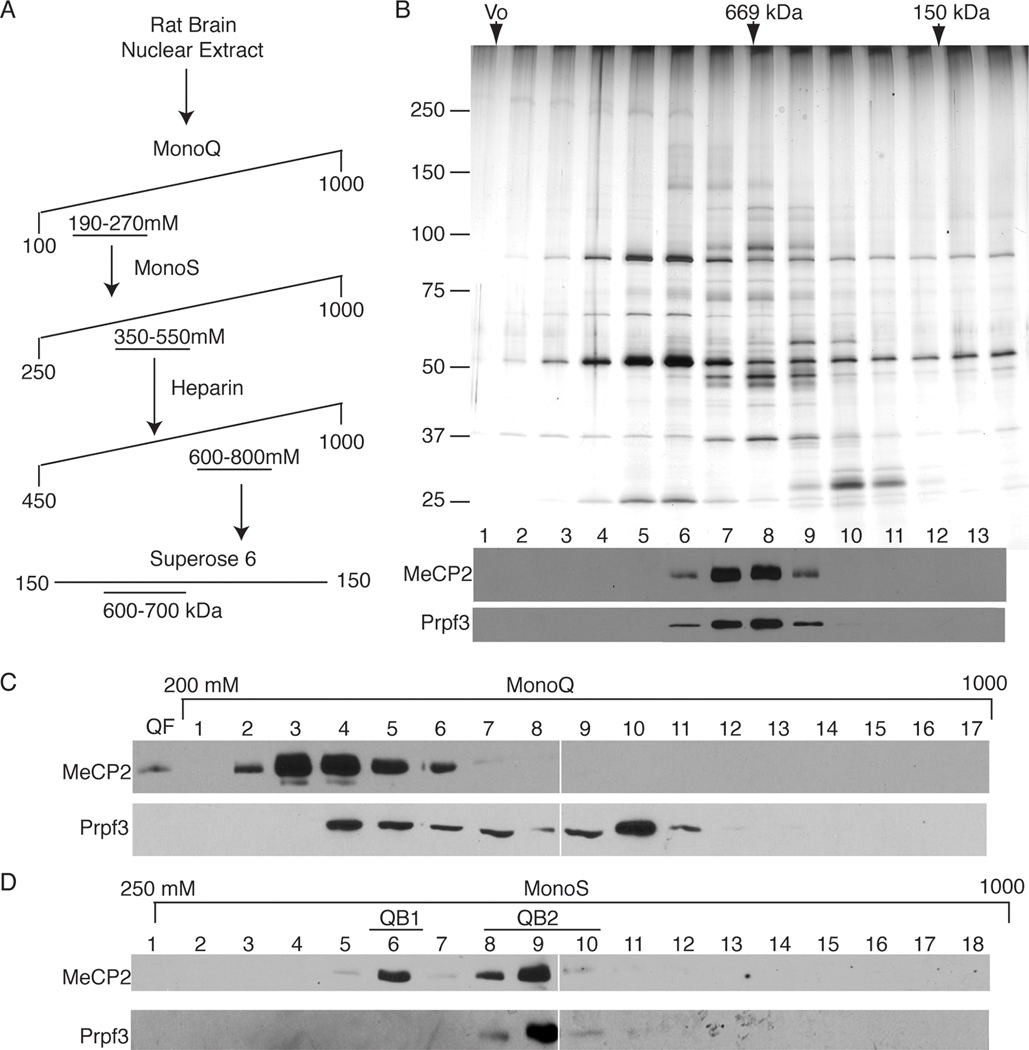
(A) MeCP2 peak fractions were purified using a four-step process including the MonoQ strong anion exchange resin, MonoS strong cation exchange resin, Heparin affinity resin and by Superose6 gel filtration. (B) (Upper panel) Silver-stain analysis of the Superose6 fractionation of the QB2 MeCP2 pool. (Lower panel) Western blot analysis of Superose6 fractions shows MeCP2 protein peaks in fractions 7 and 8, precisely co-fractionating with Prpf3 protein. (C) The MonoQ fractionation of brain-derived nuclear extract reveals an overlap of Prpf3 and MeCP2 yet pools of each protein do not co-fractionate and remain independent of the other. (D) Peak fractions of the QB1/2 fractionated over the MonoS resin show two distinct pools of MeCP2 peaking at 400 mM NaCl (QB1) and 550 mM NaCl (QB2) by western blot analysis. Corresponding MonoS fractions probed for Prpf3 protein shows precise co-fractionation with QB2 Mecp2.
Figure 3
Figure 3. Identification of candidate MeCP2 complex proteins
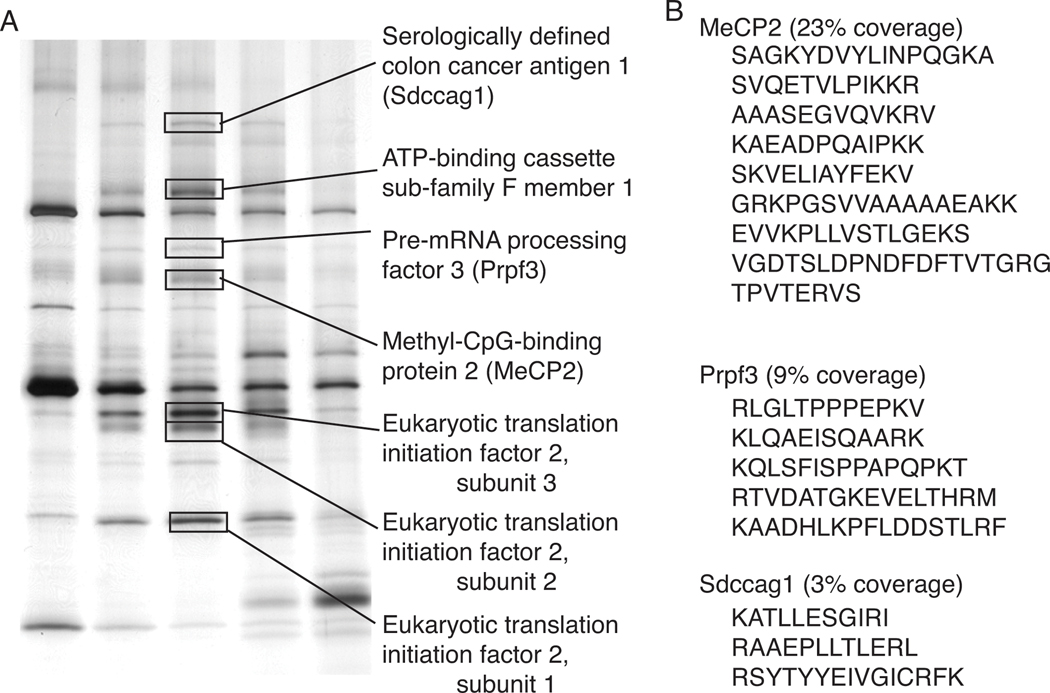
(A) Polypeptides from silver stained Superose6 fractions were excised and identified by mass spectrometry (tandem LC MS/MS). MeCP2 and two other nuclear proteins, Sdccag1 and Prpf3 were identified as well as components of a translation initiation complex. (B) Mass spectrometry peptides identifying MeCP2, Prpf3, and Sdccag1.
Figure 4
Figure 4. Co-IPs confirmed MeCP2 associates with Prpf3 in vivo
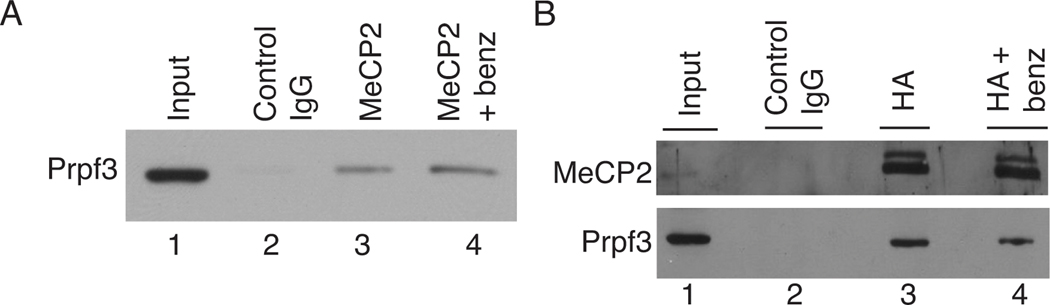
(A) Western blotting of a co-IP experiment from fractionated brain extract showing: a peak MeCP2 fraction (lane 1, 5% input), control IgG IP (lane 2), anti-MeCP2 IP (lane 3), and anti-MeCP2 IP treated with benzonase (lane 4), demonstrates that Prpf3 interacts with MeCP2 in the brain independent of nucleic acids. (B) Western blotting of a co-IP experiment from HA-MeCP2 transfected HT22 cells showing: whole cell extract (lane 1, 5% input), IgG IP (lane 2), anti-HA IP (lane 3) and anti-HA IP treated with benzonase (lane 4), demonstrates that Prpf3 interacts with MeCP2 cell culture independent of nucleic acids.
Figure 5
Figure 5. MeCP2 directly interacts with Prpf3 and Sdccag1
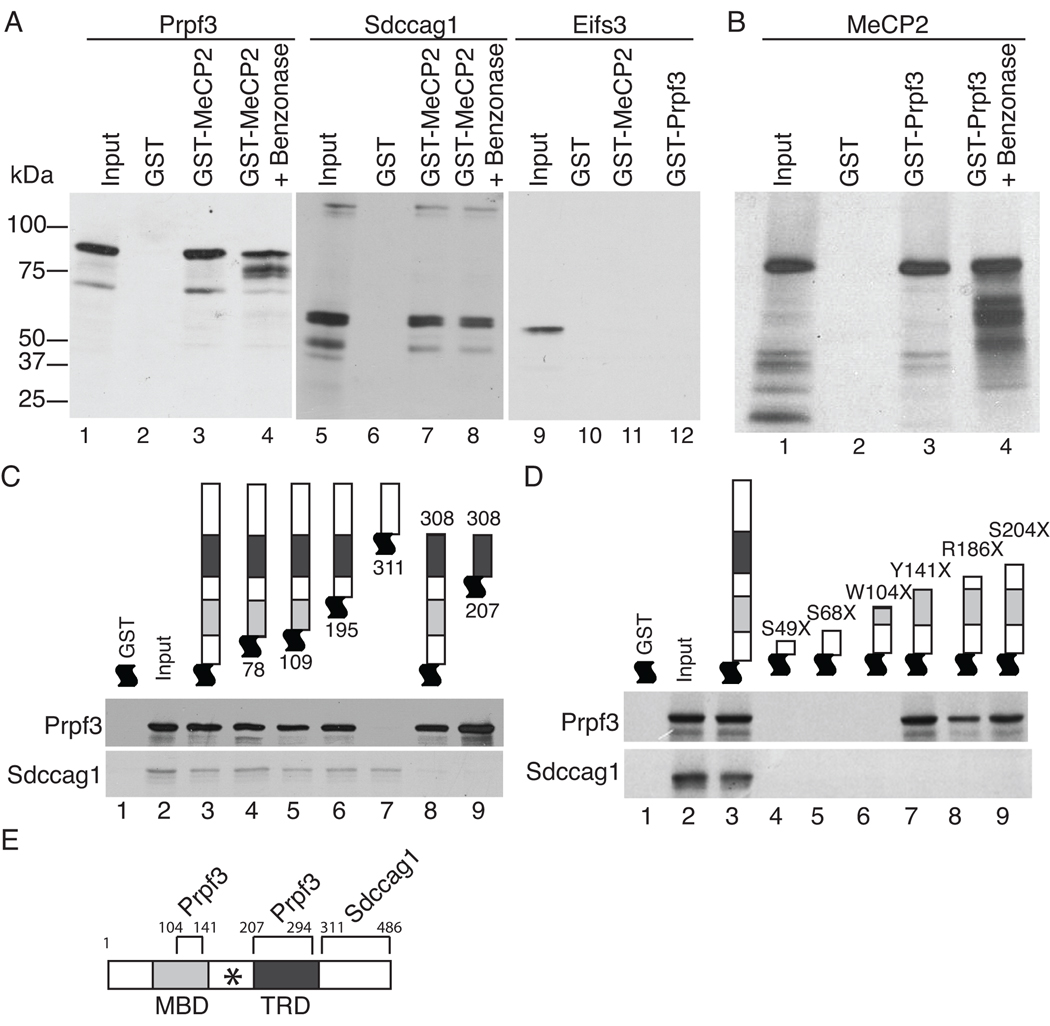
For all experiments, the GST-tagged protein was bacterially generated and purified and the visualized [35S]-methionine labeled interacting proteins were generated by in vitro transcription and translation. Coomassie blue staining of the gels showing input GST fusion proteins are shown in Figure S4. (A) Prpf3 (left) and Sdccag1 (middle) interact directly with GST tagged MeCP2 but not GST alone. Eif2s3 (right) does not interact with either GST MeCP2 or GST Prpf3. Benzonase treatment indicates these interactions are independent of nucleic acids. (B) Reciprocally, MeCP2 interacts with GST tagged Prpf3 independent of nucleic acids. (C) GST-MeCP2 deletion constructs mapped the region of MeCP2 required for the direct interactions with Prpf3 or Sdccag1 in vitro. (D) GST tagged MeCP2 containing the indicated RTT nonsense mutations disrupt Prpf3 binding if truncations are prior to amino acid 104, but identify a second Prpf3 binding site on MeCP2 in the MBD between amino acids 104 and 141. All RTT truncations tested abolished Sdccag1 binding to MeCP2. (E) Map of MeCP2e2 protein showing the Prpf3 and Sdccag1 interaction domains with boundary amino acid numbers. The MBD, TRD, and (*) RNA binding domain [37] are indicated.
Figure 6
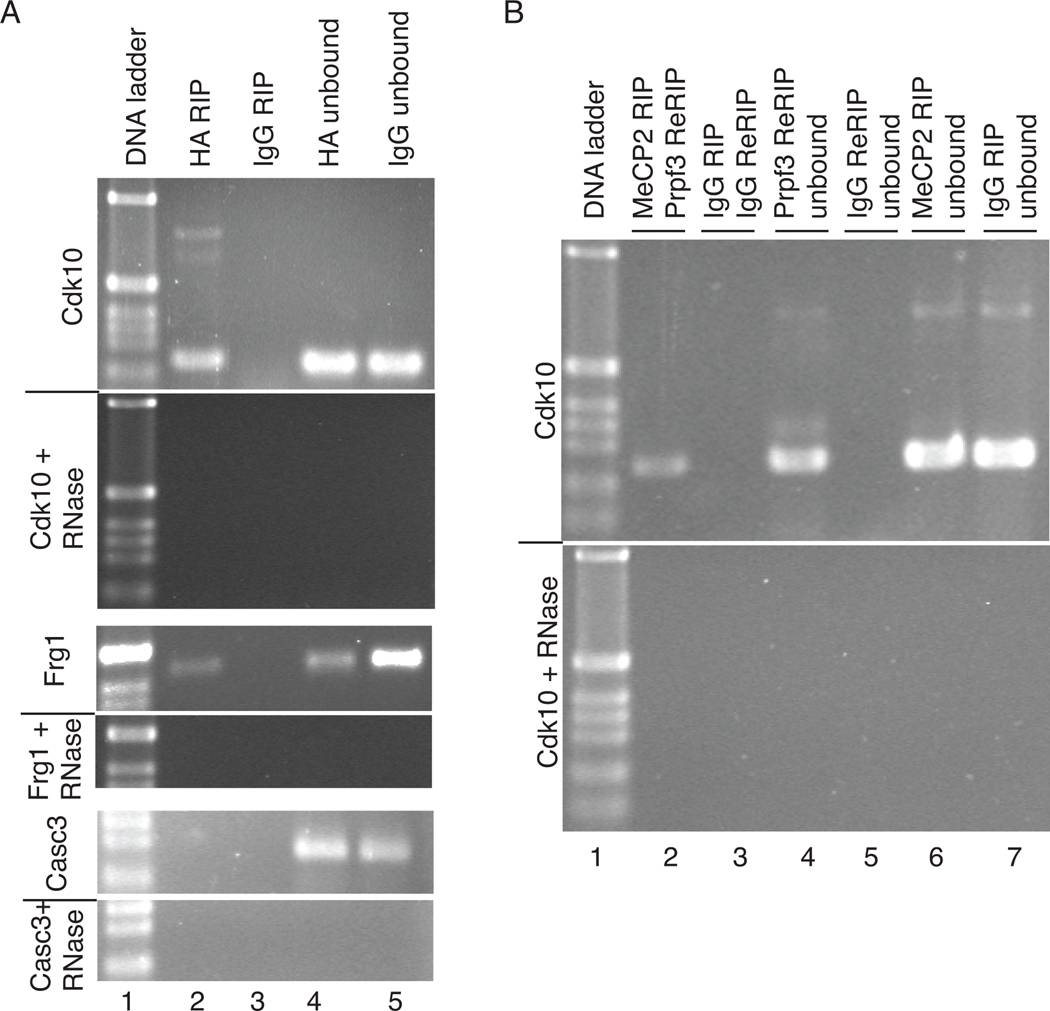
Figure 6. The MeCP2-Prpf3 complex interacts with mRNA in vivo
(A) RT-PCR analysis of a RIP from HA-MeCP2 stably transfected HT-22 cells indicates an association of HA-MeCP2 with Cdk10 mRNA (top, lane 2), and FRG1 mRNA (middle, lane 2), but not Casc3 mRNA (bottom, lane 2). Control RIPs using normal rabbit serum (IgG) (lane 3) show no RT-PCR product. RT-PCRs using unbound RNA from RIPs indicate target mRNAs were present in all RIP samples (lanes 4 and 5) and all RT-PCRs were RNase sensitive (+ RNase) confirming RNA and not DNA was being assayed. (B) An anti-HA RIP followed by anti-Prpf3 Re-RIP experiment from HA-MeCP2 HT-22 cells was assayed for Cdk10 mRNA by RT-PCR (lane 2). Control RIP and Re-RIP experiments using normal rabbit serum (IgG) showed no product by RT-PCR (lane 3). Unbound mRNA was assayed by RT-PCR for the RIP (lanes 6 and 7) and Re-RIPs (lanes 4 and 5) to confirm the presence of the Cdk10 mRNA in the reactions. All RT-PCRs were sensitive to RNase treatment (lower panel) confirming the amplifications were from RNA and not DNA templates.

References

    1. Meehan RR, Lewis JD, Bird AP. Characterization of MeCP2, a vertebrate DNA binding protein with affinity for methylated DNA. Nucleic Acids Res. 1992;20:5085–5092. - PMC - PubMed
    1. Hendrich B, Bird A. Identification and characterization of a family of mammalian methyl-CpG binding proteins. Mol Cell Biol. 1998;18:6538–6547. - PMC - PubMed
    1. Jones PL, Veenstra GJ, Wade PA, Vermaak D, Kass SU, Landsberger N, Strouboulis J, Wolffe AP. Methylated DNA and MeCP2 recruit histone deacetylase to repress transcription. Nat Genet. 1998;19:187–191. - PubMed
    1. Nan X, Campoy FJ, Bird A. MeCP2 is a transcriptional repressor with abundant binding sites in genomic chromatin. Cell. 1997;88:471–481. - PubMed
    1. Nan X, Ng HH, Johnson CA, Laherty CD, Turner BM, Eisenman RN, Bird A. Transcriptional repression by the methyl-CpG-binding protein MeCP2 involves a histone deacetylase complex. Nature. 1998;393:386–389. - PubMed

Publication types

MeSH terms

LinkOut - more resources