


Encapsulated follicular thyroid tumor with equivocal nuclear changes, so-called well-differentiated tumor of uncertain malignant potential: a morphological, immunohistochemical, and molecular appraisal
- PMID: 21070478
- PMCID: PMC11159267
- DOI: 10.1111/j.1349-7006.2010.01769.x
Encapsulated follicular thyroid tumor with equivocal nuclear changes, so-called well-differentiated tumor of uncertain malignant potential: a morphological, immunohistochemical, and molecular appraisal
Abstract
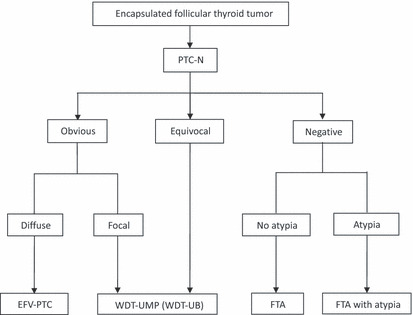
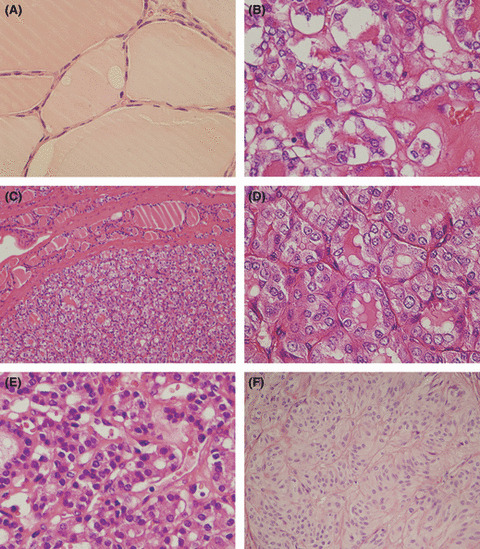
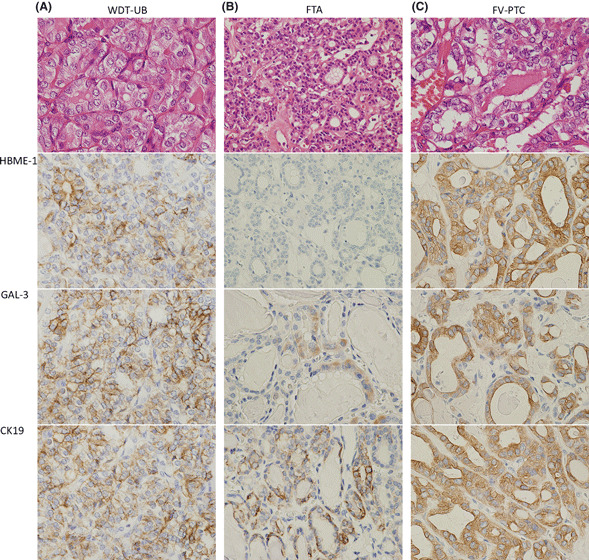
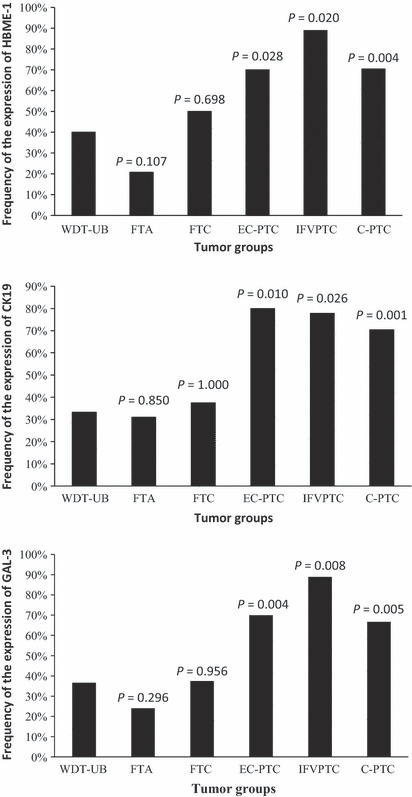
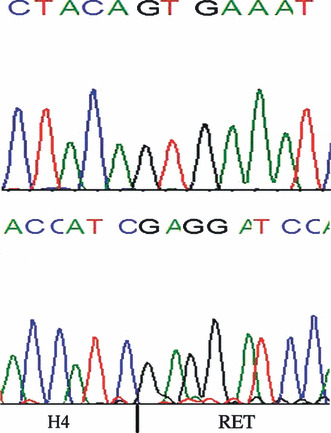
There is a continuous debate regarding the classification of thyroid follicular lesions and the term "well-differentiated tumor of uncertain malignant potential (WDT-UMP)" was recently introduced to cover this problematic spectrum of tumors. The objective of this study was to reappraise WDT-UMP using morphological, immunochemical, and molecular analysis and to shed more light on encapsulated thyroid follicular-patterned tumors. A total of 30 cases of WDT-UMP with equivocal papillary thyroid carcinoma-type nuclear changes (PTC-N) or focal unequivocal PTC-N were examined. As a control, follicular adenoma (n = 29), follicular carcinoma (n = 8), hyalinizing trabecular adenoma (n = 5), and PTC (n = 48) were included. HBME-1, cytokeratin 19, and galectin-3 were positive in 12 (40.0%), 10 (33.3%) and 11 (36.7%) cases of WDT-UMP, respectively. According to the positivity of those markers, significant differences were obtained between WDT-UMP and PTC encapsulated common type (P = 0.028, 0.010, and 0.004, respectively), infiltrative follicular variant (P = 0.020, 0.026, and 0.008, respectively), and infiltrative common type (P = 0.004, 0.001, and 0.005, respectively), but not between WDT-UMP and follicular adenoma or follicular carcinoma. BRAF(V600E) mutation was absent but RET/PTC1 rearrangement was found in only two (6.7%) cases of WDT-UMP. None of the 20 patients with WDT-UMP developed recurrence, with an average follow-up of 80 months. These findings indicate that WDT-UMP has a favorable outcome and is distinct from PTC in morphological, immunohistochemical, and molecular characteristics. We propose that WDT-UMP should be classified as "well-differentiated tumor with uncertain behavior".
© 2010 Japanese Cancer Association.
Figures
References
-
- DeLellis RA, LIoyd RV, Heitz PU, Eng C. World Health Organization Classification of Tumours: Pathology and genetics of tumours of Endocrine Organs. Lyon: IARC press, 2004.
-
- Cameselle‐Teijeiro J, Chan JK. Cribriform‐morular variant of papillary carcinoma: a distinctive variant representing the sporadic counterpart of familial adenomatous polyposis‐associated thyroid carcinoma? Mod Pathol 1999; 12: 400–11. - PubMed
-
- Gaertner EM, Davidson M, Wenig BM. The columnar cell variant of thyroid papillary carcinoma. Case report and discussion of an unusually aggressive thyroid papillary carcinoma. Am J Surg Pathol 1995; 19: 940–7. - PubMed
-
- Asioli S, Erickson LA, Lloyd RV. Solid cell nests in Hashimoto’s thyroiditis sharing features with papillary thyroid microcarcinoma. Endocr Pathol 2009; 20: 197–203. - PubMed
-
- Carney JA, Hirokawa M, Lloyd RV, Papotti M, Sebo TJ. Hyalinizing trabecular tumors of the thyroid gland are almost all benign. Am J Surg Pathol 2008; 32: 1877–89. - PubMed
Publication types
MeSH terms
Substances
LinkOut - more resources
Full Text Sources
Medical
Research Materials
