


Alström Syndrome protein ALMS1 localizes to basal bodies of cochlear hair cells and regulates cilium-dependent planar cell polarity
- PMID: 21071598
- PMCID: PMC3016908
- DOI: 10.1093/hmg/ddq493
Alström Syndrome protein ALMS1 localizes to basal bodies of cochlear hair cells and regulates cilium-dependent planar cell polarity
Abstract
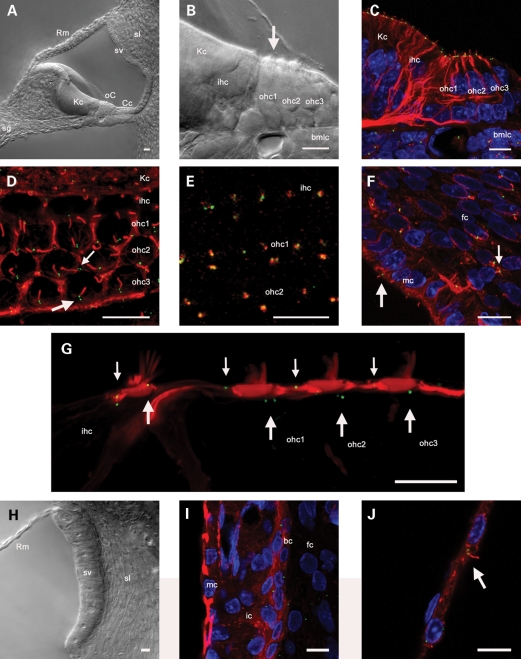
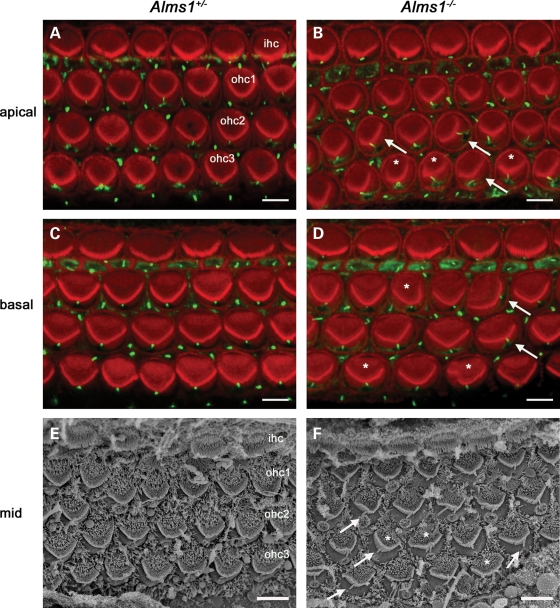
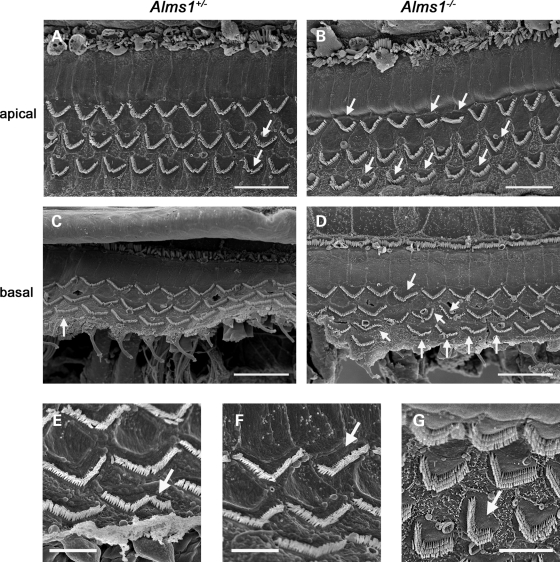
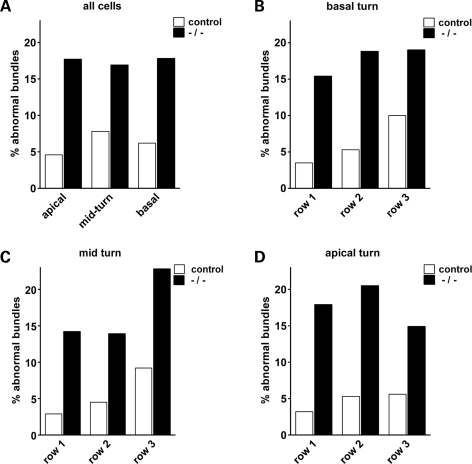
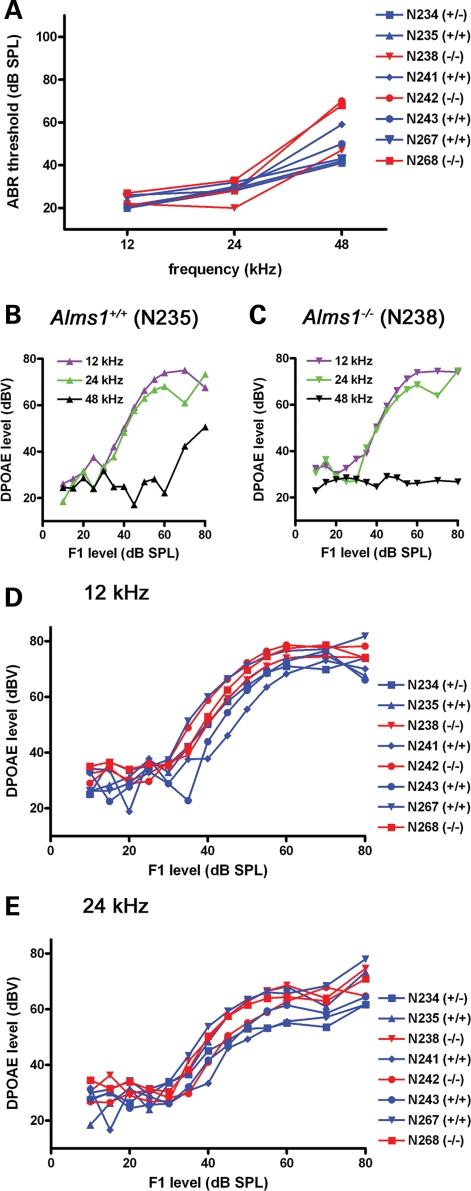
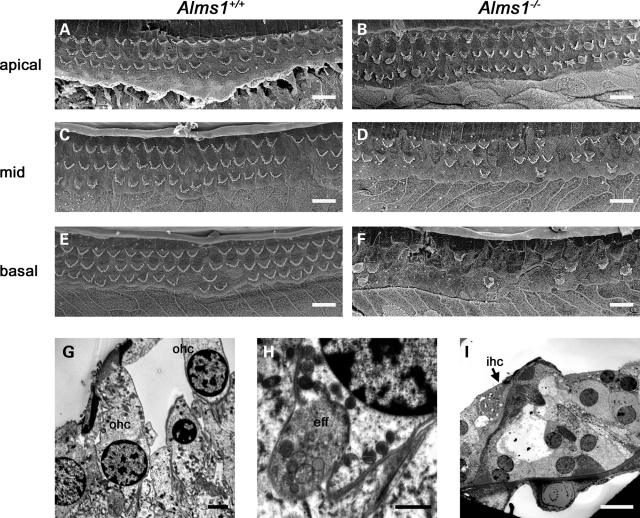
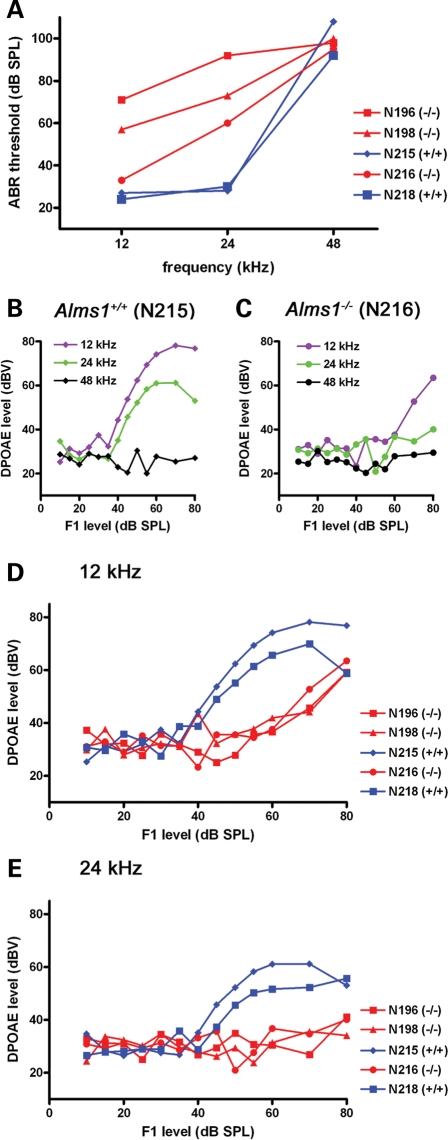
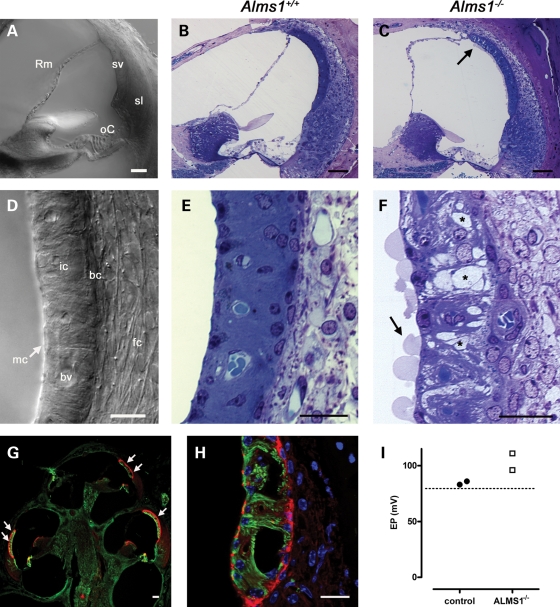
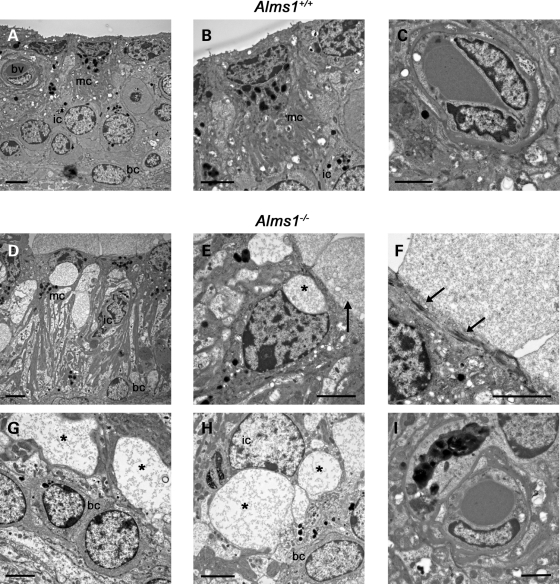
Alström Syndrome is a life-threatening disease characterized primarily by numerous metabolic abnormalities, retinal degeneration, cardiomyopathy, kidney and liver disease, and sensorineural hearing loss. The cellular localization of the affected protein, ALMS1, has suggested roles in ciliary function and/or ciliogenesis. We have investigated the role of ALMS1 in the cochlea and the pathogenesis of hearing loss in Alström Syndrome. In neonatal rat organ of Corti, ALMS1 was localized to the basal bodies of hair cells and supporting cells. ALMS1 was also evident at the basal bodies of differentiating fibrocytes and marginal cells in the lateral wall. Centriolar ALMS1 expression was retained into maturity. In Alms1-disrupted mice, which recapitulate the neurosensory deficits of human Alström Syndrome, cochleae displayed several cyto-architectural defects including abnormalities in the shape and orientation of hair cell stereociliary bundles. Developing hair cells were ciliated, suggesting that ciliogenesis was largely normal. In adult mice, in addition to bundle abnormalities, there was an accelerated loss of outer hair cells and the progressive appearance of large lesions in stria vascularis. Although the mice progressively lost distortion product otoacoustic emissions, suggesting defects in outer hair cell amplification, their endocochlear potentials were normal, indicating the strial atrophy did not affect its function. These results identify previously unrecognized cochlear histopathologies associated with this ciliopathy that (i) implicate ALMS1 in planar cell polarity signaling and (ii) suggest that the loss of outer hair cells causes the majority of the hearing loss in Alström Syndrome.
Figures
References
-
- Collin G.B., Marshall J.D., Ikeda A., So W.V., Russell-Eggitt I., Maffei P., Beck S., Boerkoel C.F., Sicolo N., Martin M., et al. Mutations in ALMS1 cause obesity, type 2 diabetes and neurosensory degeneration in Alstrom syndrome. Nat. Genet. 2002;31:74–78. - PubMed
-
- Hearn T., Renforth G.L., Spalluto C., Hanley N.A., Piper K., Brickwood S., White C., Connolly V., Taylor J.F., Russell-Eggitt I., et al. Mutation of ALMS1, a large gene with a tandem repeat encoding 47 amino acids, causes Alstrom syndrome. Nat. Genet. 2002;31:79–83. - PubMed
-
- Alström C.H., Hallgren B., Nilsson L.B., Asander H. Retinal degeneration combined with obesity, diabetes mellitus and neurogenous deafness: a specific syndrome (not hitherto described) distinct from the Laurence–Moon–Bardet–Biedl syndrome: a clinical, endocrinological and genetic examination based on a large pedigree. Acta Psychiatr. Neurol. Scand. Suppl. 1959;129:1–35. - PubMed
-
- Marshall J.D., Bronson R.T., Collin G.B., Nordstrom A.D., Maffei P., Paisey R.B., Carey C., Macdermott S., Russell-Eggitt I., Shea S.E., et al. New Alstrom syndrome phenotypes based on the evaluation of 182 cases. Arch. Intern. Med. 2005;165:675–683. - PubMed
-
- Marshall J.D., Beck S., Maffei P., Naggert J.K. Alstrom syndrome. Eur. J. Hum. Genet. 2007;15:1193–1202. - PubMed
Publication types
MeSH terms
Substances
Grants and funding
LinkOut - more resources
Full Text Sources
Other Literature Sources
Molecular Biology Databases
