Iron status, inflammation and hepcidin in ESRD patients: The confounding role of intravenous iron therapy
- PMID: 21072151
- PMCID: PMC2966977
- DOI: 10.4103/0971-4065.70840
Iron status, inflammation and hepcidin in ESRD patients: The confounding role of intravenous iron therapy
Abstract
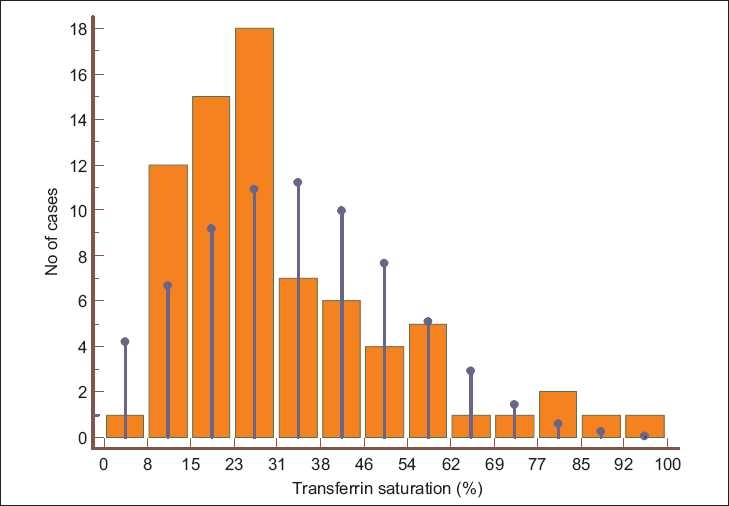
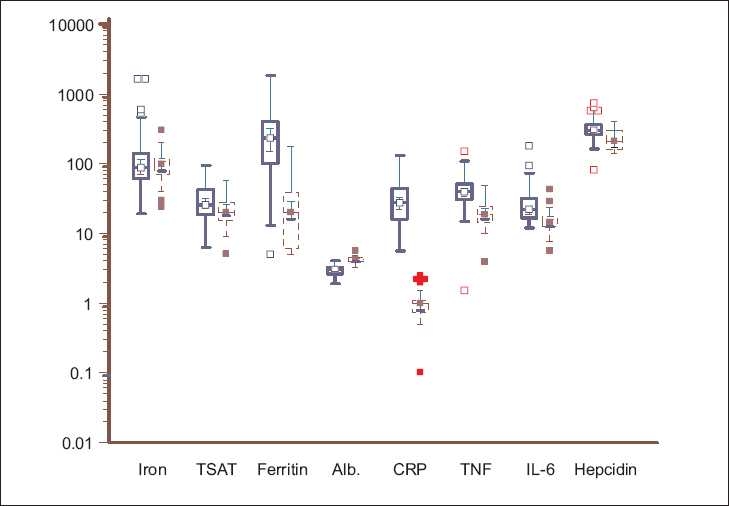
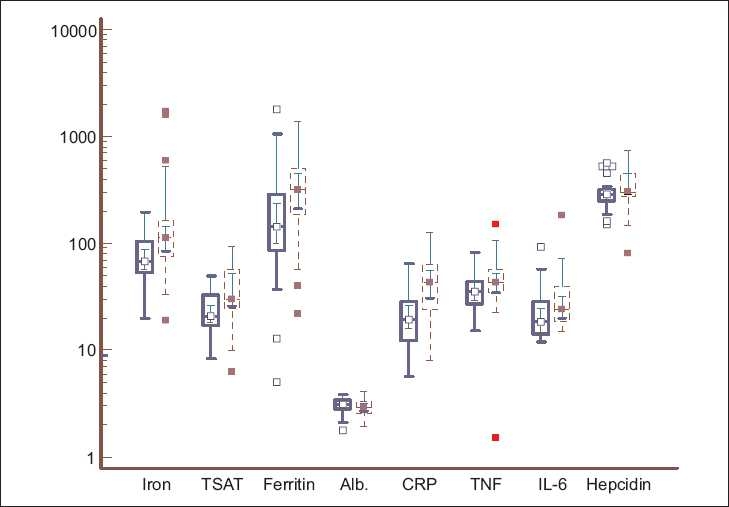
Uremia is a state of heightened inflammatory activation. This might have an impact on several parameters including anemia management. Inflammation interferes with iron utilization in chronic kidney disease through hepcidin. We studied the body iron stores, degree of inflammatory activation, and pro-hepcidin levels in newly diagnosed patients with end-stage renal disease (ESRD), and compared them with normal population. In addition to clinical examination and anthropometry, the levels of iron, ferritin, C-reactive protein, tumor necrosis factor alfa, interleukin-6, and prohepcidin were estimated. A total of 74 ESRD patients and 52 healthy controls were studied. The ESRD patients had a significantly lower estimated body fat percentage, muscle mass, and albumin; and higher transferrin saturation (TSAT) and raised serum ferritin. Inflammatory activation was evident in the ESRD group as shown by the significantly higher CRP, IL-6, and TNF-α levels. The pro-hepcidin levels were also increased in this group. Half of the ESRD patients had received parenteral iron before referral. Patients who had received intravenous iron showed higher iron, ferritin, and TSAT levels. These patients also showed more marked inflammatory activation, as shown by the significantly higher CRP, TNF-α, and IL-6 levels. We conclude that our ESRD patients showed marked inflammatory activation, which was more pronounced in patients who had received IV iron. High hepcidin levels could explain the functional iron deficiency. The cause of the relatively greater degree of inflammatory activation as well as the relationship with IV iron administration needs further studies.
Keywords: Anemia; end-stage renal disease; hepcidin; inflammation; intravenous iron.
Conflict of interest statement
Figures
References
-
- KDOQI; National Kidney Foudnation. II. Clinical practice guidelines and clinical practice recommendations for anemia in chronic kidney disease in adults. Am J Kidney Dis. 2006;47:S16–85. - PubMed
-
- Collins AJ, Li S, Ebben J, Ma JZ, Manning W. Hematocrit levels and associated medicare expenditures. Am J Kidney Dis. 2000;36:282–93. - PubMed
-
- MacDougall IC. Hyporesponsiveness to anemia therapy: What are we doing wrong? Perit Dial Int. 2001;21:S225–30. - PubMed
-
- Kalantar-Zadeh K, Kopple JD, Humphreys MH, Block G. Comparing outcome predictability of markers of malnutrition-inflammation complex syndrome in haemodialysis patients. Nephrol Dial Transplant. 2004;19:1507–19. - PubMed
-
- Kalantar-Zadeh K, Rodriguez RA, Humphreys MH. Association between serum ferritin and measures of inflammation, nutrition and iron in haemodialysis patients. Nephrol Dial Transplant. 2004;19:141–9. - PubMed
LinkOut - more resources
Full Text Sources
Research Materials
Miscellaneous