


Emergency contraception: potential role of ulipristal acetate
- PMID: 21072297
- PMCID: PMC2971744
- DOI: 10.2147/ijwh.s5865
Emergency contraception: potential role of ulipristal acetate
Abstract
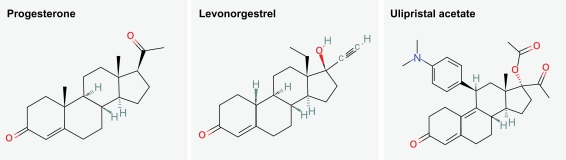
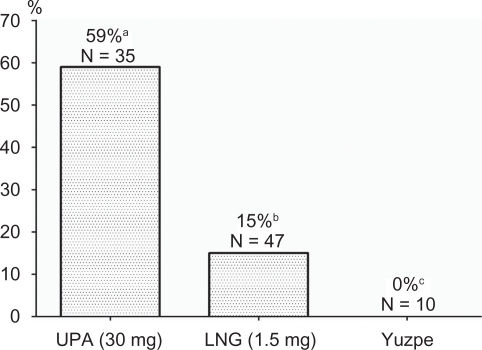
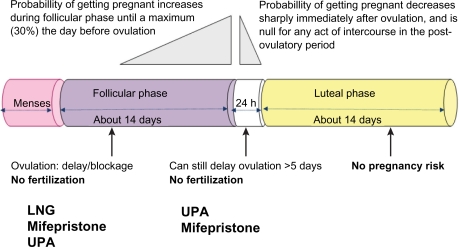
Unintended pregnancy is a global reproductive health problem. Emergency contraception (EC) provides women with a safe means of preventing unwanted pregnancies after having unprotected intercourse. While 1.5 mg of levonorgestrel (LNG) as a single dose or in 2 doses with 12 hours apart is the currently gold standard EC regimen, a single dose of 30 mg ulipristal acetate (UPA) has recently been proposed for EC use up to 120 hours of unprotected intercourse with similar side effect profiles as LNG. The main mechanism of action of both LNG and UPA for EC is delaying or inhibiting ovulation. However, the 'window of effect' for LNG EC seems to be rather narrow, beginning after selection of the dominant follicular and ending when luteinizing hormone peak begins to rise, whereas UPA appears to have a direct inhibitory effect on follicular rupture which allows it to be also effective even when administered shortly before ovulation, a time period when use of LNG is no longer effective. These experimental findings are in line with results from a series of clinical trials conducted recently which demonstrate that UPA seems to have higher EC efficacy compared to LNG. This review summarizes some of the data available on UPA used after unprotected intercourse with the purpose to provide evidence that UPA, a new type of second-generation progesterone receptor modulator, represents a new evolutionary step in EC treatment.
Keywords: emergency contraception; levonorgestrel; ulipristal acetate.
Figures
References
-
- Moreau C, Bajos N, Trussell J. The impact of pharmacy access to emergency contraceptive pills in France. Contraception. 2006;73(6):602–608. - PubMed
-
- Consensus statement on emergency contraception. Contraception. 1995;52(4):211–213. - PubMed
-
- Raymond EG, Trussell J, Polis CB. Population effect of increased access to emergency contraceptive pills: a systematic review. Obstet Gynecol. 2007;109(1):181–188. - PubMed
-
- Yuzpe AA, Lancee WJ. Ethinylestradiol and dl-norgestrel as a postcoital contraceptive. Fertil Steril. 1977;28(9):932–936. - PubMed
LinkOut - more resources
Full Text Sources
Research Materials
Miscellaneous
