


Back muscle strength and spinal mobility are predictors of quality of life in middle-aged and elderly males
- PMID: 21072545
- PMCID: PMC3099149
- DOI: 10.1007/s00586-010-1606-4
Back muscle strength and spinal mobility are predictors of quality of life in middle-aged and elderly males
Abstract
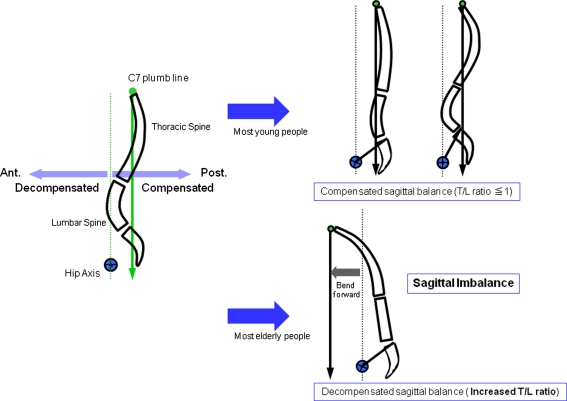
With aging of society, clarification of the relationship between QOL and abnormal posture in the elderly may allow improvement of QOL through any preventive methods and training. However, sagittal balance has not been studied widely and most studies have focused on postmenopausal patients with osteoporosis. In this report, we provide the first evaluation of the simultaneous effects of degenerative changes on radiograph, spinal range of motion (ROM), sagittal balance, and back muscle strength, and examine the influence of these effects on QOL of the middle-aged and elderly male subjects. The subjects were 100 Japanese males who underwent a basic health checkup. Lumbar lateral radiograph, sagittal balance and spinal mobility determined with SpinalMouse(®) and back muscle strength were measured. The thoracic/lumbar angle ratio (T/L ratio) was used as an index of sagittal balance. SF-36 physical component summary (PCS) scores showed a significant negative correlation with age (r = -0.377), osteophyte score (r = -0.246) and T/L ratio (r = -0.214), and a significant positive correlation with lumbar lordosis angle (r = 0.271), thoracic ROM (r = 0.282), and back muscle strength (r = 0.549). Multiple regression analysis indicated that thoracic spinal ROM (r = 0.254, p < 0.01) and back muscle strength (r = 0.488, p < 0.0001) were significantly associated with SF-36 PCS (R (2) = 0.403). In conclusion, QOL of the middle-aged and elderly male subjects was related to sagittal balance, lumbar lordosis angle, spinal ROM, and back muscle strength. Exercise including muscle strength and spinal ROM may be able to influence these primary factors related to QOL. Back muscle strength and thoracic ROM impact on improvement of QOL in the middle-aged and the elderly.
Figures
References
-
- Schneider DL, Muhlen D, Barrett-Connor E, Sartoris DJ. Kyphosis does not equal vertebral fractures: the Rancho Bernardo study. J Rheumatol. 2004;31:747–752. - PubMed
MeSH terms
LinkOut - more resources
Full Text Sources
