


Speciated human high-density lipoprotein protein proximity profiles
- PMID: 21073165
- PMCID: PMC3006032
- DOI: 10.1021/bi1015452
Speciated human high-density lipoprotein protein proximity profiles
Abstract
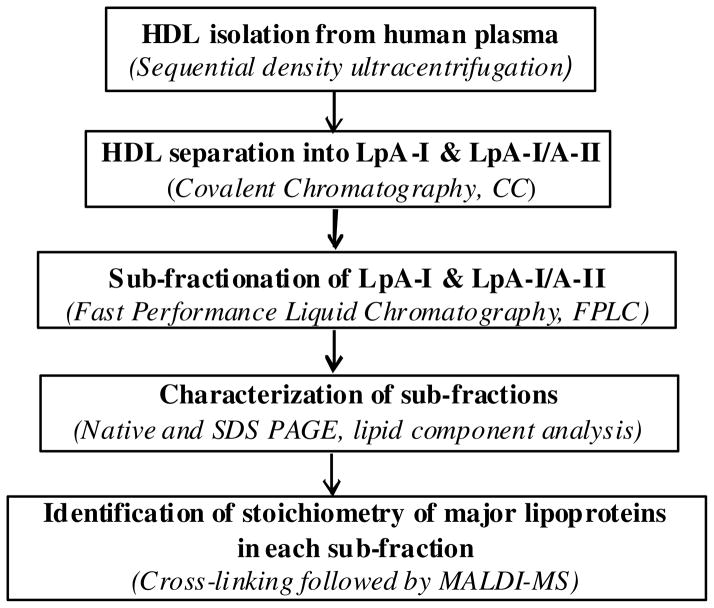
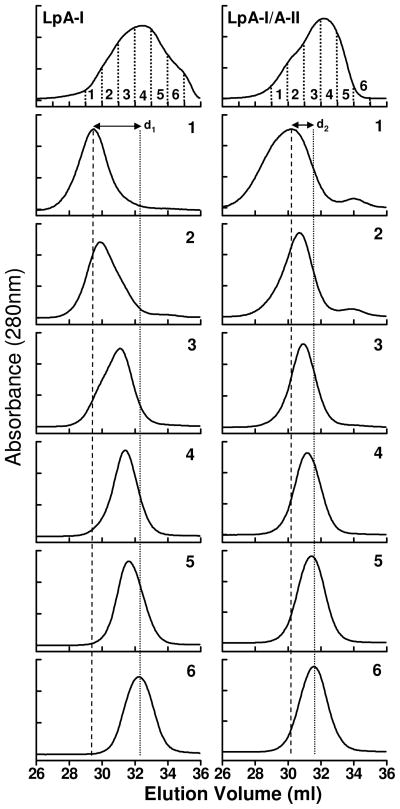
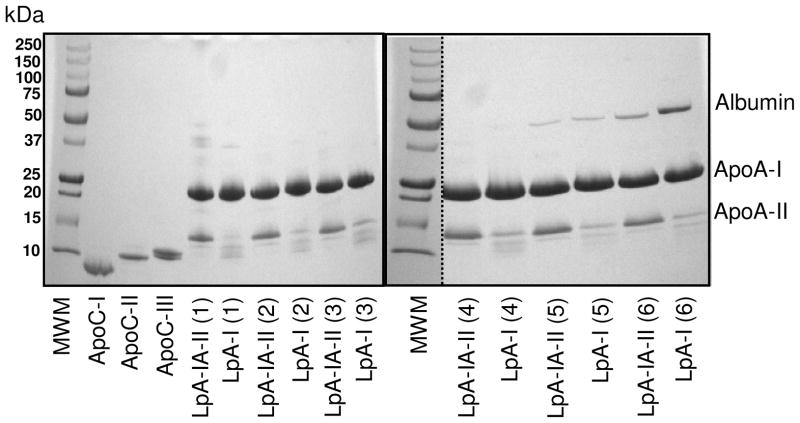
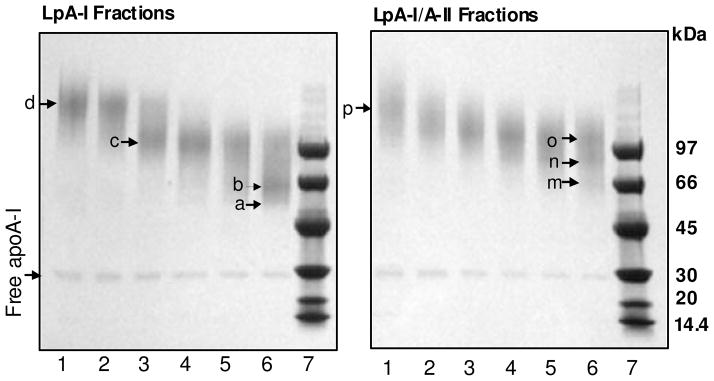
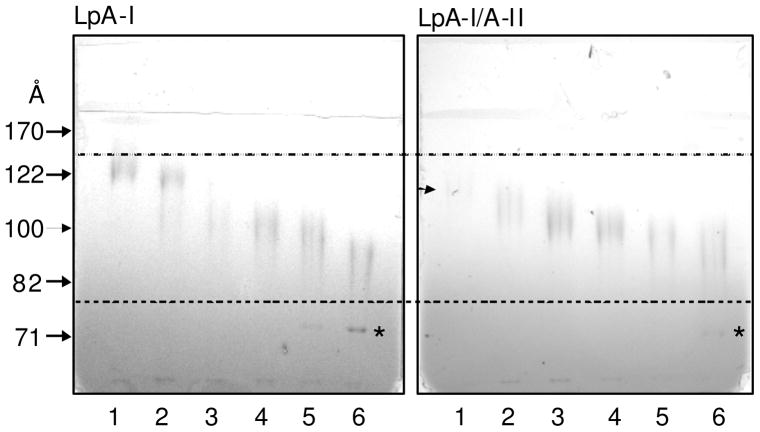
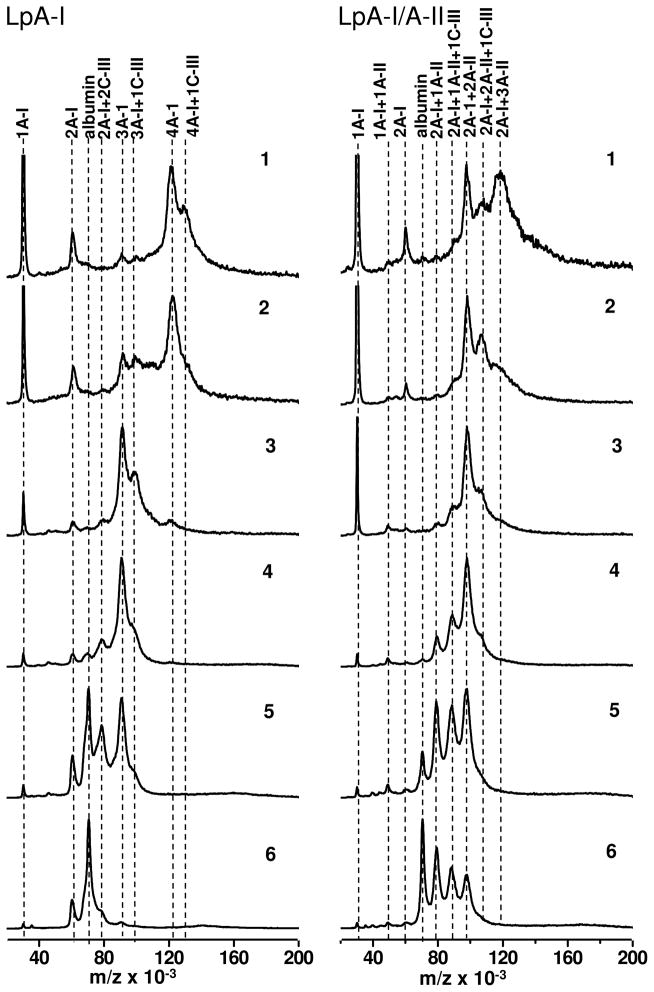
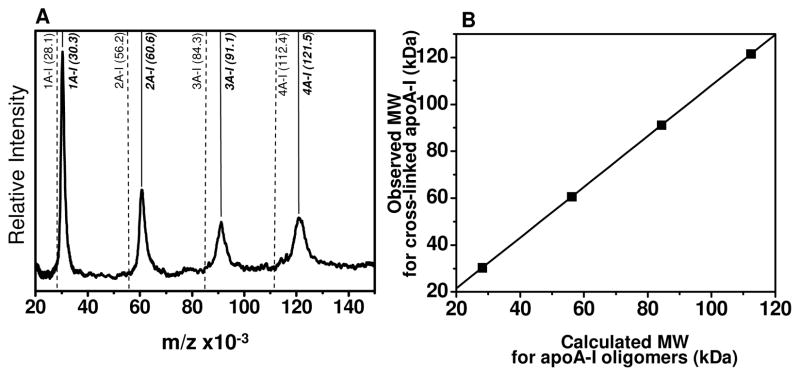
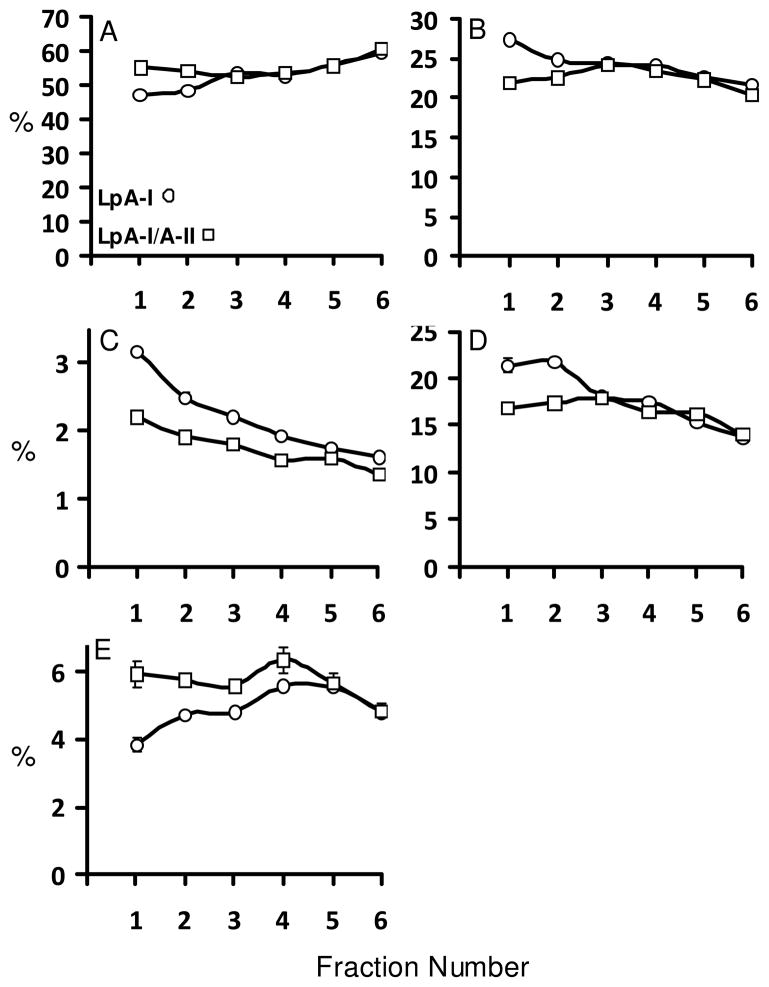
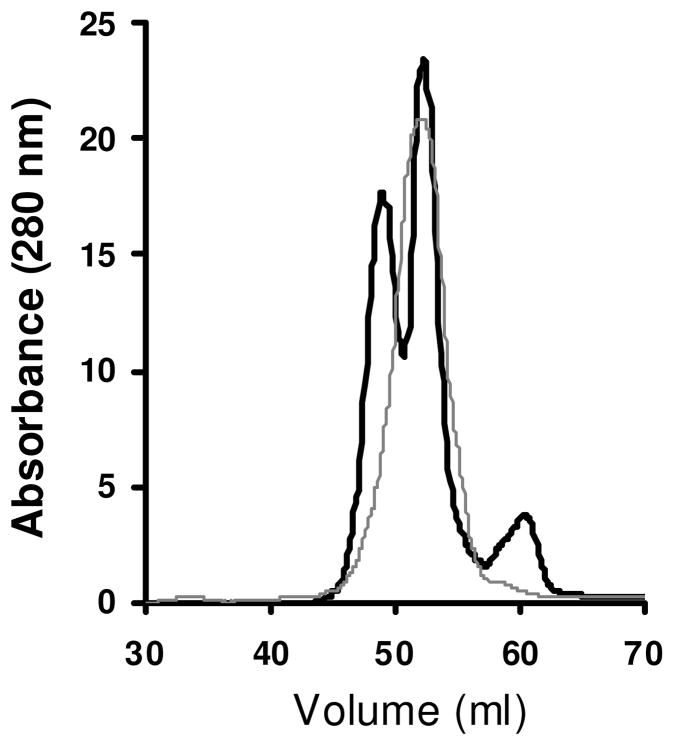
It is expected that the attendant structural heterogeneity of human high-density lipoprotein (HDL) complexes is a determinant of its varied metabolic functions. To determine the structural heterogeneity of HDL, we determined major apolipoprotein stoichiometry profiles in human HDL. First, HDL was separated into two main populations, with and without apolipoprotein (apo) A-II, LpA-I and LpA-I/A-II, respectively. Each main population was further separated into six individual subfractions using size exclusion chromatography (SEC). Protein proximity profiles (PPPs) of major apolipoproteins in each individual subfraction was determined by optimally cross-linking apolipoproteins within individual particles with bis(sulfosuccinimidyl) suberate (BS(3)), a bifunctional cross-linker, followed by molecular mass determination by MALDI-MS. The PPPs of LpA-I subfractions indicated that the number of apoA-I molecules increased from two to three to four with an increase in the LpA-I particle size. On the other hand, the entire population of LpA-I/A-II demonstrated the presence of only two proximal apoA-I molecules per particle, while the number of apoA-II molecules varied from one dimeric apoA-II to two and then to three. For most of the PPPs described above, an additional population that contained a single molecule of apoC-III in addition to apoA-I and/or apoA-II was detected. Upon composition analyses of individual subpopulations, LpA-I/A-II exhibited comparable proportions for total protein (∼58%), phospholipids (∼21%), total cholesterol (∼16%), triglycerides (∼5%), and free cholesterol (∼4%) across subfractions. LpA-I components, on the other hand, showed significant variability. This novel information about HDL subfractions will form a basis for an improved understanding of particle-specific functions of HDL.
Figures
References
-
- Barter P, Kastelein J, Nunn A, Hobbs R. High density lipoproteins (HDLs) and atherosclerosis; the unanswered questions. Atherosclerosis. 2003;168:195–211. - PubMed
-
- Ansell BJ, Watson KE, Fogelman AM, Navab M, Fonarow GC. High-density lipoprotein function recent advances. J Am Coll Cardiol. 2005;46:1792–1798. - PubMed
-
- Navab M, Ananthramaiah GM, Reddy ST, Van Lenten BJ, Ansell BJ, Fonarow GC, Vahabzadeh K, Hama S, Hough G, Kamranpour N, Berliner JA, Lusis AJ, Fogelman AM. The oxidation hypothesis of atherogenesis: the role of oxidized phospholipids and HDL. J Lipid Res. 2004;45:993–1007. - PubMed
-
- Curtiss LK, Valenta DT, Hime NJ, Rye KA. What is so special about apolipoprotein AI in reverse cholesterol transport? Arterioscler Thromb Vasc Biol. 2006;26:12–19. - PubMed
Publication types
MeSH terms
Substances
Grants and funding
LinkOut - more resources
Full Text Sources
Miscellaneous
